
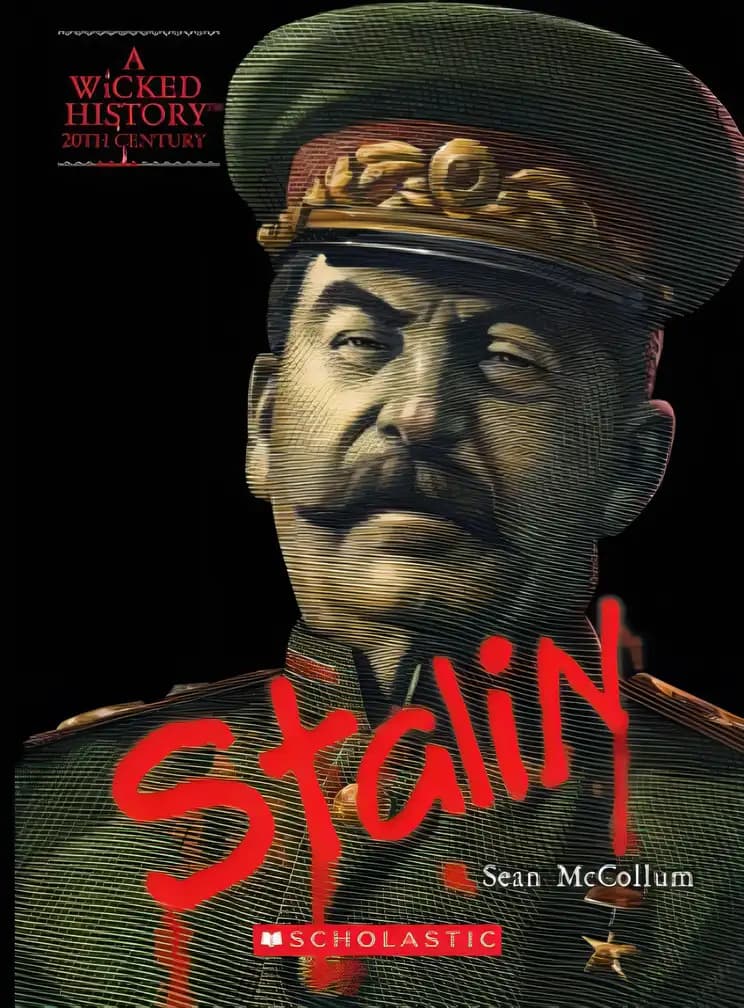
Joseph Stalin (A Wicked History)
A Wicked History 20th Century Series
on Goodreads (235)
What’s inside...
Explore the life of Joseph Stalin. The wicked ways of some of the most ruthless rulers to walk the earth are revealed in these thrilling biographies (A Wicked History) about men and women so monstrous, they make Frankenstein look like a sweetheart.
Series reading
Non-Sequential
Age
11-12
Length
128 pages
Text complexity
Character compass
Joseph Stalin
Discussion points
How do you think the actions of Joseph Stalin impacted the people living during his time?
Why is it important to learn about historical figures, even if they did things that were wrong?
What can we learn from the mistakes or choices of others in history?
How do you think history would have been different if Joseph Stalin had made different decisions?
What qualities do you think a good leader should have?
Tip: Role play these questions
Encourage your child to think critically by asking them to consider the consequences of Stalin’s actions.
Discuss the importance of learning history to understand the present and shape the future.
Highlight the distinctions between positive and negative leadership qualities, using examples from the book.
Foster empathy by exploring the feelings and experiences of people who lived during Stalin’s regime.
Link the discussion to current events when appropriate, to illustrate the lasting impact of historical figures.
Key lessons
Example Lesson: The importance of historical awareness
Explanation: The book navigates through the complex and often brutal history of Joseph Stalin, providing insights into his rise to power and the implications of his totalitarian regime.
Real-World Application: By learning about historical figures like Stalin, children can better understand the impact of leadership and governance on a society, helping them appreciate the value of political awareness and history in shaping the future.
Example Lesson: Understanding the consequences of absolute power
Explanation: Through examining Stalin’s authoritarian rule, the book illustrates the dangers and ethical implications that come with unchecked power and control.
Real-World Application: Children can learn the significance of checks and balances in leadership roles, whether it be in their student council, team sports, or community groups, recognizing the importance of accountability.
Example Lesson: The value of critical thinking
Explanation: The book encourages readers to analyze and question the motivations behind Stalin's political strategies, pushing them to think critically about the information presented.
Real-World Application: This encourages children to practice critical thinking in their daily lives, teaching them to question the validity and sources of information before accepting them as truth.
Example Lesson: Ethical decision-making
Explanation: By exposing readers to the ethical dilemmas and harsh realities under Stalin’s regime, the book prompts discussions on right and wrong.
Real-World Application: Children can apply this understanding by making more ethically-informed decisions in their interactions with others, forming a foundation for integrity and moral judgment.
Example Lesson: Resilience in adversity
Explanation: The narrative details how individuals and communities survived during Stalin's rule, highlighting stories of resistance and resilience.
Real-World Application: This teaches children about the strength of human spirit and the importance of perseverance in challenging times, whether it be dealing with school challenges or personal obstacles.