
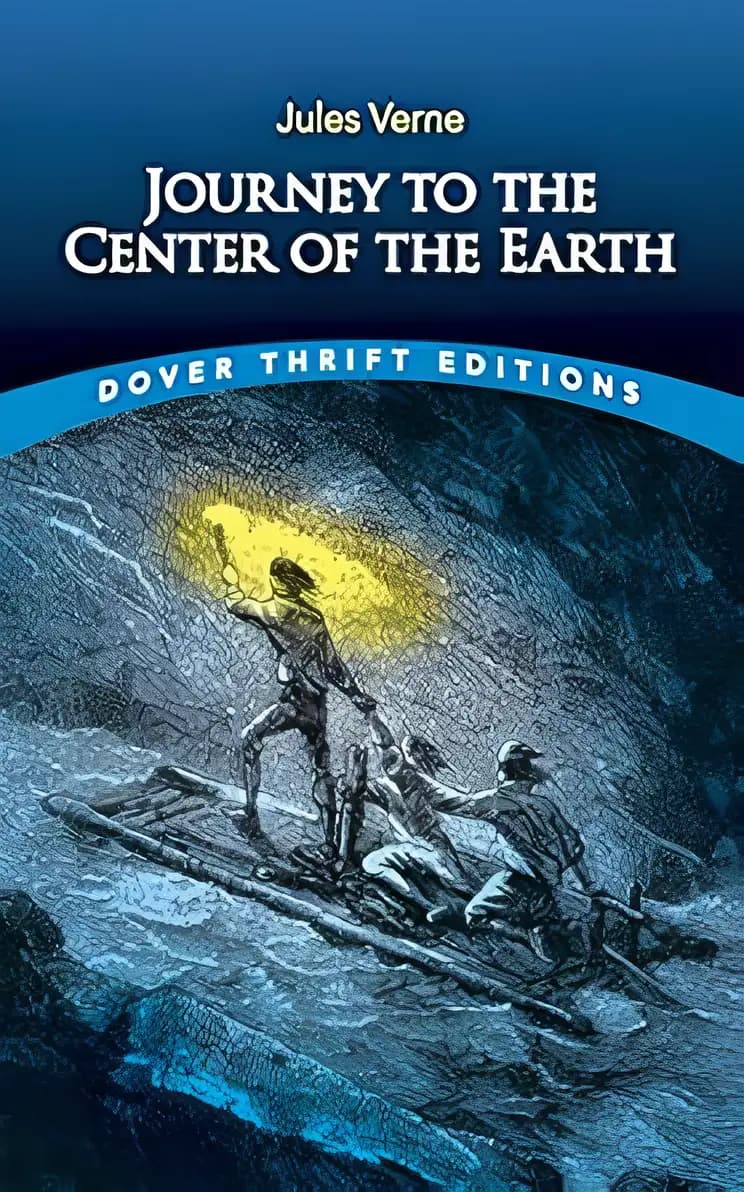
Journey to the Centre of the Earth
What’s inside...
A Journey to the Centre of the Earth is a novel by Jules Verne, first published in 1864. It follows the adventures of Professor Lidenbrock and his nephew Axel, who discover a manuscript suggesting a path to the Earth's core. Guided by Hans Bjelke, they journey through an extinct volcano in Iceland and explore a subterranean world filled with prehistoric life and luminous rocks. The novel is part of Verne's Voyages extraordinaires series and is celebrated for its visionary imagination and blend of scientific facts with adventure fiction. Jules Verne's influence is noted in the works of many subsequent writers across various genres.
Age
10-13
Length
155 pages
Text complexity
Character compass
Axel
Hans Bjelke
Professor Otto Lidenbrock
Gräuben
Otto Liedenbrock
Discussion points
What do you think motivated Professor Lidenbrock to explore the center of the Earth, and what drives your own curiosity?
How did the characters handle unexpected challenges during their journey? How do you handle surprises or challenges in your own life?
What role did teamwork play in the explorers' adventure? Can you think of a time when teamwork helped you achieve something?
If you had the chance to explore a new world, what would you hope to discover and why?
How do you think the journey changed the characters by the end of the book?
Tip: Role play these questions
Encourage your child to draw parallels between their life and the explorations in the book to personalize the reading experience.
Ask open-ended questions that prompt your child to think critically about the characters' decisions and their own decision-making processes.
Discuss the concept of curiosity and its importance in learning and exploration, linking it to everyday situations your child encounters.
Highlight the teamwork aspect in the story and relate it to your child’s experiences in school or while playing sports.
After discussing the questions, encourage your child to imagine their own adventurous journey and describe what it would entail.
Key lessons
Example Lesson: Perseverance Pays Off
Explanation: Throughout the book, the characters face numerous challenges and obstacles during their adventure. Their determination and perseverance in overcoming these hurdles demonstrate the importance of persistence.
Real-World Application: Children can apply this lesson by continuously working hard and not giving up when faced with difficulties in school or in learning new skills.
Example Lesson: Importance of Teamwork
Explanation: The explorers in the story rely on each other’s strengths and work collaboratively to navigate through the unknown terrains of the Earth’s interior. This highlights the effectiveness of teamwork.
Real-World Application: Kids can learn to work cooperatively in group settings such as in sports teams or school projects, understanding that collective efforts often lead to greater successes.
Example Lesson: Curiosity and Learning
Explanation: The protagonist’s quest is driven by a deep curiosity and commitment to scientific discovery, illustrating the value of seeking knowledge and learning.
Real-World Application: Children are encouraged to be inquisitive about the world around them, fostering a love for learning and exploration that can be beneficial both in and outside of the classroom.
Example Lesson: Facing Fears
Explanation: Characters in the book frequently confront fearful situations which they must overcome to progress on their journey, teaching the readers about the importance of facing fears.
Real-World Application: This can help children understand that it is okay to feel scared and that courage can be found in working through those fears rather than avoiding them.
Example Lesson: Respect for Nature
Explanation: The journey showcases the awe-inspiring and sometimes dangerous elements of nature encountered by the characters, promoting a message of respect and admiration for the natural world.
Real-World Application: Children can learn to appreciate and take care of the environment, recognizing the importance of preserving natural wonders for future generations.