
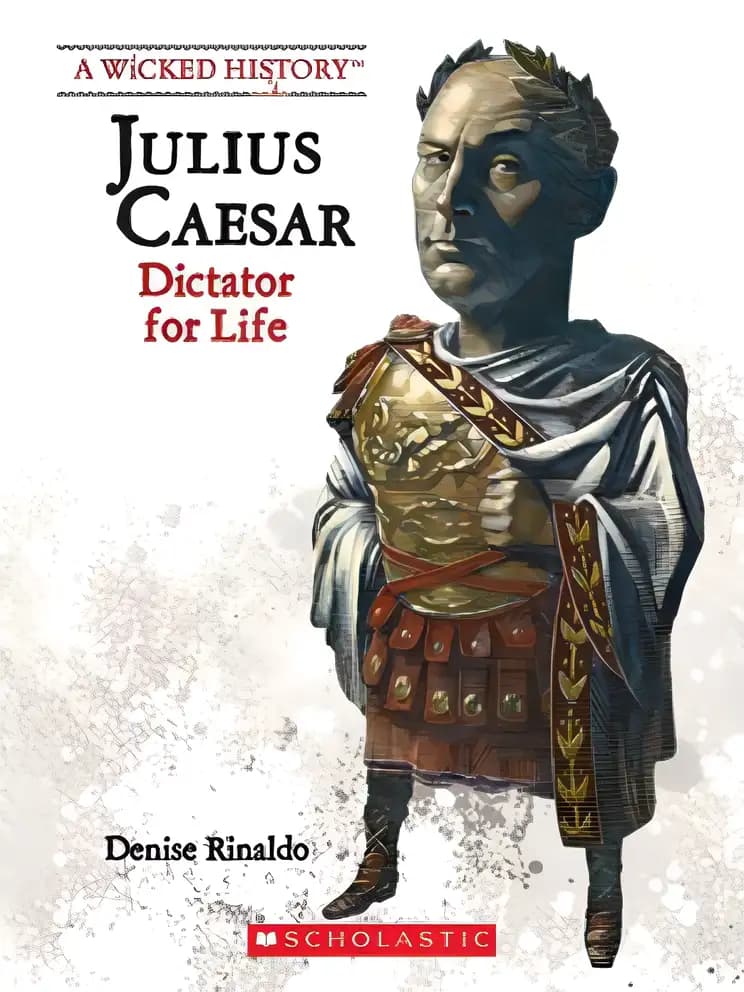
Julius Caesar (Revised Edition) (A Wicked History)
A Wicked History Series
on Goodreads (168)
What’s inside...
Julius Caesar rose from chaos to bring order to Rome. The wicked ways of some of the most ruthless rulers to walk the earth are revealed in these thrilling biographies (A Wicked History) about men and women so monstrous, they make Frankenstein look like a sweetheart. After gaining power, he attacked his allies and won a brutal civil war. Then he declared himself dictator and ruled Rome from a golden throne.
Series reading
Non-Sequential
Age
11-17
Length
144 pages
Text complexity
Character compass
Cleopatra
Sulla
Julius Caesar
Discussion points
What do you think motivated Julius Caesar to make some of the decisions he did?
How do the actions of Julius Caesar affect those around him and the course of history?
What qualities do you think a leader should have? Did Julius Caesar possess any of these qualities?
How does power change the dynamics between characters in the book?
What can we learn from Julius Caesar’s successes and failures?
Tip: Role play these questions
Encourage your child to think critically about the historical context of Julius Caesar’s life. Ask them to consider how leadership and power can impact a society. Discuss the moral implications of Caesar's decisions and actions, and how they might handle similar situations. This not only enhances their understanding of the book but also builds their analytical skills and moral reasoning.
Key lessons
Example Lesson: The importance of leadership and responsibility
Explanation: Julius Caesar’s ascent to power showcases the significant impact a leader can have on society, highlighting both the responsibilities and challenges that come with leadership.
Real-World Application: Children can learn to take charge in group activities and understand the importance of making decisions that benefit everyone involved.
Example Lesson: The consequences of ambition
Explanation: The story illustrates how Caesar's ambition, while driving him to achieve great things, also led to conflict and ultimately his downfall. It serves as a cautionary tale about the potential negative effects of being overly ambitious.
Real-World Application: This lesson can help children balance their ambitions with empathy and consideration for others, teaching them that personal goals should not be pursued at the expense of others.
Example Lesson: Understanding historical context and its impact
Explanation: The book provides insights into the political and social dynamics of ancient Rome, which helps readers understand the factors that shaped Caesar’s actions and decisions.
Real-World Application: Children can apply this understanding by learning to consider the context of situations in their own lives, such as family dynamics or school environment, before making judgments or decisions.
Example Lesson: Ethics and morality in decision making
Explanation: Caesar's choices often involved complex moral considerations, showing the gray areas in ethics and the importance of critical thinking when making decisions.
Real-World Application: This encourages children to think critically about right and wrong and to understand that real-life decisions can be complex and require thoughtful consideration.