
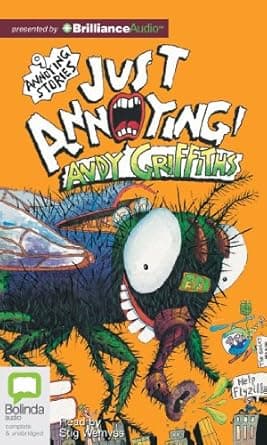
Just Annoying
Just series
on Goodreads (1,650)
What’s inside...
Just Annoying follows the hilarious adventures of a mischievous 12-year-old boy named Andy, who often finds himself in trouble due to his relentless pranks and jokes. Whether he's annoying his sister, driving his parents mad, or getting up to all sorts of antics at school, Andy's shenanigans are sure to make readers laugh out loud. The book invites readers to take the ANNOYING TEST to find out if they would enjoy the book, with questions that gauge their penchant for practical jokes. Scores indicate whether they are a practical joking genius or just a good practical joker, but regardless of the result, all are likely to find humor and delight in Andy's escapades. This book is the second in a series by bestselling authors Andy Griffiths and Terry Denton, known for their engaging and humorous storytelling.
Series reading
Non-Sequential
Age
8-10
Length
144 pages
Text complexity
Character compass
Andy
Discussion points
How do you think the main character feels when he's being annoying? Can you relate to his feelings?
What are some consequences of the main character's actions in the story?
Can you think of a time when you found something annoying? How did you handle it?
How do you think the story would change if the main character chose not to be annoying?
What have you learned from the main character’s experiences about how to treat others?
Tip: Role play these questions
Encourage your child to put themselves in the shoes of different characters to explore different perspectives.
Discuss personal experiences that relate to the theme of annoyance to foster a deeper personal connection to the story.
Use hypothetical scenarios to explore alternative actions and potential outcomes, helping your child understand the impact of their decisions.
Highlight the importance of empathy and understanding in everyday interactions, using the book’s characters as examples.
Key lessons
Example Lesson: Understanding boundaries
Explanation: Through the protagonist's various annoying antics, the story illustrates the importance of recognizing and respecting personal and social boundaries.
Real-World Application: Children can learn to observe and respect others' space and limits, essential for forming healthy relationships.
Example Lesson: Empathy and consideration for others
Explanation: The reactions of the characters affected by the protagonist's behavior highlight the impact one's actions can have on others.
Real-World Application: This encourages children to consider how their behaviors affect peers and teaches them to act more thoughtfully.
Example Lesson: Consequences of actions
Explanation: As the book progresses, the protagonist faces various repercussions for his annoying behaviors, which exemplifies that actions have consequences.
Real-World Application: Children are taught accountability and to think before they act, understanding that their actions will have outcomes that could affect themselves and others.