
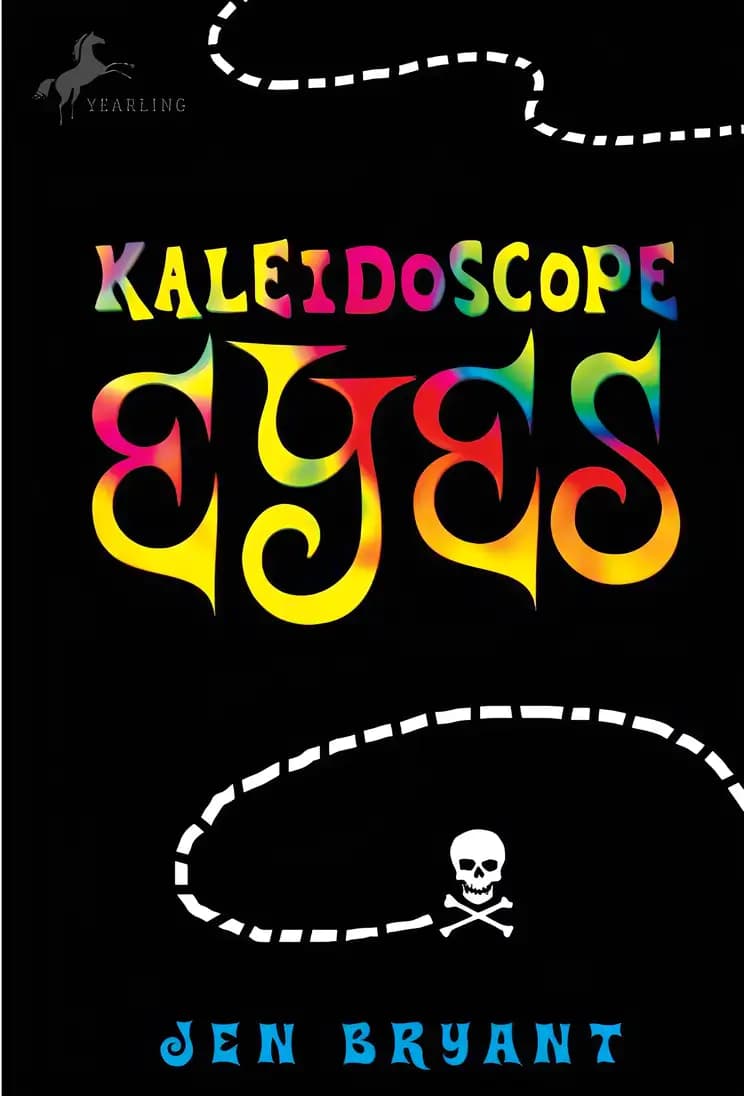
Kaleidoscope Eyes
on Goodreads (926)
What’s inside...
When Lyza helps her dad clean out her late grandfather's house, she finds three maps in the attic with an envelope labeled 'For Lyza ONLY.' With her friends Malcolm and Carolann, Lyza discovers that the maps point to potential spots in their New Jersey town where Captain Kidd may have buried treasure. As the three friends embark on a secret treasure hunt set against the backdrop of the Vietnam War, they must navigate the challenges and excitement of possibly finding pirate treasure. Inspired by a true story, this emotional and suspenseful novel in poems captures a pivotal year in U.S. history.
Age
8-12
Length
272 pages
Text complexity
Character compass
Lyza Bradley
Carolann
Malcolm
Jill Bradley
Mr. Bradley
Discussion points
What did you think about Lyza's journey in finding the treasure? What qualities did she show that you admire?
How did Lyza's relationships with her friends and family change throughout the book? Can you relate to any of these changes?
Why do you think the author chose the 1960s as the setting for the story? How do you think the story would change if it was set in today's time?
What feelings did you experience during the surprising parts of the book? How did the twists and turns affect your enjoyment of the story?
If you could ask any character in the book a question, who would you choose and what would you ask them?
Tip: Role play these questions
Initiate discussions by sharing your own thoughts and feelings about the book, allowing your child to express their viewpoints comfortably.
Encourage your child to describe their favorite parts of the book and why those parts stood out to them, fostering a deeper understanding of their preferences and thoughts.
Ask your child to imagine alternative endings or different scenarios within the book, promoting creativity and critical thinking.
Connect themes or events in the book to personal experiences or current events, helping your child relate to the story in a broader context.
Be open to your child's interpretations or opinions, even if they differ from yours, to build their confidence in expressing their thoughts and ideas.
Key lessons
Example Lesson: The importance of curiosity and exploration
Explanation: In 'Kaleidoscope Eyes,' the characters embark on a treasure-hunting adventure that drives the plot, depicting how curiosity leads to exciting discoveries and learning.
Real-World Application: Encourages children to explore their surroundings, ask questions, and engage in new experiences, fostering a lifelong love for learning.
Example Lesson: Value of teamwork and collaboration
Explanation: The protagonist, Lyza, teams up with her friends to decode a map and hunt for treasure, highlighting how working together can lead to greater success than working alone.
Real-World Application: Teaches children to collaborate effectively, share tasks, and respect others' ideas in group settings at school or in sports.
Example Lesson: The importance of historical preservation
Explanation: Through their treasure-hunting journey, the characters uncover significant historical artifacts, showing the importance of preserving history and cultural heritage.
Real-World Application: Inspires children to explore and appreciate history, whether through visits to museums, reading about different cultures, or preserving family traditions.
Example Lesson: Resilience in the face of challenges
Explanation: Lyza and her friends overcome various obstacles during their adventure, underscoring the importance of resilience and determination.
Real-World Application: Encourages children to remain determined and resilient in overcoming personal challenges, whether in their academic endeavors or personal pursuits.
Example Lesson: Ethics of decision-making
Explanation: Throughout the story, characters face moral dilemmas about the treasure they find, teaching ethical decision-making and the consequences of their choices.
Real-World Application: Helps children understand the impact of their decisions and encourages them to think critically about right and wrong in their daily interactions.