
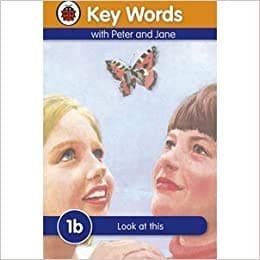
Key Words: 1b Look at this: (Key Words)
Dick and Jane and Friends Treasury, Read With Dick and Jane Series
What’s inside...
'Key Words: 1b Look at this' by W. Murray is a delightful addition to the Key Words Reading Scheme, specifically designed to support children’s early reading development. This book uses simple, repetitive phrases paired with vivid illustrations to help young readers, typically aged 4 to 5, to build their vocabulary and foster recognition of common objects. Its engaging content is perfect for shared reading sessions, reinforcing the bond between child and parent while promoting literacy skills. The first Key Words with Peter and Jane book, from Ladybird, uses the most frequently met words in the English language as a starting point for learning to read successfully and confidently. The Key Words reading scheme is scientifically researched and world renowned. Book 1b follows on from 1a and introduces 16 new words, including 'toys', 'has', 'trees', and 'ball'. Once this book has been completed, the child moves on to book 3b. The Key Words with Peter and Jane books work because each of the key words is introduced gradually and repeated frequently. This builds confidence in children when they recognize these key words on sight (also known as the 'look and say' method of learning). The series contains 12 levels, each with 3 books: a, b, and c. Series a gradually introduces new words, Series b provides further practice of words featured in the 'a' series, and Series c links reading with writing and phonics, reinforcing the words introduced in each 'a' and 'b' book.
Series reading
Non-Sequential
Age
5-7
Length
56 pages
Text complexity
Character compass
Peter
Jane
Discussion points
What objects in the book can you find around our house? What are they used for?
Which picture in the book was your favorite and why did you like it?
Can you think of a story about one of the items you saw in the book?
How do you think the boy/girl in the book felt when they saw the different things? How would you feel?
If you could add one thing to the book, what would it be and why?
Tip: Role play these questions
Use the book as a scavenger hunt tool by asking your child to find similar items around your home that are featured in the book.
Encourage your child to describe each item they see in the book to enhance their vocabulary and comprehension skills.
After reading, ask your child to draw their favorite scene or item from the book, helping them connect art with storytelling.
Discuss the emotions associated with different objects or scenes in the book to foster emotional intelligence.
Praise your child’s responses to boost their confidence and encourage a deeper engagement with reading.
Key lessons
Example Lesson: Vocabulary Expansion
Explanation: The book uses simple, repetitive phrases to reinforce basic words which enhances vocabulary retention.
Real-World Application: Children learn new words that they can use daily to express themselves more clearly and confidently.
Example Lesson: Observation Skills
Explanation: The book prompts children to observe carefully through the 'Look at this' pointers, fostering attentiveness.
Real-World Application: Enhanced observation skills can help children in academic settings and also in their social interactions by paying attention to details.
Example Lesson: Following Instructions
Explanation: The narrative structure guides young readers to follow sequences, which teaches them how to adhere to instructions.
Real-World Application: This can assist children in understanding the importance of following guidelines in school tasks or home chores.
Example Lesson: Cognitive Development
Explanation: Engaging with the words and pictures stimulates cognitive connections and enhances comprehension skills.
Real-World Application: Boosted cognitive skills aid in problem-solving and better academic performance in varied subjects.
Example Lesson: Creativity and Imagination
Explanation: The imagery and simple story lines encourage children to imagine and create scenarios beyond the text.
Real-World Application: Children can utilize their creativity to think beyond the obvious in their playtime activities and academic projects.