
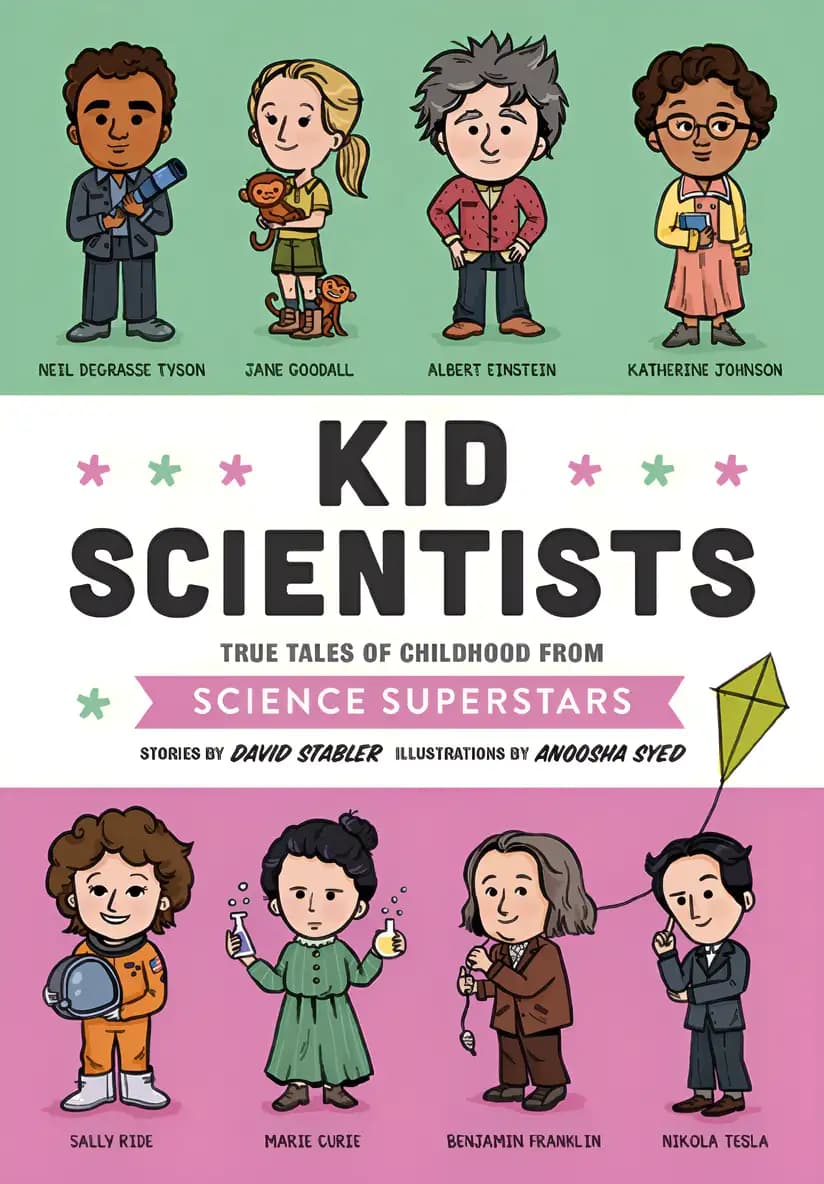
Kid Scientists: True Tales of Childhood from Science Superstars
#2 of 10 in Kid Legends Series
What’s inside...
Kid Scientists: True Tales of Childhood from Science Superstars by David Stabler is a book that shares the childhood stories of renowned scientists like Marie Curie, Albert Einstein, and Stephen Hawking. It aims to inspire young readers by showing that these scientific icons were once curious kids. The book includes humorous and relatable stories, fun facts, and illustrations, making it an engaging and educational read. It features a diverse cast including physicists, inventors, and other scientific figures, each depicted with colorful illustrations and true tales from their childhoods.
Discussion points
Which scientist in the book did you find most interesting and why?
How do you think overcoming challenges helped these scientists make their discoveries?
If you could ask any of the featured scientists a question, what would it be?
What qualities do you think all these scientists shared when they were young?
How does learning about the childhood of these scientists change your view on making mistakes?
Tip: Role play these questions
Highlight the perseverance shown by each scientist when discussing their stories, emphasizing that setbacks are part of the learning process.
Encourage your child to relate their current interests or struggles to those experienced by the scientists when they were young.
Use the book as a tool to discuss future aspirations with your child, asking them what they dream of achieving and how they might overcome obstacles in their way.
Create a supportive atmosphere that values curiosity and learning from errors, mirroring the childhood environments of the scientists.
After reading, co-engage in a simple experiment or related activity that aligns with one of the scientist’s fields, enhancing comprehension through hands-on learning.
Key lessons
Example Lesson: Perseverance pays off
Explanation: The book shares stories of famous scientists who faced challenges but never gave up. For instance, it highlights how Jane Goodall persisted in her research despite many initial setbacks.
Real-World Application: Children can learn that sticking with tasks, even when they get difficult, can lead to success in school projects or learning new skills.
Example Lesson: Curiosity leads to discovery
Explanation: The tales illustrate how curiosity drove these scientists to explore and make significant discoveries. Examples include young Albert Einstein's deep questions about the nature of light.
Real-World Application: This can encourage children to ask questions and explore subjects that interest them, which can lead to new learning and personal growth.
Example Lesson: Learning from mistakes
Explanation: The book underscores that mistakes are a part of the learning process, as seen in the early experiments of scientists like Marie Curie.
Real-World Application: Children can understand that errors aren’t failures, but opportunities to learn and improve, fostering a resilient approach to challenges in their academics and personal lives.
Example Lesson: Importance of imagination
Explanation: Kid Scientists highlights how a strong imagination was crucial for scientific breakthroughs, such as Isaac Newton imagining forces unseen by others.
Real-World Application: This lesson can encourage children to use their imagination not just in play, but as a tool to solve problems and think creatively about the world around them.
Example Lesson: Value of education
Explanation: Each scientist's story begins with a passion for learning and education, showing how their early education was fundamental to their later success.
Real-World Application: This can motivate children to value and take their education seriously, understanding its role in achieving future career goals and personal fulfillment.