
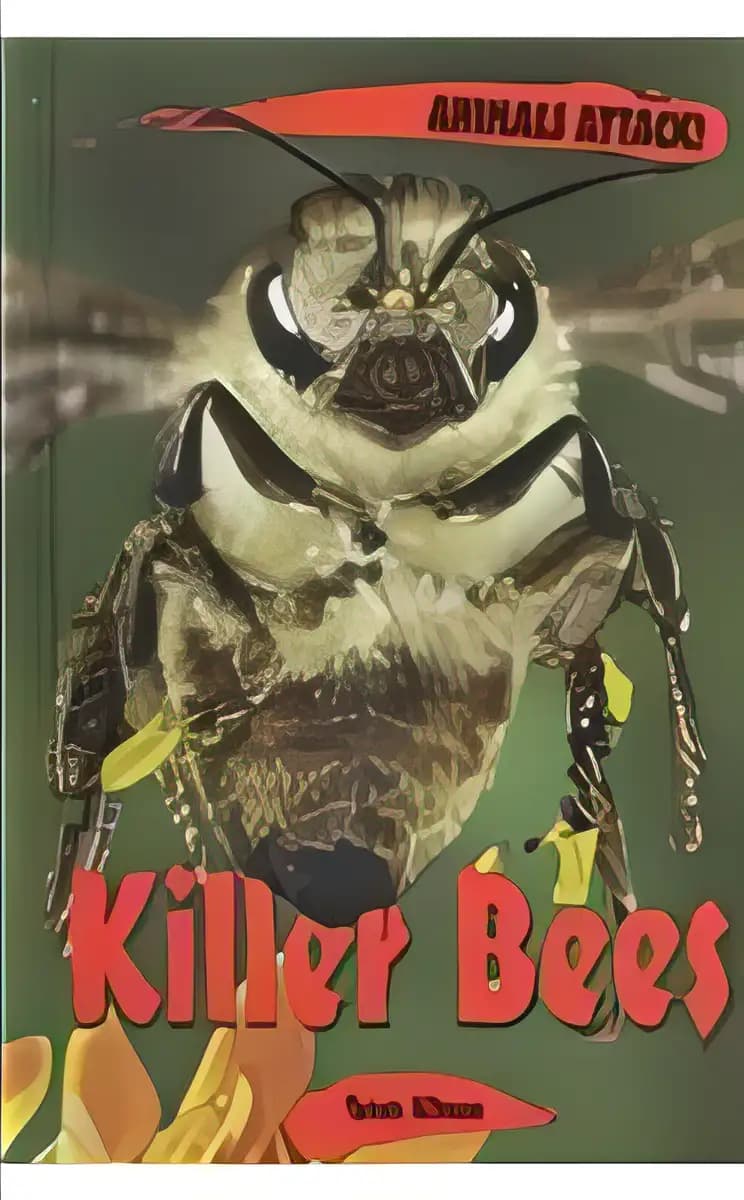
Killer Bees (Animals Attack)
#5 in Animals attack Series
What’s inside...
Explains the migration of killer bees and the frightening problems they cause. Age 9+. Details the characteristics, habitat, and life cycle of the Africanized honeybee, sometimes referred to as the killer bee.
Discussion points
Why do you think killer bees are considered dangerous?
What can we learn from the way killer bees work together?
How do you feel about the way humans interact with wildlife like bees?
What are some ways we can help protect bees and their habitats?
Tip: Role play these questions
Show genuine curiosity about your child's responses to encourage deeper thinking.
Connect the topic to real-world examples, such as discussing the role of bees in pollination and the food chain.
Encourage your child to think about the consequences of human actions on wildlife, fostering empathy and environmental stewardship.
Highlight the importance of teamwork and cooperation, as demonstrated by the bees, and relate it to everyday situations.
Key lessons
Example Lesson: Respect for nature
Explanation: The book educates about the behavior and the environmental role of killer bees, teaching children the importance of every species in nature.
Real-World Application: Children can learn to appreciate and protect natural habitats in their local communities.
Example Lesson: Understanding ecosystem balance
Explanation: Through the narrative about killer bees, the book illustrates how every creature has a role in maintaining the balance of ecosystems.
Real-World Application: Children can apply this knowledge by participating in activities such as recycling or local clean-up initiatives to support their environment.
Example Lesson: Importance of safety and preparedness
Explanation: The book discusses how to safely handle a situation if one encounters potentially dangerous animals like killer bees.
Real-World Application: This lesson teaches children to stay calm, make informed decisions, and seek help in emergency situations involving wildlife.
Example Lesson: Science appreciation
Explanation: By providing factual information about killer bees, the book fosters a love and curiosity for science and the natural world.
Real-World Application: Children are encouraged to engage in science-related educational activities or explore more about animals and nature through books and documentaries.
Example Lesson: Empathy for animals
Explanation: The story portrays killer bees not as villains, but as creatures acting on instinct, promoting an empathetic view towards them.
Real-World Application: This perspective helps children develop empathy for all living beings, teaching them to coexist peacefully with nature.