
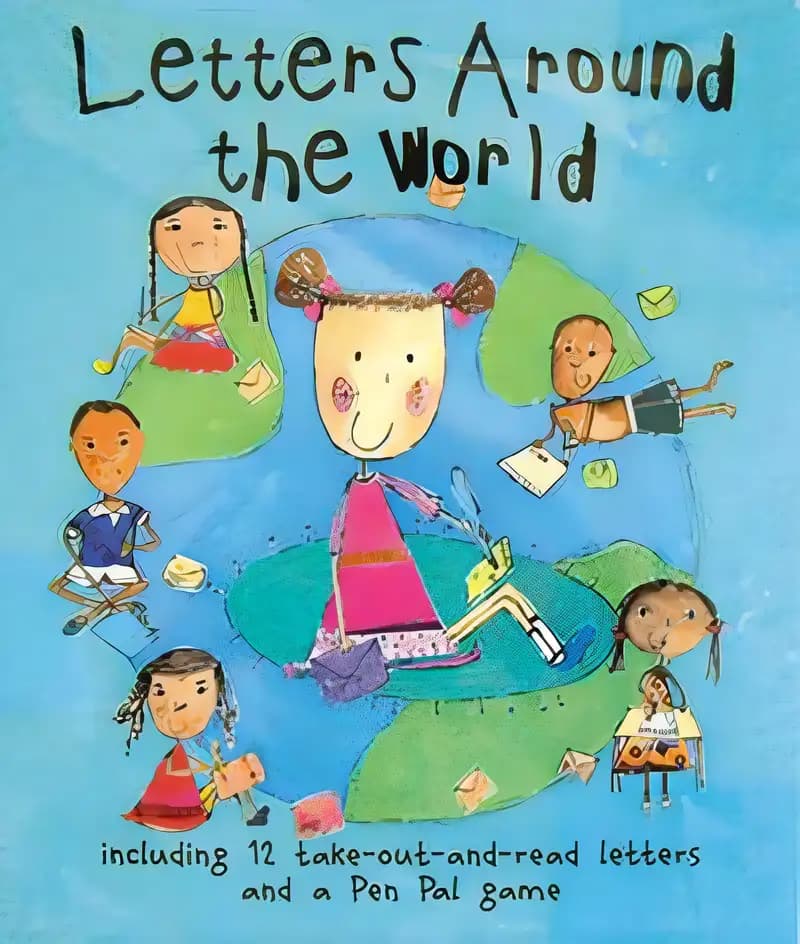
Letters Around the World
What’s inside...
In this captivating book, Emily from the United States and Katerina from Greece engage in correspondence with boys and girls from India, Tanzania, New Zealand, Trinidad and Tobago, and Indonesia. The readers get to open the envelopes and read letters discussing family life, favorite foods, interests, and local customs. This unique book will help young readers understand the habits of people from different parts of the world, recognize similarities and differences among cultures, and foster respect for diversity.
Age
8-12
Length
26 pages
Text complexity
Discussion points
What did you learn about the different places mentioned in the book?
How did the letters traveling around the world make you feel?
Can you imagine writing a letter to someone in another country? What would you say?
Which place mentioned in the book would you like to visit the most and why?
What did the characters learn during their adventures?
Tip: Role play these questions
As you read each page, pause to ask your child what they think about the illustrations and the places depicted.
Encourage your child to describe how they would feel if they received or sent letters to different parts of the world.
Use a world map to help your child visualize the journey of the letters and the various geographical locations mentioned.
After reading, consider writing a small letter or drawing with your child to send to a friend or family member, mimicking the characters in the book.
Discuss the different cultures and traditions mentioned in the book, highlighting the diversity and uniqueness of each place.
Key lessons
Example Lesson: Cultural Awareness
Explanation: Through the journey of the book's characters as they explore different countries, children learn about diverse cultures and traditions.
Real-World Application: Children can apply this by showing respect and curiosity about different cultural backgrounds among their peers and in their community.
Example Lesson: Geographical Knowledge
Explanation: The book provides information about various countries' locations, landmarks, and physical features, enhancing children’s geographical knowledge.
Real-World Application: This knowledge helps children understand global diversity and fosters a sense of global citizenship from a young age.
Example Lesson: Importance of Communication
Explanation: Characters in the book communicate with people from different parts of the world, highlighting the importance of sharing ideas and information.
Real-World Application: Children learn the significance of effective communication and can practice it in their interactions at school and home.
Example Lesson: Curiosity and Learning
Explanation: As characters explore new places and ask questions, they model how curiosity drives learning and discovery.
Real-World Application: This encourages children to ask questions and seek answers about their surroundings and beyond, promoting continuous learning.
Example Lesson: Empathy and Inclusion
Explanation: The interactions between different characters from around the globe foster empathy and the understanding of inclusion.
Real-World Application: Children are encouraged to be empathetic towards others' feelings and backgrounds, promoting a more inclusive attitude in their daily lives.