
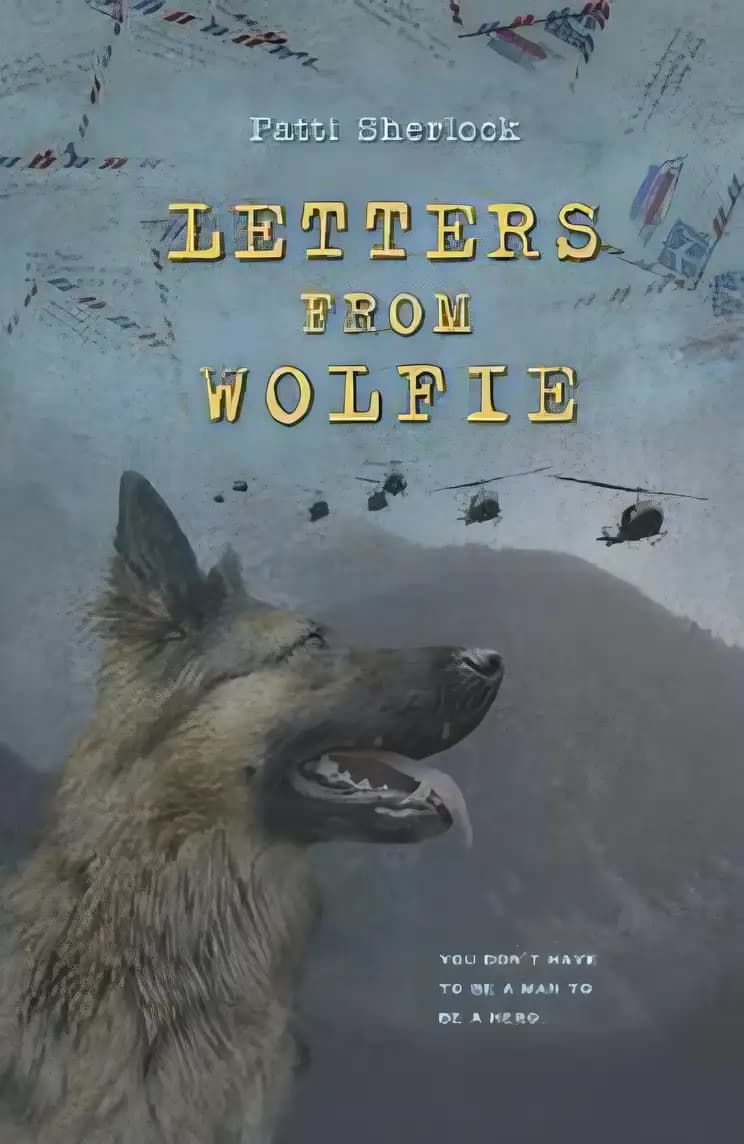
Letters From Wolfie
on Goodreads (545)
What’s inside...
Certain that he is doing the right thing by donating his dog, Wolfie, to the Army's scout program in Vietnam, thirteen-year-old Mark begins to have second thoughts when the Army refuses to say when and if Wolfie will ever return. Mark’s dog Wolfie is part malamute, part German shepherd, and all heart. Mark can hardly imagine life without his big, loving canine companion. But in 1969, the Vietnam War is still raging, and when Mark learns that the army needs scout dogs, he decides to send Wolfie. As his dad says, a smart dog like Wolfie could save a lot of soldiers—soldiers like Mark’s brother, Danny. Besides, it seems like the patriotic thing to do. Inspired by real events, this is a heartbreaking story about sacrifice, loyalty, and the complex meanings of patriotism.
Age
8-12
Length
256 pages
Text complexity
Character compass
Mark Cantrell
Danny Cantrell
Mrs. Cantrell
Mr. Cantrell
Wolfie
Discussion points
How do you think Mark felt when he decided to donate Wolfie to the army, and how did his feelings change throughout the book?
What do you think Wolfie represents in the story, and why is he important to Mark?
Why is it significant that the story is set during the Vietnam War? How does it affect the characters?
In what ways do Mark and his family show courage and loyalty?
How do the letters from Wolfie help Mark cope with his decision and feelings?
Tip: Role play these questions
Start by sharing your own thoughts on the themes of loyalty, sacrifice, and the impact of war; this can create a comfortable space for your child to express their feelings. Ask your child how they might have reacted in similar situations to those presented in the book to deepen their connection to the characters. Encourage them to consider different perspectives by discussing the views of Mark’s family and friends on his decision. Link the narrative to current events or historical contexts to make the story more relatable and relevant. Lastly, praise your child for thoughtful responses to nurture a positive reading and learning environment.
Key lessons
Example Lesson: The importance of responsibility
Explanation: In 'Letters from Wolfie', the protagonist, Mark, learns about responsibility through his decision to donate his beloved dog, Wolfie, to the Vietnam War as a scout dog. The story explores the repercussions and emotional turmoil that follow his decision.
Real-World Application: Children can understand the weight and consequences of making choices that affect not only themselves but also others around them. It teaches the importance of thoughtful decision-making.
Example Lesson: Empathy and compassion
Explanation: Throughout the book, Mark goes through a journey of understanding and empathy as he corresponds with soldiers, learning about the challenges and sacrifices of those in the war. His evolving emotions towards the soldiers and his dog demonstrate a deepening sense of empathy.
Real-World Application: This encourages children to consider and empathize with people in different situations, fostering a nurturing attitude towards diverse experiences and emotions.
Example Lesson: The impact of war
Explanation: The book delves into the emotional and social impacts of war on individuals and families. Through the letters, the readers see the harsh realities of conflict and how it transforms lives.
Real-World Application: It provides a platform for parents and educators to discuss historical events and their impacts with children, promoting an understanding of history and its relevance to present times.
Example Lesson: Coping with loss
Explanation: Mark experiences deep loss and learns to cope with his emotions after sending Wolfie to the war. The narrative provides a close look at his process of emotional healing.
Real-World Application: This can help children understand that loss is a part of life and that it’s okay to feel sadness and grief. It also encourages them to find healthy ways to express and cope with their emotions.
Example Lesson: The power of communication
Explanation: The correspondence between Mark and the soldiers demonstrates how communication can bridge emotional and physical distances, helping individuals share experiences and support each other.
Real-World Application: Children can learn the importance of staying connected with others, especially during difficult times, and how writing letters or messages can be a powerful way to express feelings and thoughts.