
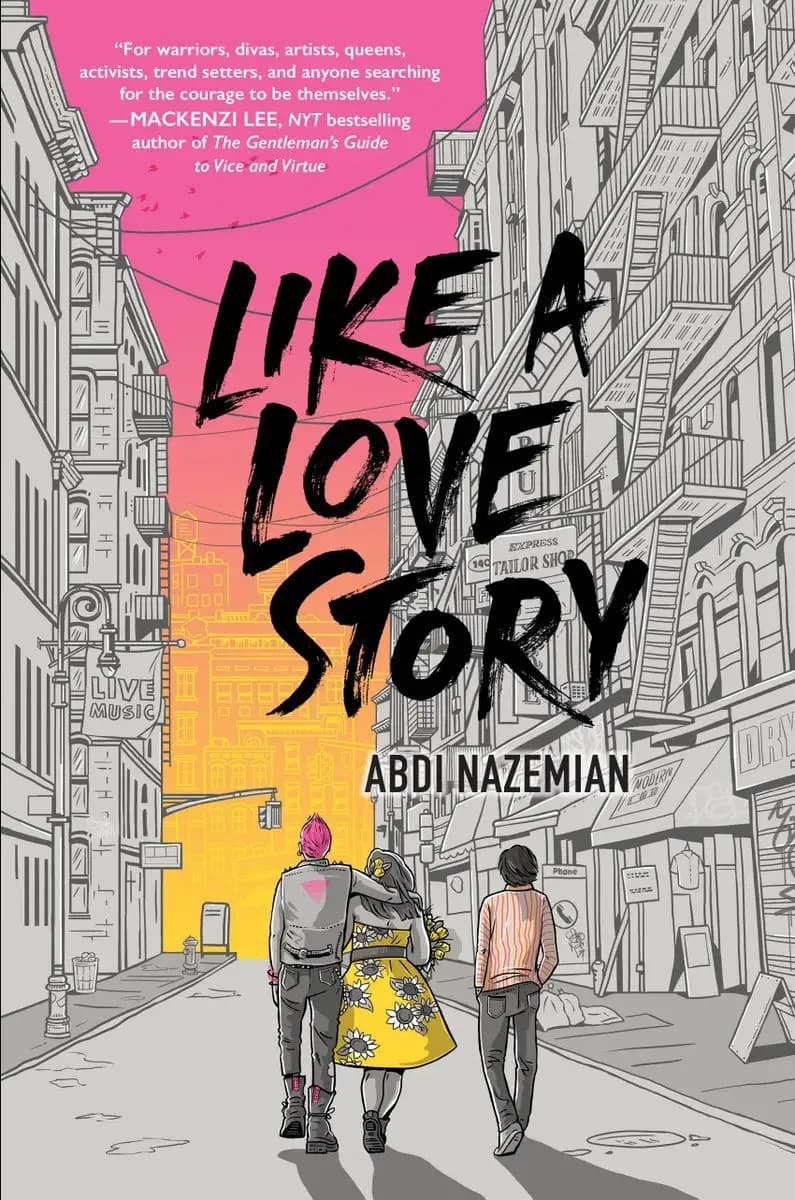
Like a Love Story
on Goodreads (15,207)
What’s inside...
It's 1989 in New York City, and for three teens, the world is changing. Reza is an Iranian boy who has just moved to the city with his mother to live with his stepfather and stepbrother. He's terrified that someone will guess the truth he can barely acknowledge about himself. Reza knows he's gay, but all he knows of gay life are the media's images of men dying of AIDS. Judy is an aspiring fashion designer who worships her uncle Stephen, a gay man with AIDS who devotes his time to activism as a member of ACT UP. Judy has never imagined finding romance...until she falls for Reza and they start dating. Art is Judy's best friend, their school's only out and proud teen. He'll never be who his conservative parents want him to be, so he rebels by documenting the AIDS crisis through his photographs. As Reza and Art grow closer, Reza struggles to find a way out of his deception that won't break Judy's heart--and destroy the most meaningful friendship he's ever known.
Age
13-17
Length
432 pages
Text complexity
Character compass
Reza
Art
Judy
Stephen
Discussion points
How do the characters in 'Like a Love Story' show courage and resilience in the face of challenges?
What can we learn from the friendships portrayed in the book?
How does this story help us understand the importance of acceptance and love for everyone, no matter who they are?
In what ways do the characters in the book inspire you to stand up for what you believe in?
What did you feel was the most impactful moment in the book, and why?
Tip: Role play these questions
Encourage your child to express their thoughts and feelings about the story’s themes. Listen attentively and validate their feelings. Highlight the historical context of the book, discussing the significance of the era and its parallels to today’s societal issues. Share personal experiences or stories that relate to the struggles and triumphs of the characters. This not only enhances understanding but also deepens the bond over shared values of love, acceptance, and justice.
Key lessons
Example Lesson: Empathy and understanding
Explanation: The story revolves around a gay teenager and his friends in 1980s New York, grappling with the AIDS crisis and their identities. Through their challenges, readers learn about the importance of empathy.
Real-World Application: Children can apply this lesson by trying to understand and respect people who are different from them, contributing to a more inclusive environment at school and in social settings.
Example Lesson: The power of friendship
Explanation: The characters in the book support each other through personal and societal challenges, showcasing the strength of friendship.
Real-World Application: This lesson can encourage children to value and nurture their friendships, understanding that true friends stand by each other during tough times.
Example Lesson: Courage to be oneself
Explanation: The protagonist, learning to accept his own sexuality, demonstrates bravery in embracing his true identity despite societal pressures.
Real-World Application: Children can learn to be true to themselves and stand up for what they believe in, even when it may be against the norm or challenging.
Example Lesson: Activism and advocacy
Explanation: The characters are involved in activism, particularly related to the rights and acknowledgement of the LGBTQ+ community during the AIDS crisis.
Real-World Application: This can inspire children to stand up for others' rights and get involved in causes they are passionate about, teaching them the value of civic engagement.