
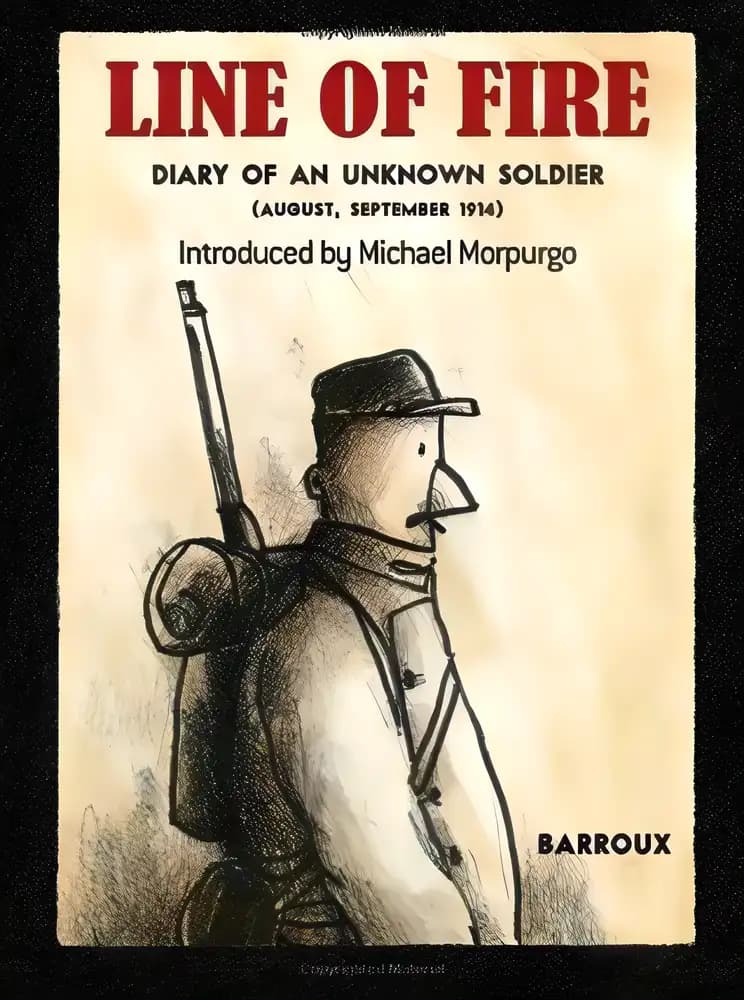
Line Of Fire: Diary Of An Unknown Soldier
What’s inside...
A powerful and moving graphic novel that tells the story of a soldier's experiences in World War I, told through his diary entries and letters home. The book offers a unique and personal perspective on the war, highlighting the struggles and sacrifices of those who fought in it. The illustrations are stark and evocative, conveying the horrors of war in a way that is both accessible and impactful. The book is a powerful anti-war statement, and a testament to the human cost of conflict. A graphic adaptation of a 100-year-old diary brings World War I history to life. One winter morning, Barroux was walking down a street in Paris when he made an extraordinary find: the real diary of a soldier in World War I. Barroux rescued the diary from the trash and illustrated the soldier's words. In this striking black and white graphic novel adaptation of a 100-year-old diary, the events of the first two months of World War I are given fresh meaning and relevance to modern audiences. This is living history that has the power to engage new generations through one man's story that is silhouetted against the historical events that formed and transformed the world we live in today.
Age
10-13
Length
96 pages
Text complexity
Character compass
Name
Discussion points
What emotions did you feel while reading about the soldier’s experiences?
How do you think the soldier's daily life differed from yours?
What kind of challenges do you think the soldier faced and how did he handle them?
Why is it important to remember and talk about the stories of soldiers from the past?
If you were in the soldier's shoes, what would you have done differently in his situation?
Tip: Role play these questions
Start by setting a calm environment where your child feels comfortable to express their thoughts and feelings about the book.
Use the illustrations in the book to help guide the conversation, asking your child what they can infer from the pictures about the soldier's story.
Encourage your child to think about the moral dilemmas and choices faced by the soldier, relating them to conflicts or decisions they might encounter in their own life.
Acknowledge the seriousness of the book’s theme, and reassure your child about their own safety and peace.
Follow up by exploring more about the historical context of the book to give your child a deeper understanding of the period in which the soldier lived.
Key lessons
Example Lesson: Empathy and understanding towards others' experiences
Explanation: The book, through its intimate diary format, allows young readers to step into the shoes of a soldier during wartime, fostering a deeper understanding of the struggles faced by others.
Real-World Application: Children can apply this understanding by showing more compassion and empathy towards classmates who may be going through challenging times.
Example Lesson: The importance of history and personal narratives
Explanation: This book highlights the significance of personal accounts in understanding historical events, demonstrating how individual stories contribute to the larger historical narrative.
Real-World Application: Children can be encouraged to explore and value their family histories and the stories of those around them, recognizing the importance of each person's experiences in shaping history.
Example Lesson: The impact of war on individuals and communities
Explanation: Through the soldier’s diary entries, readers see the effects of war on an individual’s life and the broader community, underlining the far-reaching consequences of conflict.
Real-World Application: This lesson can help children understand the significance of peace and the importance of resolving conflicts in non-violent ways within their own communities.
Example Lesson: Resilience in the face of adversity
Explanation: The soldier's experiences in the diary showcase his resilience despite the hardships of war, providing a powerful example of enduring tough times with courage.
Real-World Application: Children can be inspired to develop their own resilience in challenging situations, whether in academic struggles, sports, or personal relationships.
Example Lesson: Reflecting on moral choices
Explanation: The book provides a platform for readers to reflect on the moral decisions faced by individuals during wartime, encouraging them to think critically about right and wrong.
Real-World Application: This can translate to children making conscious, ethical choices in their daily interactions and standing up for what they believe is just and fair.