
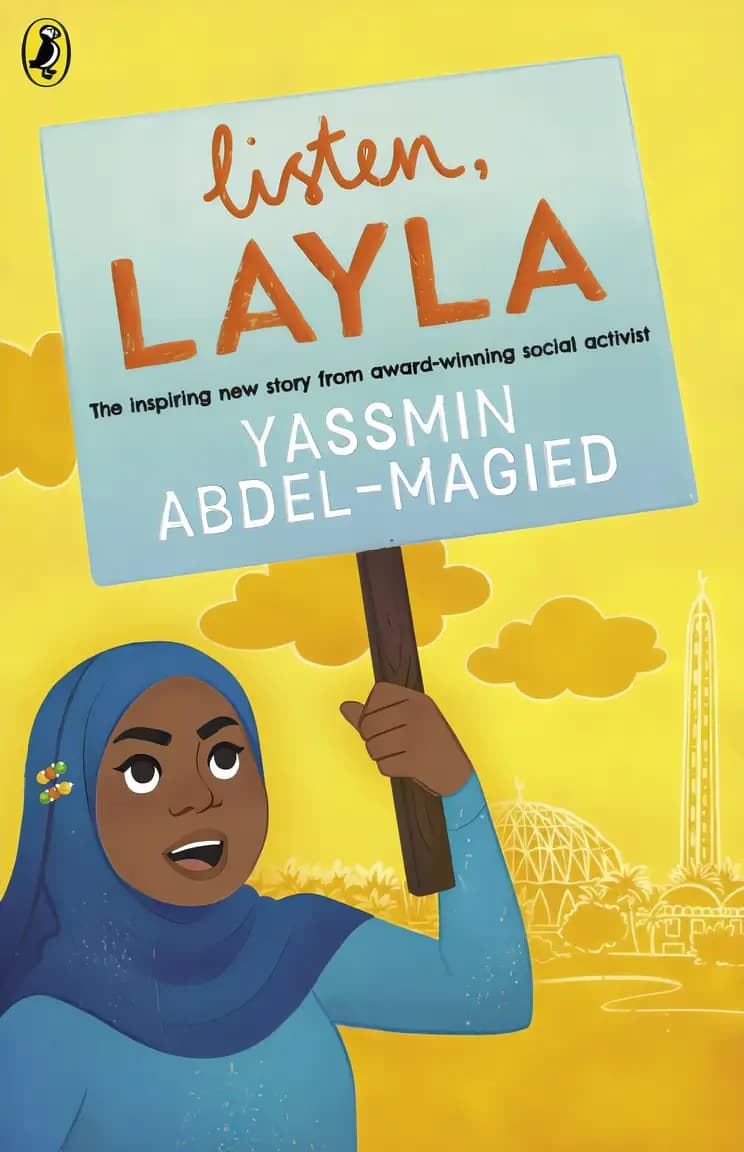
Listen, Layla
#2 in Layla Series
What’s inside...
Listen, Layla by Yassmin Abdel-Magied is an own voices novel that explores the diaspora experience, race, politics, and identity through the eyes of young Layla. After ending the school year on a high, Layla's plans for the holidays are disrupted when her grandmother in Sudan falls ill and her family rushes to be by her side. Returning to Sudan for the first time since she was a child, Layla feels a split between her Sudanese and Australian identities. As political tensions rise in Sudan, Layla faces conflicts with her family and struggles to maintain her place in an invention team, all while grappling with the question of what a Kandaka would do.
Character compass
Layla
Discussion points
How do you think Layla felt when she was trying to fit in with her friends and family in Sudan? Can you relate to her feelings?
What are some differences and similarities between your culture and Layla’s Sudanese culture?
Layla faces many challenges throughout the story. Which challenge do you think was the hardest for her, and why?
What did you learn from Layla’s experiences about handling misunderstandings or conflicts with loved ones?
If you could give Layla one piece of advice, what would it be and why?
Tip: Role play these questions
Encourage your child to express their feelings and thoughts about Layla’s experiences, highlighting that it’s okay to feel multiple emotions about a situation.
Discuss the cultural aspects in the book, perhaps bringing in similar traditions from your family’s culture to create a connection.
Ask your child about times they have faced challenges and how they dealt with them, drawing parallels to Layla’s resilience.
Focus on conflict resolution themes from the book, prompting your child to think about how they might handle similar situations.
Reinforce the importance of empathy and understanding towards others’ feelings and backgrounds, using Layla’s story as a reference point.
Key lessons
Example Lesson: Understanding Cultural Diversity
Explanation: In 'Listen, Layla,' Layla explores her Sudanese heritage and navigates the challenges of cultural identity. The story portrays how she learns to appreciate and respect her roots and the diversity around her.
Real-World Application: Children can learn to appreciate diverse cultures and backgrounds, fostering inclusivity and respect among peers in their communities and schools.
Example Lesson: Importance of Family Bonds
Explanation: The narrative emphasizes Layla's relationship with her family, especially her grandparents, showing how family support can guide personal growth and self-discovery.
Real-World Application: Young readers can be encouraged to strengthen their relationships with family members, understanding and valuing the support system they provide.
Example Lesson: Resilience in Facing Challenges
Explanation: Layla's story exemplifies resilience as she encounters and overcomes personal and cultural obstacles during her journey. Her perseverance is highlighted throughout the book.
Real-World Application: Children can learn to embrace challenges in their lives as opportunities for growth and to persistently work towards their goals despite setbacks.
Example Lesson: Empathy and Understanding
Explanation: As Layla interacts with different characters, both from her native and new environments, she learns to see things from multiple perspectives, fostering empathy.
Real-World Application: This lesson can help children develop empathy by considering different viewpoints and understanding the feelings and experiences of others.
Example Lesson: Self-Identity and Confidence
Explanation: Throughout the book, Layla's journey towards self-discovery and balancing her dual cultural identity helps build her confidence in who she is.
Real-World Application: Children can be inspired to explore their own identities, leading to increased self-confidence and a strong sense of self.