
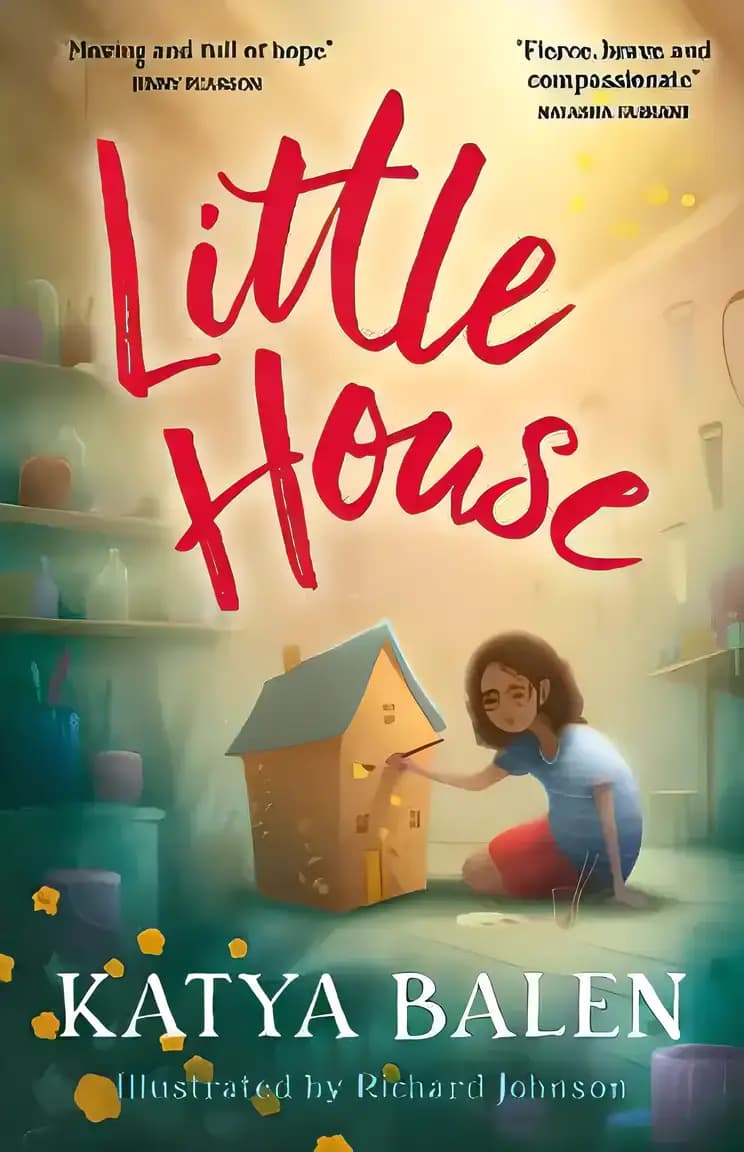
Little House of Wonders
What’s inside...
The importance and meaning of home is explored in this thought-provoking new novella from Carnegie Medal winning author Katya Balen. Juno's furious about being sent to stay with her grandfather for the summer. She'll miss all the fun she and her friends had planned for...
Age
9-12
Length
88 pages
Text complexity
Discussion points
What part of the little house would you most like to visit and why?
How did the different characters in the story make you feel?
Can you think of a time when you discovered something wonderful like the characters in the book?
What do you think is the most important lesson the characters learned in their adventures?
If you could add another room to the Little House of Wonders, what would it be like?
Tip: Role play these questions
Before reading, briefly discuss the concept of wonder and discovery to set the stage for the themes of the book.
Encourage your child to describe their emotions as various scenarios unfold in the story, fostering empathy and understanding.
After finishing the book, ask your child to draw their favorite part of the little house or an entirely new room, utilizing their imagination.
Share your own stories of wonder from childhood to deepen the connection with your child and reinforce the theme of the book.
End discussions with reflective questions about what your child learned from the story, promoting critical thinking.
Key lessons
Example Lesson: Empathy and Understanding
Explanation: In 'Little House of Wonders', the characters often face challenges and different emotions. Through their interactions, children learn the importance of understanding and empathizing with others' feelings.
Real-World Application: Children can use these lessons to better understand their peers and family members, leading to more harmonious relationships and effective communication.
Example Lesson: Importance of Curiosity and Exploration
Explanation: The book narrates various exploratory adventures of the characters, emphasizing learning and discovery. This promotes a love for exploration and curiosity amongst readers.
Real-World Application: Curiosity can lead children to explore new subjects in school or try new activities, enhancing their educational experience and personal growth.
Example Lesson: Resilience in Adversity
Explanation: Characters in the book often encounter setbacks but learn to overcome them through resilience. This teaches children that facing difficulties is a part of life and how resilience can aid in overcoming these challenges.
Real-World Application: This lesson is crucial as it prepares children to face and adapt to challenges in their real lives, be it at school or at home.
Example Lesson: Value of Family and Community
Explanation: The book highlights the interactions within a community and the support systems inherent in family structures, showcasing their importance.
Real-World Application: Children learn to value their own families and communities more, understanding the strength that can be found in unity and support.
Example Lesson: Joy in Simple Pleasures
Explanation: ‘Little House of Wonders’ is filled with moments that celebrate simple joys, whether it's playing in the rain or reading a book together. This teaches children to find happiness in everyday moments.
Real-World Application: This can encourage children to appreciate the small, everyday events, fostering a positive and grateful attitude towards life.