
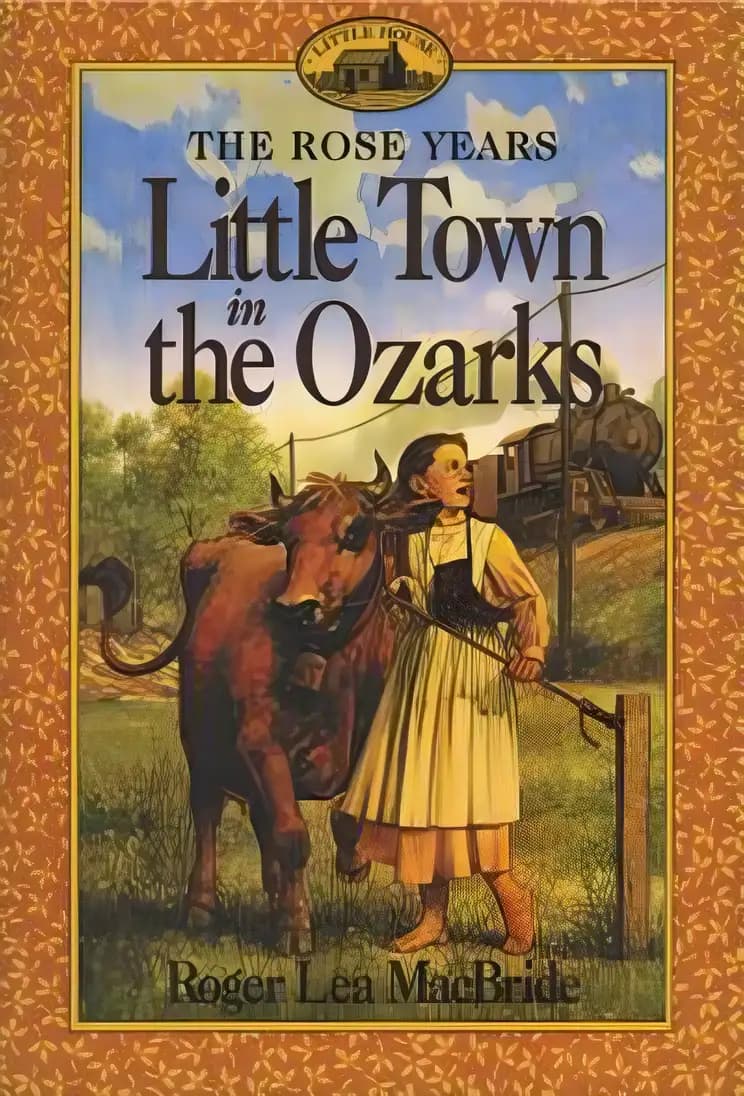
Little Town in the Ozarks (Little House Sequel)
#5 of 8 in Little House: The Rose Years Series
What’s inside...
When drought and fire afflict Rocky Ridge Farm, eleven-year-old Rose Wilder and her parents temporarily move to Mansfield and try to adjust to a new life in town.
Character compass
Rose Wilder
Almanzo Wilder
Laura Ingalls Wilder
Rose Wilder Lane
Discussion points
How do you think Laura felt when she had to adapt to life in the little town? Can you relate to her experiences?
What lessons did Laura learn from the challenges she faced in the Ozarks? How do you handle challenges in your life?
Laura's relationships with her family and friends are important in the story. What do those relationships teach her about kindness and support?
How does the setting in the Ozarks influence the story? What role does the environment play in your own life?
Why is it important for Laura to keep a hopeful attitude? How does hope help us in difficult situations?
Tip: Role play these questions
Use empathy and personal experience to relate to the story. Share a similar challenge you faced when you were young and discuss how you overcame it.
Encourage your child to imagine living in Laura’s time. Ask them to describe a typical day in the Ozarks, using details from the book to fuel their imagination.
Highlight the historical aspect of the story. Discuss how life has changed since Laura’s time and what things might still be the same.
Focus on the emotional journey of the characters. Ask your child how they would feel in Laura's situations and why.
Praise your child’s insights and encourage them to think critically about the story’s themes of resilience, friendship, and hope.
Key lessons
Example Lesson: Perseverance through adversity
Explanation: The story showcases how the main character, Rose, and her family navigate financial and emotional hardships with resilience.
Real-World Application: Children can learn to stay determined and keep a positive attitude during difficult times, whether it's dealing with school challenges or setbacks in activities.
Example Lesson: The importance of community support
Explanation: Rose’s family often relies on help from their neighbors and likewise provides support to others, illustrating the mutual benefits of community involvement.
Real-World Application: This can encourage children to participate in community activities, help out their neighbors, and understand the value of building strong community bonds.
Example Lesson: Creativity as a problem-solving tool
Explanation: The characters frequently use their creativity to overcome obstacles, such as inventing ways to earn money or make their daily tasks easier.
Real-World Application: Children can apply creativity in their approach to solving problems at school or in social settings, learning that sometimes unconventional methods can yield great results.
Example Lesson: Value of hard work
Explanation: Throughout the book, Rose and her family undertake numerous tasks that require hard work and dedication, teaching the rewards that come from diligent effort.
Real-World Application: This lesson could inspire children to apply themselves diligently in their studies, chores, or in learning new skills, understanding that their efforts will lead to personal growth and achievements.
Example Lesson: Adapting to change
Explanation: The family faces many changes and challenges in their new life in the Ozarks, adapting to each situation with courage.
Real-World Application: Children can learn the importance of being flexible and adapting to new environments or changes in their lives, such as moving to a new school or welcoming a new family member.