
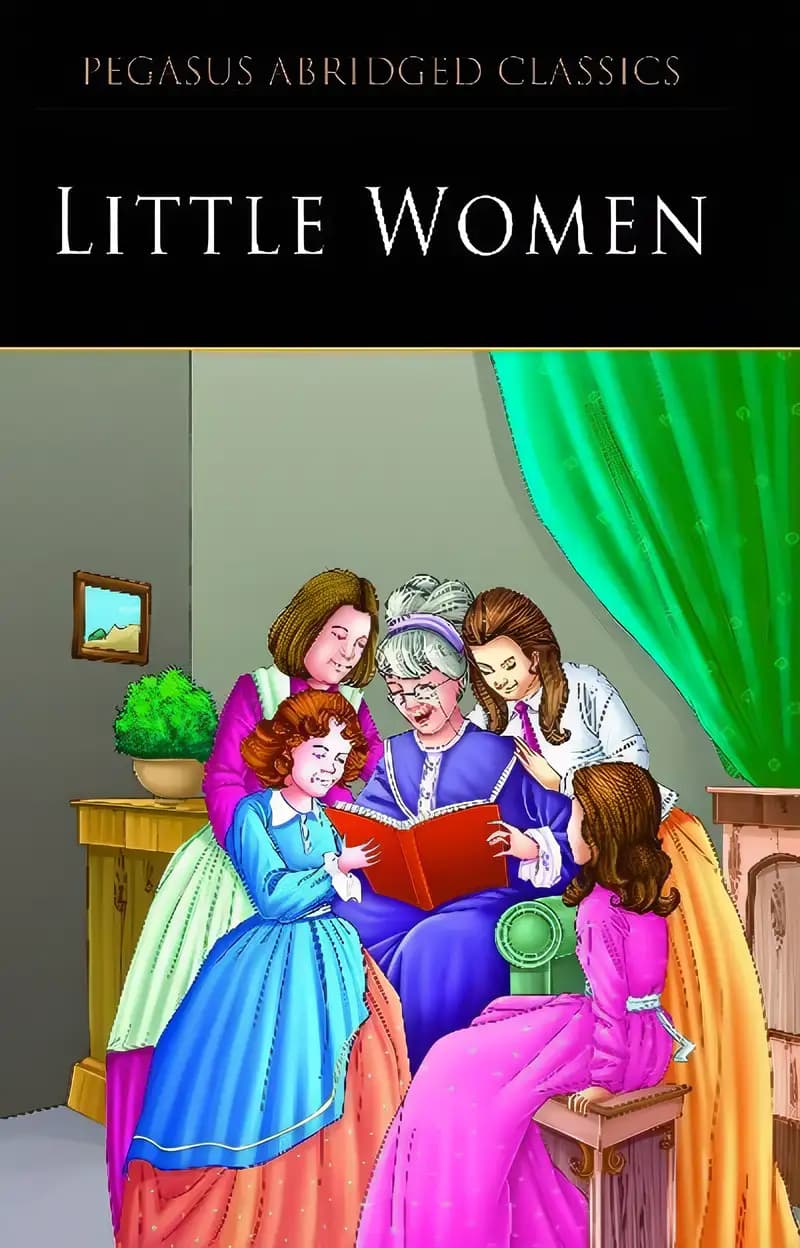
Little Women
Little Women Series
on Goodreads (1)
What’s inside...
Pegasus Abridged Classics provides simplified versions of popular stories and books by renowned literary masters. These books encompass a range of genres, from heart-warming tales of hope to thrilling sci-fi adventures, representing the most loved literature from around the globe.
Series reading
Non-Sequential
Age
13-18
Length
144 pages
Text complexity
Character compass
Josephine "Jo" March
John Brooke
Theodore 'Laurie' Laurence
Elizabeth 'Beth' March
Margaret 'Meg' March
Amy Curtis March
Mr. Laurence
Margaret 'Marmee' March
Aunt March
Discussion points
How do the March sisters each show their unique personalities and strengths? Which sister do you relate to the most and why?
What challenges do the sisters face and how do they overcome them? How would you handle similar situations?
The theme of family unity is strong in 'Little Women.' Why do you think their bond is so important? How does your family support each other?
What lessons do the characters learn about happiness and success? Do you agree with their conclusions?
How do the characters grow and change from the beginning to the end of the story? Which character’s growth do you find most inspiring?
Tip: Role play these questions
Start by sharing which character you felt most connected to when you read 'Little Women' and why. Encourage your child to think about which character they feel similar to and discuss the reasons.
Discuss the historical context of 'Little Women' to help your child understand the different expectations and challenges faced by the sisters compared to today's standards.
Connect the trials faced by the characters to real-life situations your child might encounter. Ask how they would use the lessons from the book to handle such situations.
Highlight the importance of resilience as shown in the book. Discuss with your child times when they have had to be resilient and how they felt about it.
After finishing the book, ask your child to draw or write about their favorite scene and explain what makes it special to them. This encourages deeper engagement with the text and allows for creative expression.
Key lessons
Example Lesson: The importance of family and unity
Explanation: In 'Little Women', the March sisters demonstrate a profound bond and support for each other through their various struggles and joys, showing how family can be a source of strength and comfort.
Real-World Application: Children can learn to value and nurture relationships with their siblings and family members, understanding that unity can help overcome challenges.
Example Lesson: Resilience through adversity
Explanation: Each sister faces their own set of challenges but they learn to overcome them with resilience and perseverance. Jo, for instance, pursues her passion for writing despite obstacles.
Real-World Application: This teaches children the value of persistence and hard work in achieving goals and handling difficult situations.
Example Lesson: The virtue of kindness and generosity
Explanation: The March family, despite being not wealthy, often gives to those more in need. They show compassion and generosity throughout the story.
Real-World Application: Children learn the importance of helping others and being considerate, fostering a sense of community and empathy.
Example Lesson: Personal growth and self-acceptance
Explanation: Throughout the book, characters like Amy and Meg evolve through personal trials, learning to accept themselves and grow from their experiences.
Real-World Application: This encourages children to embrace their own journey of personal growth and learning, appreciating themselves while striving to improve.
Example Lesson: Economic independence
Explanation: Jo exemplifies the pursuit of economic independence through her writing, showing that hard work can lead to personal and financial autonomy.
Real-World Application: This can inspire children to develop skills and pursue passions that enable them to be self-reliant and confident in their abilities.