
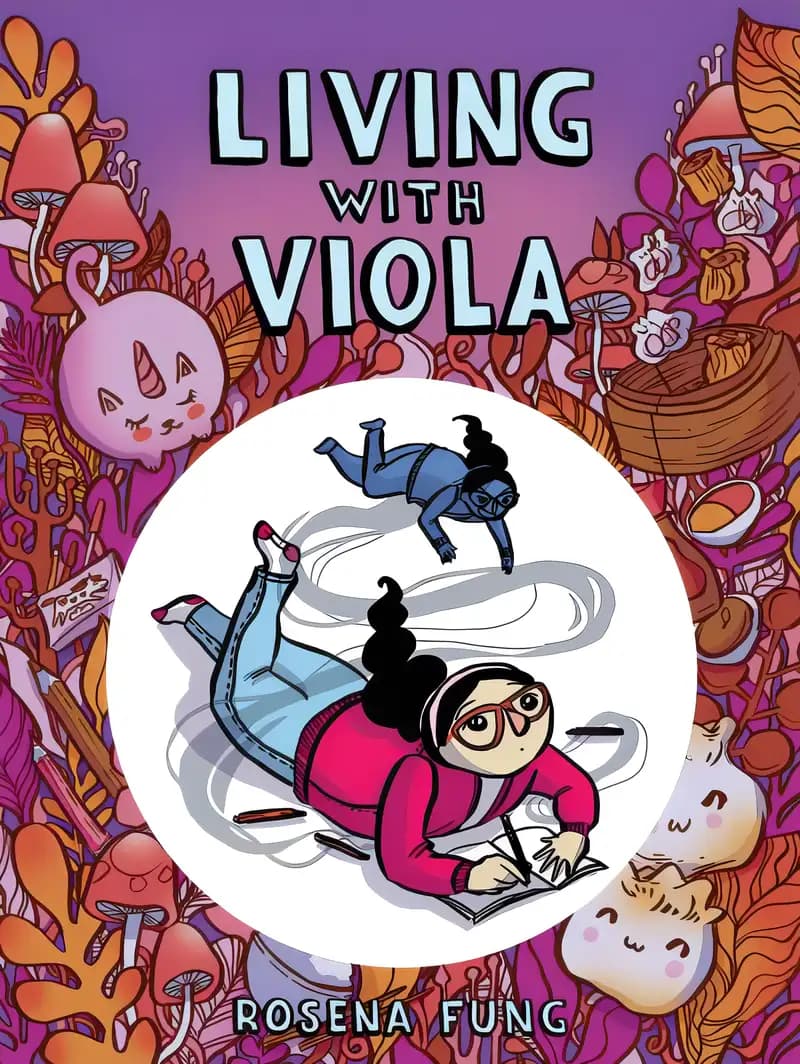
Living With Viola
on Goodreads (1,939)
What’s inside...
This debut book by Rosena, an author with personal experience in mental health, explores the intersection of Asian identity and mental health in a unique and joyful way for middle-grade readers. With a background in strip comics, Rosena infuses the book with humor and clever sight gags. The book delves into themes such as anxiety, first-generation Asian experiences, and the importance of friendships and empathy. It is described as a blend of 'Guts' and 'Ghosts' with an Asian protagonist, making it an unforgettable read that will resonate deeply with readers. Heartbreakingly honest and quietly funny, this graphic novel from a debut creator is a refreshingly real exploration of mental health, cultural differences, and the trials of middle school. Livy is already having trouble fitting in as the new girl at school--and then there's Viola. Viola is Livy's anxiety brought to life, a shadowy twin that only Livy can see or hear. Livy tries to push back against Viola's relentless judgment, but nothing seems to work until she strikes up new friendships at school. Livy hopes that Viola's days are numbered. But when tensions arise both at home and at school, Viola rears her head stronger than ever. Only when Livy learns how to ask for help and face her anxiety does she finally figure out living with Viola. Rosena Fung draws on her own early experiences with anxiety and the pressures of growing up as the child of Chinese immigrant parents to craft a charming, deeply personal story that combines the poignancy of Raina Telgemeier's Guts with the wacky humor of Lumberjanes. Exuberant, colorful art brings Livy's rich imaginative world--filled with everything from sentient dumplings to flying unicorns--to life on the page.
Age
9-12
Length
272 pages
Text complexity
Character compass
Olivia
Livy'S Mother
Livy'S Father
Viola
Discussion points
How do you think the main character felt when facing challenges? Can you relate to their feelings?
What are some ways the main character dealt with their emotions? Do you think these methods were effective?
Why is it important to talk about our feelings, like the character did in the story?
What does the story teach us about friendship and support?
If you were a friend to the main character, how would you help them?
Tip: Role play these questions
Use empathetic listening when your child expresses their thoughts about the story. Validate their feelings and relate them to the character’s experiences.
Encourage your child to draw parallels between the book and their own life, which can help deepen their understanding of the emotional themes.
Discuss the different emotions depicted in the book, asking your child to identify moments when they have felt similar ways.
Highlight the actions of supporting characters to stress the importance of empathy and helping others.
Key lessons
Example Lesson: Embracing Individuality
Explanation: The book portrays the protagonist's journey of self-acceptance and embracing her unique qualities, despite the challenges presented by her imaginary friend, Viola.
Real-World Application: Children can apply this lesson by valuing their own qualities and respecting differences in others, which enhances peer relationships and self-esteem.
Example Lesson: Coping with Anxiety
Explanation: Through the interactions between the protagonist and Viola, the story explores ways of managing anxiety and fear, showcasing the importance of resilience.
Real-World Application: This lesson helps children understand how to identify and manage their emotions, providing them with strategies to face their fears in various situations.
Example Lesson: The Power of Communication
Explanation: The protagonist learns to communicate her feelings and fears, which is a pivotal part of overcoming the obstacles created by Viola.
Real-World Application: Children can learn to express themselves more effectively and seek support when needed, which is crucial for emotional development and building strong relationships.
Example Lesson: Importance of Support Systems
Explanation: The story highlights the role of supportive friends and family in the protagonist's journey to self-acceptance.
Real-World Application: This teaches children the value of building and maintaining support networks, which can help them through their own personal challenges.