
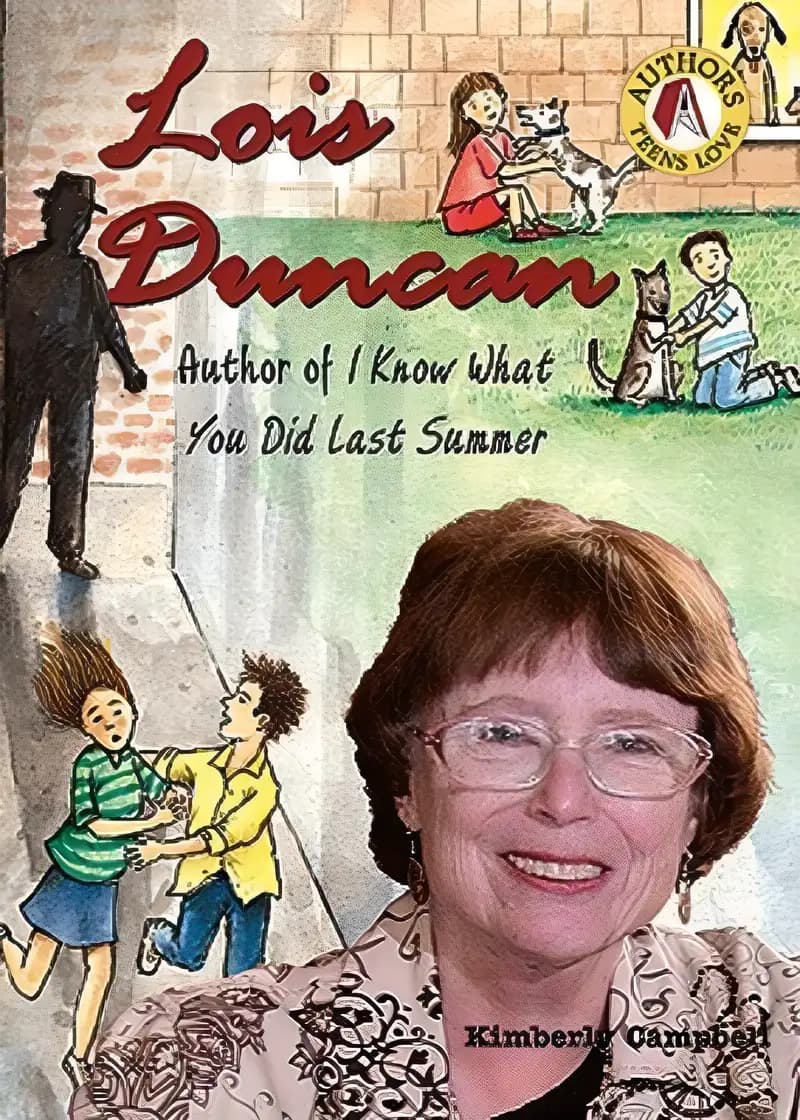
Lois Duncan: Author of I Know What You Did Last Summer (Authors Teens Love)
Authors teens love Series
on Goodreads (7)
What’s inside...
A biography of American author Lois Duncan
Series reading
Non-Sequential
Age
11-17
Length
104 pages
Text complexity
Discussion points
How do the characters' decisions impact their lives and the lives of others around them?
What would you have done differently if you were in the main character’s shoes?
How does the author build suspense and keep you engaged throughout the story?
What are the consequences of keeping secrets, according to the story?
How do the relationships between characters change from the beginning to the end of the book?
Tip: Role play these questions
Encourage your child to put themselves in the shoes of different characters. This will help them understand diverse perspectives and moral dilemmas.
Discuss the theme of accountability and ask your child how they feel about the actions of each character.
Share your own thoughts on the book’s suspenseful moments to spark a deeper conversation on narrative techniques and tension.
Use examples from the book to talk about the importance of honesty and openness in real life.
Prompt your child to discuss the ending of the book and whether they found it satisfying or surprising, helping them express their own analysis and opinions.
Key lessons
Example Lesson: The importance of accountability
Explanation: In 'I Know What You Did Last Summer', the characters face dire consequences for their actions, demonstrating that avoiding responsibility can lead to severe repercussions.
Real-World Application: Children can learn to take responsibility for their actions and understand that their choices have consequences, fostering a sense of accountability in their daily interactions.
Example Lesson: The impact of secrets
Explanation: The novel explores how keeping secrets can strain relationships and cause psychological stress.
Real-World Application: This lesson teaches children the value of honesty and open communication with peers and family members, helping them build stronger, more trusting relationships.
Example Lesson: Empathy and understanding
Explanation: Characters in the story must grapple with the outcomes of their choices, which affect not just themselves but others around them, highlighting the importance of considering others' feelings.
Real-World Application: Children can apply this by being more considerate and empathetic towards the feelings and situations of others, promoting a more inclusive and supportive environment at home and school.
Example Lesson: The strength of facing fears
Explanation: As the characters confront the truth and their fears, they find that facing problems directly, despite being difficult, is crucial for resolution and personal growth.
Real-World Application: This teaches children the importance of facing challenges head-on rather than avoiding them, which can be applied in overcoming personal fears or tackling difficult tasks in school.
Example Lesson: Learning from mistakes
Explanation: The story showcases that mistakes are a critical part of life and the learning process. Characters learn and grow from their missteps throughout the book.
Real-World Application: Children can be encouraged to see errors as opportunities for growth and learning, helping them to embrace challenges and persist through difficulties.