
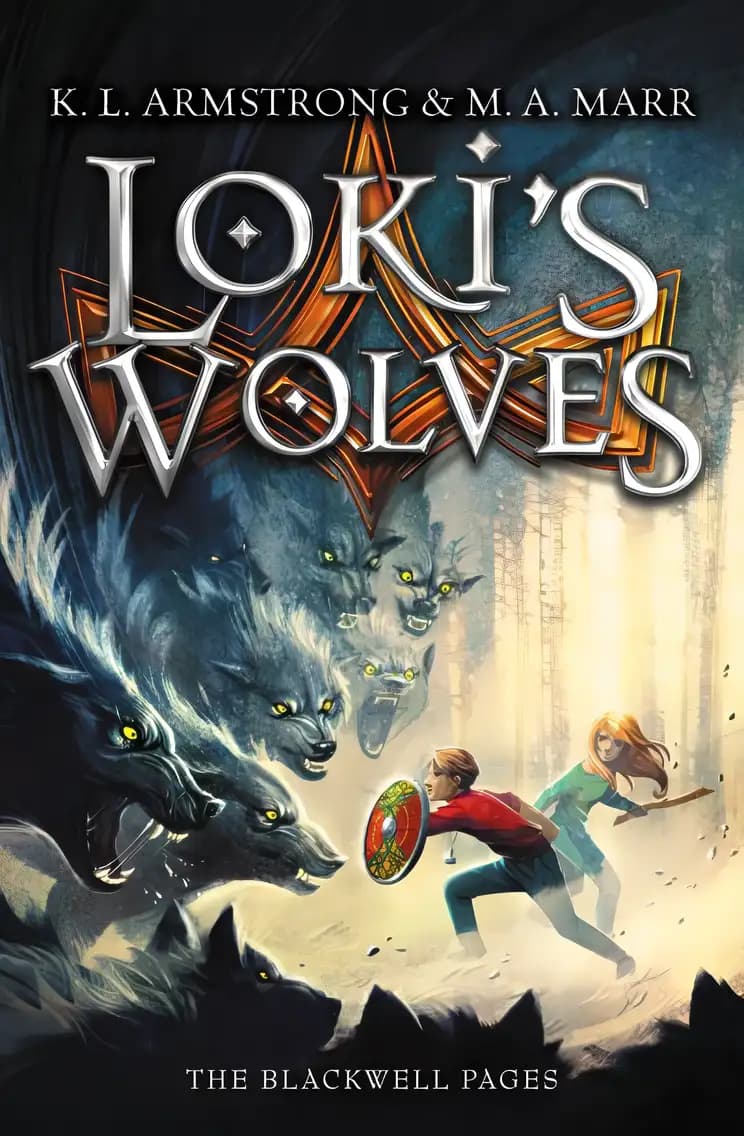
Loki's Wolves (Blackwell Pages)
#1 of 3 in The Blackwell Pages Series
What’s inside...
Calling all fans of myths, action-adventure, and the Percy Jackson series - don't miss this first book in the Blackwell Pages trilogy from bestselling authors K.L. Armstrong and Melissa Marr. While thirteen-year-old Matt Thorsen has always known he's a modern-day descendent of Thor, he's been living a normal kid's life. In fact, most people in the small town of Blackwell, South Dakota, are direct descendants of either Thor or Loki, including Matt's classmates Fen and Laurie Brekke. No big deal. But now Ragnarok is coming, and it's up to the champions to fight in the place of the long-dead gods. Matt, Laurie, and Fen's lives will never be the same as they race to put together an unstoppable team, find Thor's hammer and shield, and prevent the end of the world. In their middle grade debut, bestselling authors K.L. Armstrong and Melissa Marr begin the epic Blackwell Pages series with this action-packed adventure, filled with larger-than-life legends, gripping battles, and an engaging cast of characters who bring the myths to life.
Character compass
Matt Thorsen
Laurie Brekke
Baldwin
Fen Brekke
Discussion points
What traits do you think make Matt, Laurie, and Fen good heroes? Do they remind you of any heroes you know from other stories or real life?
How do the characters in 'Loki's Wolves' show teamwork or leadership? Can you think of a time when you worked with others to solve a problem?
Why do you think the myths of Norse gods are important in the story? What can we learn from these old stories?
If you had the powers of a Norse god, which one would you choose and why?
How do the settings in 'Loki's Wolves' affect the adventures of the characters? Which location in the book would you like to visit?
Tip: Role play these questions
Encourage your child to compare the characters in the book with people they know or characters from other books, deepening their understanding of character traits.
Discuss the importance of mythology and its influence on modern stories, fostering an appreciation for historical narratives.
Promote a discussion on problem-solving and teamwork by relating events in the book to real-life situations your child might encounter, improving their analytical skills.
Stimulate imagination by asking your child which mythical powers they would like to have, and discussing the responsibilities that come with power.
Inspire curiosity about different places and cultures by exploring the settings described in the book, enhancing their geographical and cultural knowledge.
Key lessons
Example Lesson: Teamwork and Collaboration
Explanation: In 'Loki's Wolves', the characters must work together to prevent Ragnarok, showcasing the necessity of teamwork in overcoming obstacles.
Real-World Application: Children learn the importance of cooperating with others to achieve common goals, whether in school projects or sports activities.
Example Lesson: Responsibility and Leadership
Explanation: The young protagonists, despite their fears, take on significant responsibilities as leaders. This stresses the importance of stepping up when needed.
Real-World Application: This can inspire children to embrace leadership roles in group settings and take responsibility for their actions in various situations.
Example Lesson: Understanding Mythology and Culture
Explanation: The inclusion of Norse mythology introduces children to ancient cultures and literary traditions, expanding their horizons.
Real-World Application: This fosters an appreciation for history and different cultural narratives, enhancing social studies learning and cultural sensitivity.
Example Lesson: Importance of Bravery and Courage
Explanation: Characters face terrifying beasts and daunting challenges, showcasing bravery.
Real-World Application: Children learn the value of courage in facing fears in both ordinary and challenging situations.
Example Lesson: Problem Solving and Critical Thinking
Explanation: Throughout their adventures, the characters must solve puzzles and make strategic decisions, highlighting critical thinking.
Real-World Application: This lesson can help children apply thoughtful analysis and strategic planning in their daily decision-making processes.