
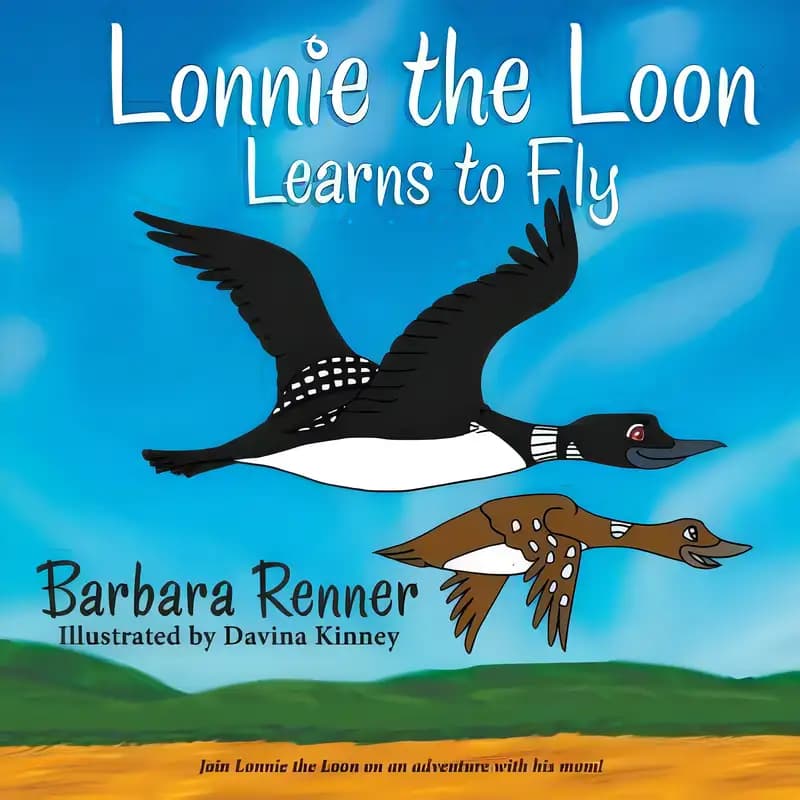
Lonnie the Loon Learns to Fly
Lonnie The Loon Series
What’s inside...
In Lonnie the Loon Learns to Fly, Lonnie is a curious loon who questions his mom about the clouds, wind, and river. He aspires to be like them as he practices the ways of nature and learns to fly.
Series reading
Non-Sequential
Age
9-12
Length
20 pages
Text complexity
Character compass
Lonnie The Loon
Discussion points
What do you think Lonnie felt when he was trying to learn how to fly?
How do you think Lonnie's mom helped him succeed?
Can you think of a time when you were learning something new? How did it feel?
Why is it important to keep trying, even when things are difficult?
What do you think Lonnie will learn next?
Tip: Role play these questions
Use expressive reading to convey the emotions Lonnie might be feeling in different parts of the story.
Relate the story to your child’s experiences by discussing times they have faced challenges and how they overcame them.
Encourage your child to imagine and describe other adventures Lonnie might have in the future to foster creative thinking.
Discuss the importance of family support and encouragement in achieving goals, as shown by Lonnie's mom in the story.
Ask follow-up questions based on your child's answers to the key questions to deepen the conversation and understanding of the book's themes.
Key lessons
Example Lesson: Perseverance and Determination
Explanation: Lonnie the Loon, despite initial struggles, learns to fly by persistently practicing and not giving up. With encouragement from his parents, he overcomes his doubts.
Real-World Application: Children learn the importance of steadfastness and hard work in achieving their goals, whether it's learning to ride a bike, mastering a new skill, or improving in their academics.
Example Lesson: The Importance of Parental Support
Explanation: Throughout Lonnie's journey, his parents are there to guide, encourage, and assure him. This familial support is crucial to his success.
Real-World Application: This mirrors the essential role parents play in a child's life, providing encouragement and stability as they tackle new challenges and navigate their learning journeys.
Example Lesson: Learning at One’s Own Pace
Explanation: Lonnie's experience highlights that everyone learns and develops at their own pace. He succeeds once he’s ready, not rushing the process.
Real-World Application: It teaches children that it’s okay to take their time to learn new things and that everyone has their individual timeline for reaching milestones.
Example Lesson: Courage to Overcome Fear
Explanation: Initially, Lonnie is afraid of failing at flying but decides to face his fears with the support of his family.
Real-World Application: Children are encouraged to face their fears and to understand that overcoming fear is a part of growing up and learning new things.
Example Lesson: Appreciation of Nature
Explanation: Set in the scenic natural backdrop, the story imparts a love and respect for nature as Lonnie explores his surroundings.
Real-World Application: This lesson urges children to explore and appreciate the natural world around them, promoting outdoor activities and environmental consciousness.