
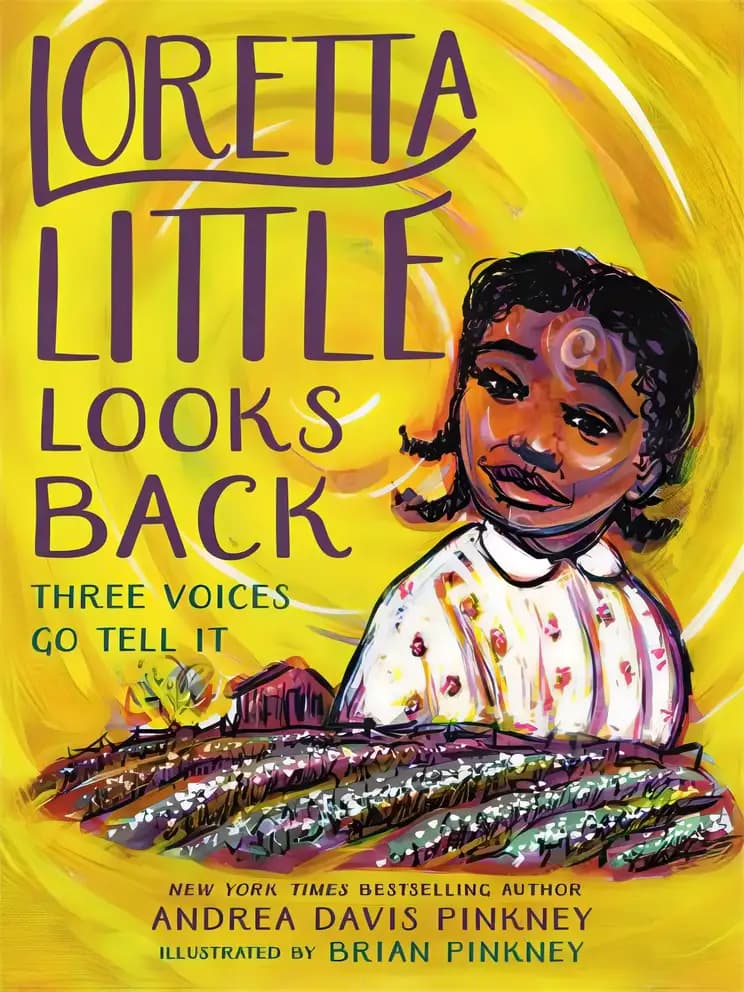
Loretta Little Looks Back: Three Voices Go Tell It
What’s inside...
Loretta Little Looks Back presents the vivid intergenerational stories of the Little family, spanning from 1927 to 1968. Loretta, Roly, and Aggie B. each share their powerful narratives through a unique blend of first-person narratives, spoken-word poems, and folk myths. The novel captures the essence of the rural South, highlighting the dignity of sharecroppers and the struggle for civil rights. Utilizing theatrical monologues and vibrant vignettes, the book offers an immersive experience that underscores the significance of storytelling in the oral tradition and celebrates the hard-fought journey towards earning the right to vote for African Americans.
Age
8-12
Length
288 pages
Text complexity
Character compass
Loretta Little
Aggie B. Little
Roly Little
Discussion points
What challenges do the characters face, and how do they overcome them?
How did the stories of Loretta, Roly, and Aggie affect your thoughts about courage and resilience?
In what ways do the characters support each other throughout the book?
What important lessons do you think the book teaches about history and justice?
How can we apply the lessons from the book to our everyday lives?
Tip: Role play these questions
Set aside a specific time for the book discussion, making it a special part of your routine.
Encourage your child to express their feelings about the story and its characters, validating their thoughts and emotions.
Relate aspects of the characters' struggles and triumphs to real-life events or personal experiences to help children connect with the narrative.
Ask open-ended questions that require more than a yes or no answer to foster deeper thinking and conversation.
Emphasize empathy by discussing how the characters might have felt during key moments in the book.
Key lessons
Example Lesson: Resilience and courage
Explanation: Through the perseverance of the three narrators, Loretta, Roly, and Aggie B, as they navigate their lives in the Jim Crow South, the book showcases the importance of resilience and courage.
Real-World Application: Children can apply the concept of resilience by not giving up when facing their own challenges, whether it's difficult homework or trying something new. They learn the value of persevering and overcoming obstacles.
Example Lesson: Importance of family and community support
Explanation: The narrative illustrates how the close-knit family and the community's support play a pivotal role in the lives of the characters, providing strength and comfort.
Real-World Application: Children can understand the significance of supporting and being supported by their family and friends in their everyday activities and how this can provide a source of strength and confidence.
Example Lesson: Historical awareness and empathy
Explanation: By exploring the challenges and experiences faced by African Americans in the past, the book educates young readers about historical injustices and fosters empathy.
Real-World Application: Children can become more aware of history and its impacts on different communities, helping them to develop a deeper understanding and empathy towards people who have experienced injustices.
Example Lesson: The power of voice and storytelling
Explanation: The unique narrative voices of the three protagonists show the power of storytelling in preserving history and personal experiences.
Real-World Application: This lesson encourages children to express themselves through their own stories or by sharing their experiences, understanding that their voices matter and can have an impact.
Example Lesson: Pursuit of justice and equality
Explanation: The characters' involvement in civil rights movements and their fight for equality demonstrates the ongoing pursuit of justice.
Real-World Application: This teaches children the importance of fairness and standing up against inequality, whether in the playground or within their community, promoting an understanding of civil rights.