
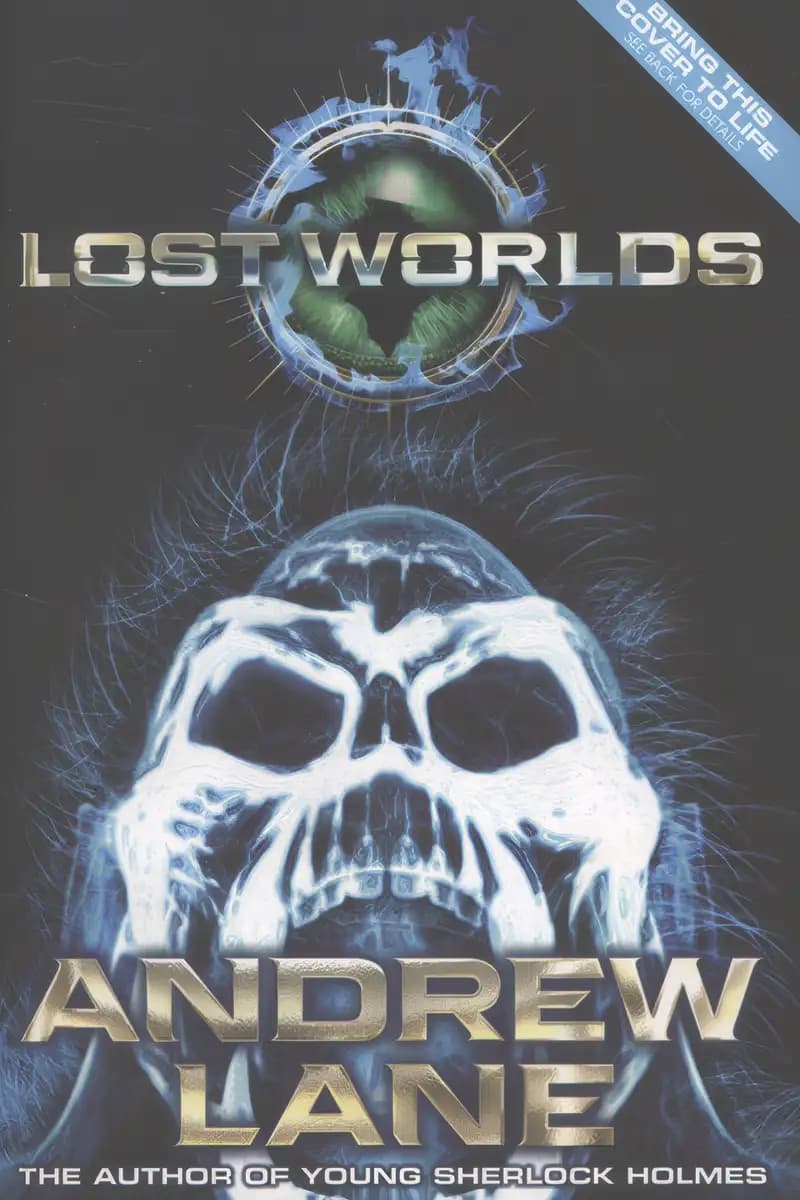
Lost Worlds
on Goodreads (119)
What’s inside...
Calum Challenger is a boy with a mission: to track down supposedly mythological creatures and capture their DNA. But while Calum and his friends want to save these beings, an aggressive pharmaceutical company wants to wipe them out. In this fast-paced, high-tech story, Calum and a group of misfit mates - a computer hacker, a freerunner, an ex-marine and a girl with a very big chip on her shoulder - criss-cross the globe, desperately trying to stay one step ahead of their enemy.
Why read this book
- Explores ancient mysteries with captivating adventures.
- Strengthens knowledge on history and archeology.
- Encourages curiosity and lifelong learning.
- Supports development of analytical skills.
Age
8-12
Length
336 pages
Text complexity
Character compass
Calum Challenger
Discussion points
What lost world would you like to explore and why?
How do the characters in the book react to the challenges they face in the unknown worlds?
What can we learn about bravery and curiosity from the adventurers in the story?
If you could take any item with you on an exploration, what would it be and why?
How do you think exploring new places can help us grow and learn?
Tip: Role play these questions
Encourage your child to imagine themselves in the story, asking them how they would feel exploring a lost world.
Discuss the moral challenges characters face, relating them to real-life situations your child might encounter.
Focus on the descriptions of the settings within the book to help visualize and enhance understanding of the textual details.
Create a fun activity by drawing a map of a 'lost world' together, discussing what unique features it might have according to your child’s imagination.
Use predictive questioning to help build anticipation and engagement, asking what your child thinks might happen next and why.
Key lessons
Example Lesson: Curiosity and Exploration
Explanation: In 'Lost Worlds', the protagonist embarks on thrilling adventures to uncharted territories, demonstrating a keen sense of curiosity and a passion for discovery.
Real-World Application: Children can apply this lesson by exploring new subjects in school or engaging in creative play that stimulates their imaginations and curiosity.
Example Lesson: Importance of Teamwork
Explanation: Throughout the book, the characters must work together to overcome challenges and solve mysteries, highlighting the value of collaboration and cooperation.
Real-World Application: This lesson encourages children to participate in team sports or group projects, teaching them to value others' ideas and communicate effectively to achieve common goals.
Example Lesson: Resilience in the Face of Adversity
Explanation: The characters often encounter setbacks and obstacles but they learn to persevere and adapt, which is a crucial theme throughout the narrative.
Real-World Application: Children can be encouraged to embrace challenges, whether in their academic studies or personal life, understanding that persistence is key to overcoming difficulties.
Example Lesson: Respect for Different Cultures
Explanation: As the characters explore lost worlds, they encounter diverse cultures and learn to appreciate and respect their differences, promoting cultural sensitivity.
Real-World Application: This lesson can be applied by encouraging children to learn about and celebrate different cultures through books, movies, and educational programs, fostering a more inclusive perspective.
Example Lesson: Consequences of Actions
Explanation: Decisions made by the characters in the book often lead to significant consequences, teaching readers about accountability and responsibility.
Real-World Application: Children can learn to think about the outcomes of their choices and behaviors, helping them develop a sense of responsibility in their actions towards themselves and others.