
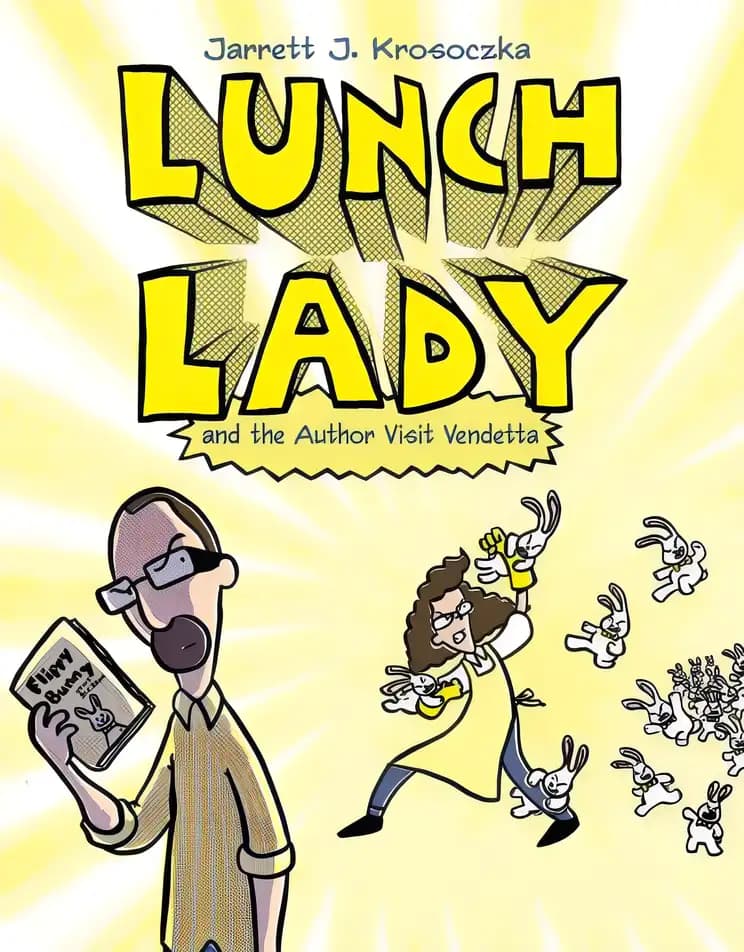
Lunch Lady and the Author Visit Vendetta: Lunch Lady #3
#3 of 10 in Lunch Lady Series
on Goodreads (4,549)
What’s inside...
From the author of National Book Award finalist Hey, Kiddo. Dee, Terrence, and Hector are very excited about Author Visit Day. Lewis Scribson is the author of the famous Flippy Bunny books, and Hector is a huge fan! And it gets Dee and Terrence out of math class. But something is a little off about this special guest. And Coach Birkby, the gym teacher, mysteriously disappears the day of his visit. What evil designs does this world-famous writer have on his agenda? Lunch Lady's going to get to the bottom of it, even if she has to kick some bunny butt!
Character compass
Lunch Lady
Dee
Betty
Terrence
Hector
Mr. Scribson
Discussion points
What do you think about the way Lunch Lady handles problems in the story?
How do the characters in the book show teamwork?
What would you do if you were in Lunch Lady's position during the author visit?
How did the author visit change the school's atmosphere in the story?
What lessons do you think the other children in the book learned from Lunch Lady's actions?
Tip: Role play these questions
Encourage your child to think about the characteristics that make Lunch Lady a unique character, prompting them to discuss her qualities and actions.
Discuss the importance of teamwork as shown in the book, and relate it to real-life scenarios that involve your child, like school projects or family tasks.
Ask your child to imagine themselves in the story and think about how they might react to the challenges faced by the characters.
Talk about the different emotions and mood shifts in the book during the author's visit, strengthening your child's ability to recognize and discuss feelings.
Highlight the moral lessons conveyed through Lunch Lady's actions and decisions, nudging your child to reflect on the learning points.
Key lessons
Example Lesson: The importance of teamwork
Explanation: Lunch Lady and the students collaborate to solve the mystery, showcasing effective teamwork.
Real-World Application: Children learn the value of working together with others to achieve common goals, which can be applied in school projects or sports teams.
Example Lesson: Honesty
Explanation: Characters in the book face situations where they must choose honesty over deceit, highlighting the importance of truthfulness.
Real-World Application: Teaches children the significance of being truthful in their interactions and the positive outcomes that honesty can bring in their daily lives.
Example Lesson: Courage to stand up for what is right
Explanation: The protagonist faces challenges but remains steadfast in her pursuit of justice, demonstrating courage.
Real-World Application: Encourages children to be brave and stand up against wrongdoing, whether it's in their community or when witnessing unfair treatment towards others.
Example Lesson: Problem-solving skills
Explanation: The book features various challenges that characters must think creatively to resolve.
Real-World Application: Helps children understand that problems can be approached and solved in different ways, enhancing their cognitive flexibility and critical thinking.