
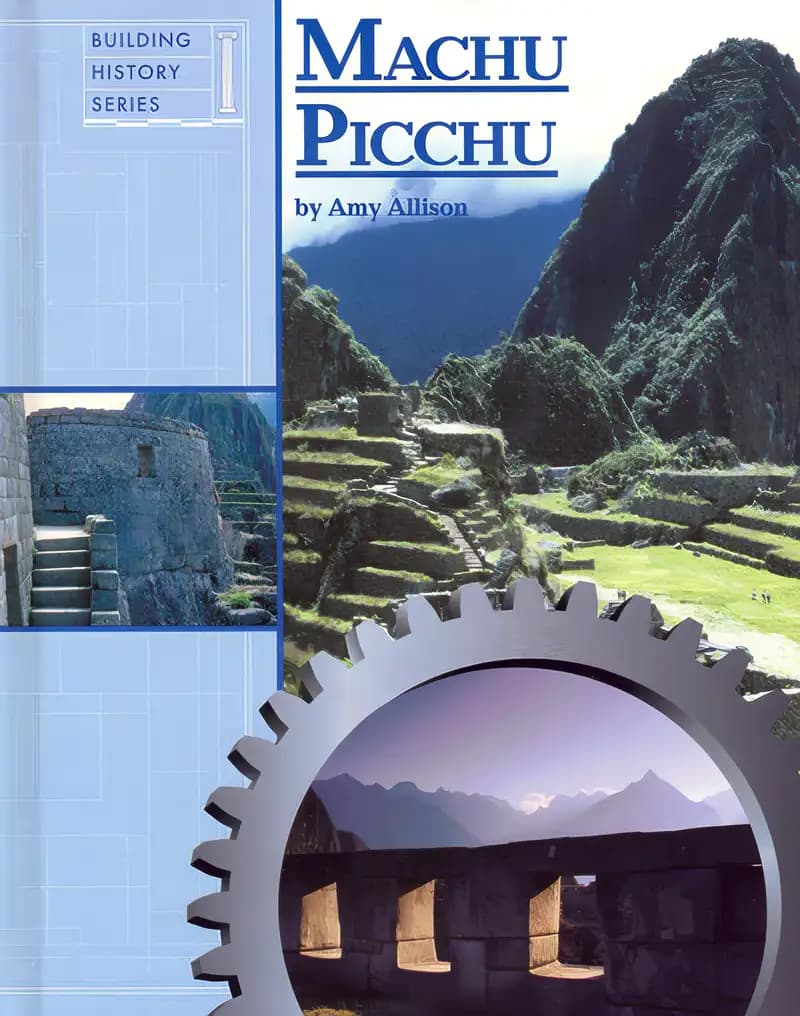
Machu Picchu
Building history Series
What’s inside...
Perched high in the Andes mountains, in harmony with nature, Machu Picchu offers mute witness to how the Inca, who left no written records, shaped their world. It has retained its secrets, intriguing historians, for centuries.
Series reading
Non-Sequential
Age
10-12
Length
112 pages
Text complexity
Discussion points
What do you think life was like for the people who lived in Machu Picchu long ago?
Why do you think Machu Picchu was built in such a high place among the mountains?
How do you feel when you see pictures of Machu Picchu and its surroundings?
If you could ask the builders of Machu Picchu one question, what would it be?
What can we learn from the story of Machu Picchu that might help us today?
Tip: Role play these questions
Encourage your child to imagine being at Machu Picchu — feeling the altitude, seeing the landscape. It'll help them connect more deeply with the book.
Use a globe or map to locate Machu Picchu and discuss how people might have traveled to such a remote place long ago.
After reading, you might consider exploring more about the Incan civilization with your child to extend their learning and curiosity.
Relate themes from the book to your child’s experiences, such as discussing times when they had to adapt to new situations, just like the builders of Machu Picchu.
Key lessons
Example Lesson: Perseverance and Curiosity
Explanation: The main character explores the ancient city of Machu Picchu with determination, showcasing the values of perseverance and curiosity throughout their journey.
Real-World Application: Children can apply these traits in their daily life by being enthusiastic and persistent in their studies or when learning new skills.
Example Lesson: Respect for History and Culture
Explanation: The story highlights the significance of Machu Picchu as a historical landmark, teaching children the importance of respecting and preserving cultural heritage.
Real-World Application: Kids can be encouraged to explore and respect different cultures and histories, promoting inclusivity and understanding in their interactions with diverse communities.
Example Lesson: Environmental Awareness
Explanation: The lush scenery of Machu Picchu is depicted with an emphasis on its natural beauty and the need to protect such environments.
Real-World Application: This can help children understand the importance of environmental conservation and inspire them to participate in activities like recycling or clean-up drives.
Example Lesson: Problem-Solving Skills
Explanation: The protagonist faces various challenges on their adventure, using critical thinking and problem-solving skills to navigate through them.
Real-World Application: Children can apply these skills at school or at home, using reasoning to overcome obstacles or resolve conflicts.