
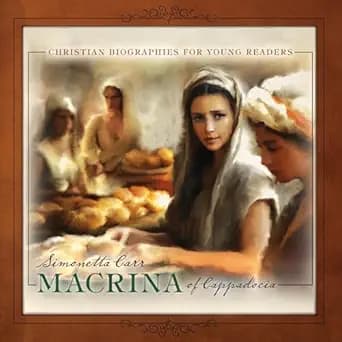
Macrina of Cappadocia (Christian Biographies for Young Readers)
Christian Biographies For Young Readers Series
What’s inside...
Part of the award-winning Christian Biographies for Young Readers series, this illustrated volume traces the life of Macrina the Younger (c. 330–379 AD), a fourth-century believer who became a spiritual mentor to two of the church’s most influential theologians, Basil the Great and Gregory of Nyssa. Moving from her childhood estate in Cappadocia to the family’s monastic community on the banks of the Iris River, the biography shows how Macrina used learning, hard work, and compassion to care for her family, teach impoverished neighbors, and stand firm through famine, disease, and personal loss. Maps, a timeline, photographs of archaeological sites, and “Did You Know?” sidebars place her story firmly in its historical context while inviting modern readers to reflect on courage, generosity, and steadfast faith.
Series reading
Non-Sequential
Age
8-12
Length
64 pages
Text complexity
Character compass
Macrina the Younger
Gregory of Nyssa
Basil the Great
Emmelia of Caesarea
Discussion points
Why did Macrina choose not to marry after her fiancé died?
How did sharing food during the famine change the community?
What qualities made Macrina a good mentor to her brothers?
Which modern problems could be helped by Macrina’s approach to generosity?
Tip: Role play these questions
Create a family ‘kindness plan’ after reading each chapter.
Look up Cappadocia on a map to visualize the setting.
Key lessons
Example Lesson: Lead through service
Explanation: Macrina guides her siblings by example—cooking, teaching, sharing.
Real-World Application: Children learn that real leaders help first and direct later.
Example Lesson: Practice generosity during scarcity
Explanation: The monastery feeds neighbors despite limited grain.
Real-World Application: Kids can donate time or toys even when resources feel tight.
Example Lesson: Value lifelong learning
Explanation: Macrina studies Scripture daily and encourages intellectual growth.
Real-World Application: Readers may set personal goals for reading and study.