
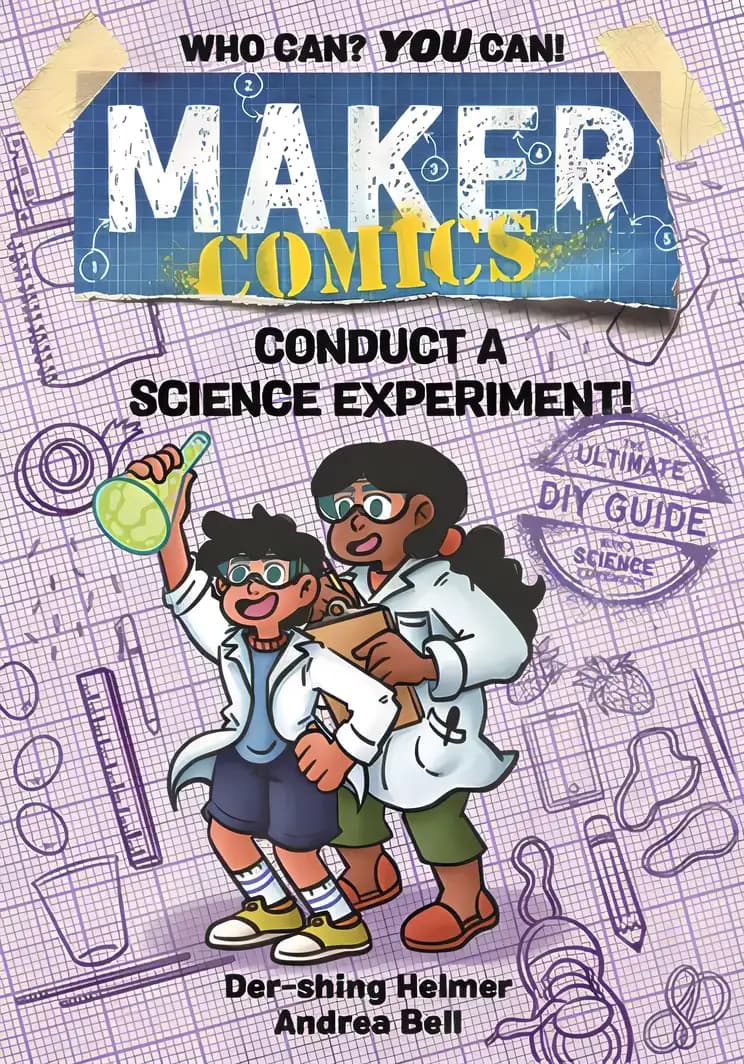
Maker Comics: Conduct a Science Experiment!
#4 of 7 in Maker Comics Series
What’s inside...
Inside Maker Conduct a Science Experiment!, the latest volume of First Second's DIY graphic novel series, provides step-by-step instructions for six STEM projects. The story follows Reed as his big sister Olive comes home from college to help improve his science grades over the summer. Through a week of engaging experiments, Reed discovers that science can be exciting and enjoyable.
Discussion points
What was your favorite experiment from the book and why?
How do you think the science you learned can be applied in real-life situations?
Which character did you relate to the most and what would you have done in their situation?
What is one new scientific term you learned from this book, and what does it mean?
If you could create your own experiment after reading this book, what would it be about?
Tip: Role play these questions
Encourage your child to think critically by asking them how they might modify an experiment from the book.
Discuss the importance of following steps in sequence when conducting experiments, drawing parallels to the book’s content.
Relate the experiments to everyday life to make the science more tangible for your child.
Highlight the trial and error process in science as depicted in the book to teach resilience and persistence.
Key lessons
Example Lesson: Curiosity and Exploration
Explanation: The characters in the book engage in exciting science experiments, sparking interest in scientific exploration.
Real-World Application: Children can apply this curiosity in school or at home by asking questions and conducting their own simple experiments under supervision.
Example Lesson: Problem-solving Skills
Explanation: As the characters encounter challenges during their experiments, they demonstrate critical thinking and problem-solving.
Real-World Application: Kids learn to approach problems systematically, whether in academic tasks or personal projects.
Example Lesson: Teamwork and Collaboration
Explanation: The book shows characters working together to conduct experiments and solve problems, emphasizing the importance of collaborative effort.
Real-World Application: This teaches children the value of teamwork in school group projects or in family activities.
Example Lesson: Persistence and Resilience
Explanation: Through trial and error in various experiments, the characters learn that persistence leads to success.
Real-World Application: Children can embrace this resilience in learning new skills or hobbies, understanding that not every attempt may be successful initially.
Example Lesson: Scientific Method
Explanation: The book introduces basic elements of the scientific method, encouraging a structured approach to inquiry.
Real-World Application: This can help children develop a logical approach to solving everyday problems and understand the world scientifically.