
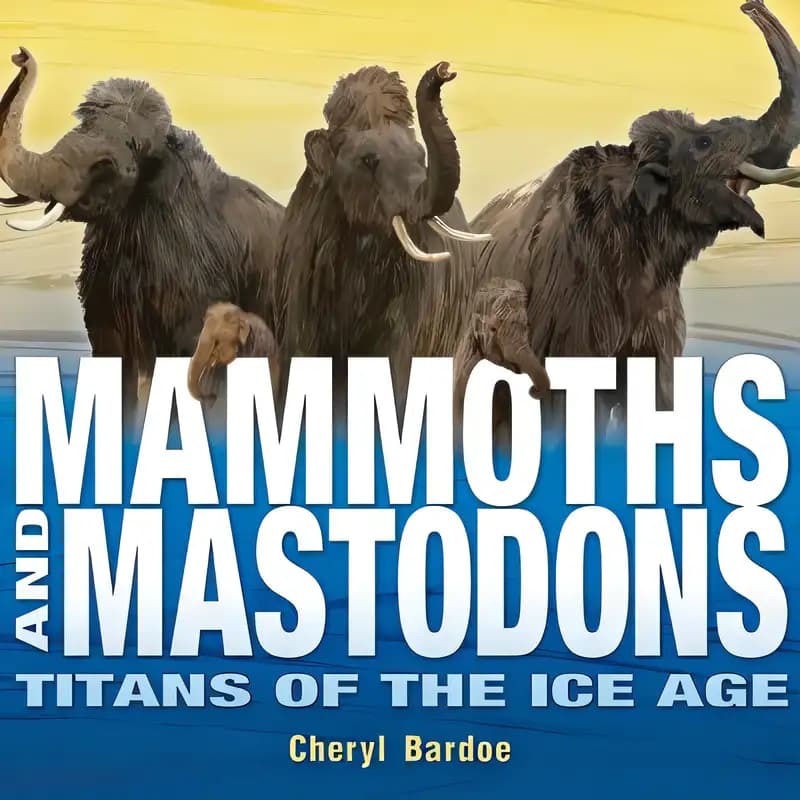
Mammoths and Mastodons: Titans of the Ice Age
Orbis Pictus Award for Outstanding Nonfiction for Children (Awards) Series
on Goodreads (91)
What’s inside...
Mammoths and Mastodons explores the lives of these ancient creatures that roamed the earth for over a million years before going extinct. Based on the latest research, including findings from a fully frozen baby mammoth, the book provides insights into their diet, habitat, and the reasons for their extinction. Featuring photographs, archival relics, and specially commissioned artwork, the book also details an exhibition at the Field Museum in Chicago and its subsequent tour. It includes a bibliography, glossary, and index to further explore the subject.
Series reading
Non-Sequential
Age
8-12
Length
48 pages
Text complexity
Discussion points
What differences and similarities did you notice between the mammoths and the mastodons in the book?
How do you think the Ice Age environment affected the lives of these creatures?
Why do you think mammoths and mastodons are no longer around today?
What did you find most fascinating about the ways scientists learn about extinct animals?
How do you think the world would be different if mammoths and mastodons were still alive today?
Tip: Role play these questions
Before reading, preview the book’s illustrations with your child and ask what they know or think about mammoths and mastodons.
At each section, pause and ask your child to share what they find interesting or surprising about the facts presented.
Encourage your child to compare the traits of mammoths and mastodons with modern animals they are familiar with to foster connections.
After reading, help your child draw or craft their version of a mammoth or mastodon, discussing the features mentioned in the book as they build.
Suggest your child to imagine being a scientist studying mammoths and mastodons, and ask them what methods they would use to learn more about these creatures.
Key lessons
Example Lesson: Resilience and Adaptation
Explanation: The book highlights how mammoths and mastodons adapted to the harsh Ice Age environment, showcasing their resilience.
Real-World Application: Children learn the importance of adapting to changing circumstances and persevering through difficulties.
Example Lesson: Respect for Nature
Explanation: By exploring the existence and extinction of these magnificent creatures, the book fosters a respect for nature and its complexities.
Real-World Application: This lesson encourages children to be mindful of their environment and promotes eco-friendly practices.
Example Lesson: Scientific Inquiry
Explanation: The book details the methods scientists use to study extinct animals, igniting curiosity about science and research.
Real-World Application: Children are encouraged to ask questions, seek evidence, and understand the world through a scientific lens in their daily life.
Example Lesson: Understanding Ecosystems
Explanation: Through the story of mammoths and mastodons, the book teaches about the ecosystems these animals lived in and their role within them.
Real-World Application: Kids learn about interdependency in nature and the significance of each organism within an ecosystem.
Example Lesson: History and Prehistoric Life
Explanation: The book provides detailed insights into the life of mammoths and mastodons, giving readers a glimpse into prehistoric times.
Real-World Application: This promotes an appreciation for history and the evolutionary processes that shape life on Earth, fostering a broader understanding of time and existence.