
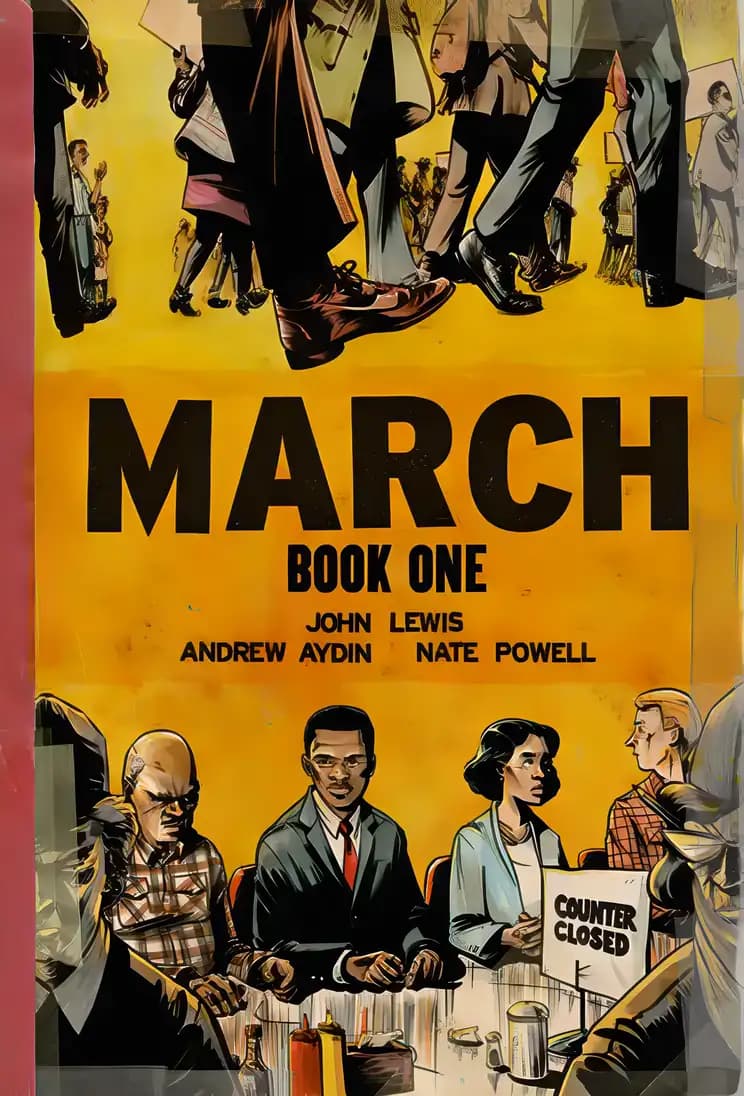
March: Book One
#1 of 4 in March Series
What’s inside...
March is a graphic novel trilogy that provides a vivid first-hand account of Congressman John Lewis' lifelong struggle for civil and human rights. The story is rooted in Lewis' personal experiences, from his youth in rural Alabama to his role in the broader civil rights movement, including his interactions with Martin Luther King, Jr. and participation in the Nashville Student Movement. The narrative also reflects on the broader social changes and challenges during the era of segregation and the fight for justice through nonviolent protests. The trilogy also draws inspiration from the 1958 comic book 'Martin Luther King and the Montgomery Story,' bringing historical events to life for a new generation and highlighting the enduring impact of the civil rights movement.
Character compass
John Lewis
Diane Nash
James Lawson
Fred Gray
Martin Luther King Jr.
Ben West
John Robert Lewis
Discussion points
Why do you think John Lewis chose to share his story in the form of a graphic novel?
What similarities and differences do you see between the events of the past and those of today?
How do the themes of justice and equality in the book relate to our everyday lives?
What role do courage and collaboration play in the accomplishments of the civil rights movement as depicted in the book?
How can we apply the lessons from 'March: Book One' to support fairness and kindness in our community?
Tip: Role play these questions
Encourage your child to express their thoughts freely, ensuring a safe space for them to explore the sensitive topics covered in the book.
Draw parallels between historical events in the book and current events, making it relevant to your child’s world.
Ask your child to think about how they would feel in John Lewis's shoes, fostering empathy and a deeper connection with the narrative.
Discuss the different characters' motivations and actions, prompting your child to consider diverse perspectives.
Finish your reading sessions with a reflective question about how the day's reading might apply to personal or school life, reinforcing the message.
Key lessons
Example Lesson: Courage and activism
Explanation: The story details John Lewis's experiences during the Civil Rights Movement, highlighting his courage in facing discrimination and his active participation in peaceful protests.
Real-World Application: Children learn the importance of standing up for what is right and the impact that peaceful activism can have on society. They are encouraged to be brave and express their views on fairness and justice in their schools and communities.
Example Lesson: Perseverance in adversity
Explanation: John Lewis's journey displays his relentless pursuit of justice, despite numerous setbacks and challenges. His commitment to his cause is unwavering.
Real-World Application: This teaches children the value of determination and not giving up in the face of difficulties. It encourages them to keep striving towards their goals, regardless of obstacles.
Example Lesson: Importance of education
Explanation: Throughout the book, the importance of education is emphasized as a tool for empowerment and change. Lewis's own educational journey is portrayed as a cornerstone of his activism.
Real-World Application: Children are inspired to value their education and see it as a powerful tool that equips them for future challenges and opportunities. It promotes the pursuit of learning to make informed decisions and inspire change.
Example Lesson: Teamwork and collaboration
Explanation: The narrative shows how John Lewis collaborates with other activists and leaders to achieve common goals, demonstrating the power of working together.
Real-World Application: This lesson highlights the importance of teamwork in achieving significant outcomes. Children learn the benefits of cooperating with others towards achieving shared goals in school projects or team sports.