
Mason Dixon: Pet Disasters
#1 of 3 in Mason Dixon Series
What’s inside...
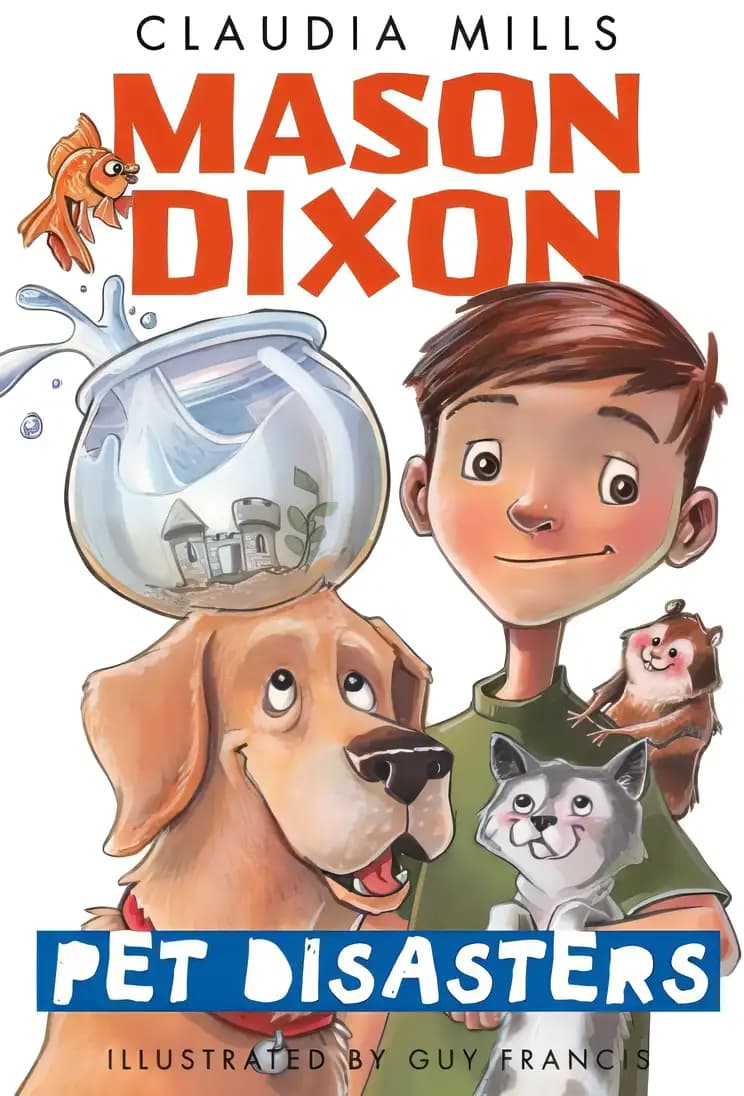
Soon-to-be fourth-grader Mason Dixon does not initially want a pet, but through a series of pet mishaps, he discovers he actually wants one. A goldfish, hamster, and cat all come and go due to various reasons, leaving Mason relieved each time. However, when a dog arrives, Mason experiences a bit of jealousy and realizes he does want a pet of his own. Claudia Mills introduces a relatable and humorous character in Mason, and the series follows him and his friend Brody as they navigate new experiences. The books are designed for 8- to 10-year-old independent readers and include black-and-white art throughout.
Character compass
Mason Dixon
Brody
Discussion points
What do you think Mason learned about responsibility from his experiences with the pets?
How would you have handled the pet situations differently if you were in Mason's shoes?
What emotions do you think Mason felt during the pet disasters, and why?
Which pet do you think was the most challenging for Mason and why?
How did Mason's adventures with the pets change his relationship with his friend Brody?
Tip: Role play these questions
While discussing the book, relate the pet scenarios to any personal experiences your child might have had with pets, fostering deeper connection and understanding.
Encourage your child to imagine alternative endings for Mason’s pet disasters to enhance creative thinking and problem-solving skills.
Ask your child to describe how they would feel in Mason’s situations to foster empathy and emotional recognition.
Discuss the importance of responsibility and the consequences of actions as portrayed in the book to instill values through storytelling.
Key lessons
Example Lesson: Responsibility
Explanation: The protagonist, Mason, navigates through various pet-related challenges, teaching children about the responsibilities involved in pet care.
Real-World Application: Children can apply this understanding by taking part in caring for family pets, such as feeding them or keeping their living area clean.
Example Lesson: Problem-solving
Explanation: Throughout the book, Mason encounters and solves different problems regarding his pets, showcasing effective problem-solving skills.
Real-World Application: This lesson encourages children to think critically and solve problems they encounter in their daily activities or in group settings at school.
Example Lesson: Compassion
Explanation: Mason’s interactions with his pets highlight the need for empathy and understanding towards animals.
Real-World Application: Children learn to extend kindness and empathy towards animals they meet, understand their needs, and treat them well.
Example Lesson: Perseverance
Explanation: Despite the mishaps, Mason continues to care for his pets, illustrating the importance of perseverance.
Real-World Application: This teaches children to remain committed to their tasks or hobbies, even when faced with difficulties.
Example Lesson: Adaptability
Explanation: Mason adjusts to the different needs and unpredictable situations with his pets, learning adaptability.
Real-World Application: Children can learn to be flexible and adapt to changes in their routines or environments, such as moving to a new school or dealing with changes at home.