
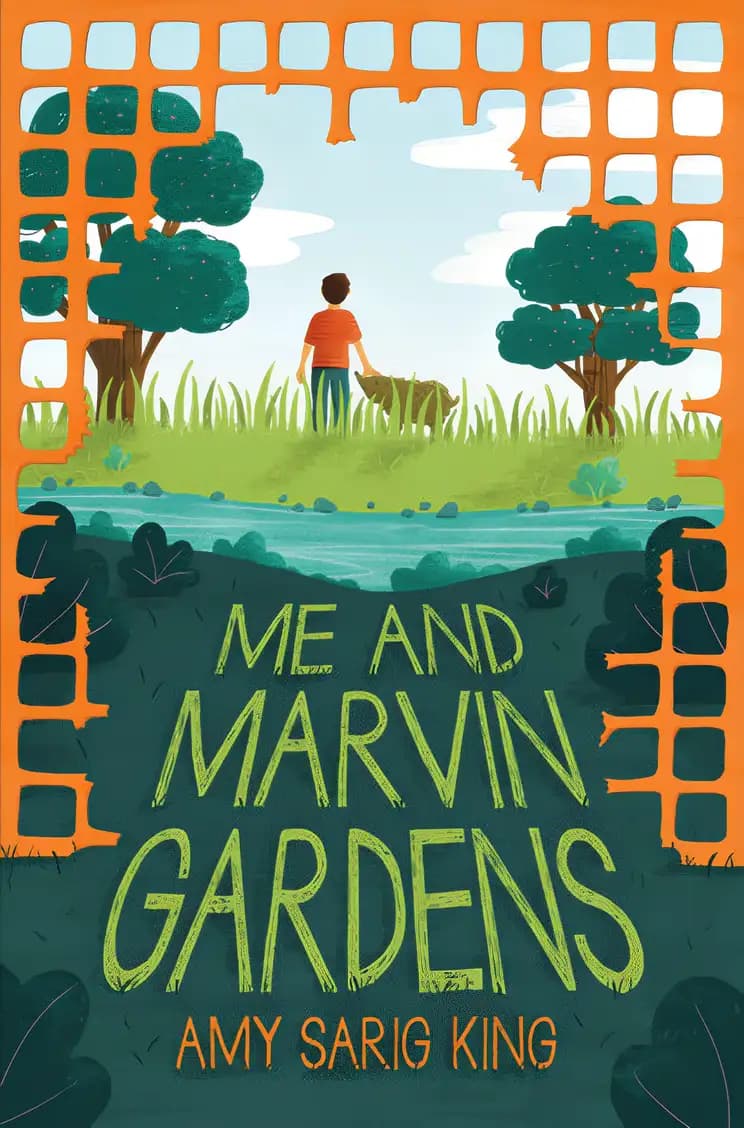
Me and Marvin Gardens
on Goodreads (2,283)
What’s inside...
Obe Devlin, a sixth grader, befriends a new species of animal, Marvin Gardens, that feeds solely on plastic, protecting it from harmful effects on its biological functions. As Obe's family farmland is overtaken by developers and he deals with personal issues and bullying from former friends, he spends time at the remaining wild patch near his home. Obe must make difficult decisions to protect Marvin from developers and others, in a story that explores the themes of friendship, environmental conservation, and personal growth.
Age
8-11
Length
256 pages
Text complexity
Character compass
Obe Devlin
Annie
Marvin Gardens
Tommy
Discussion points
How would you feel if you found a creature like Marvin, and what would you do to take care of it?
Why do you think it's important to protect the environment, and how can we help in our own community?
What did you think about the relationship between Obe and his friends? Have you ever had a similar experience with your friends?
How do you think Marvin changed Obe's view of the world? Can meeting someone new change how we see things?
What would you do if you were in Obe's situation and had to keep a big secret? Why is trust important in friendships?
Tip: Role play these questions
Share your own experiences with friendship and caring for animals or the environment to make the discussion relatable.
Encourage empathy by asking how they would feel in Obe's shoes, tapping into their feelings and thoughts about the situations in the book.
Discuss the importance of environmental conservation and what actions your family can take, linking the book's themes to real-world activities.
Validate their opinions and emotions about the book's events, fostering a safe space for open expression and critical thinking.
Key lessons
Example Lesson: Environmental Awareness
Explanation: Me and Marvin Gardens focuses on a young boy, Obe, who discovers a mysterious animal that eats plastic. The story uses this narrative to highlight issues of pollution and environmental conservation.
Real-World Application: Children can learn the importance of recycling and taking care of their surroundings to protect the planet.
Example Lesson: Empathy and Friendship
Explanation: The protagonist, Obe, forms a bond with Marvin Gardens, the plastic-eating animal, which teaches him about loyalty and friendship. This relationship fosters empathy in Obe as he learns to understand and care for Marvin’s unique needs.
Real-World Application: Children can apply this lesson by learning to respect differences and form meaningful relationships with others, regardless of their backgrounds or characteristics.
Example Lesson: Responsibility
Explanation: Throughout the book, Obe faces the dilemma of protecting his new friend or disclosing Marvin's existence to adults. His decision-making process highlights the theme of personal responsibility.
Real-World Application: This narrative encourages children to weigh their decisions and understand their impacts, teaching them to take responsibility for their actions and decisions.
Example Lesson: Problem Solving
Explanation: As Obe deals with environmental issues and the secret of Marvin Gardens, he employs critical thinking and problem-solving skills to navigate complex situations.
Real-World Application: Children are inspired to think critically and solve problems creatively, skills that are applicable in academic settings and everyday challenges.
Example Lesson: Resilience
Explanation: Obe faces numerous challenges, from environmental concerns to personal dilemmas. His resilience in overcoming these and striving for positive outcomes is a key theme.
Real-World Application: This teaches children the value of perseverance and resilience in facing their own challenges in life.