
on Goodreads (4,196)
What’s inside...
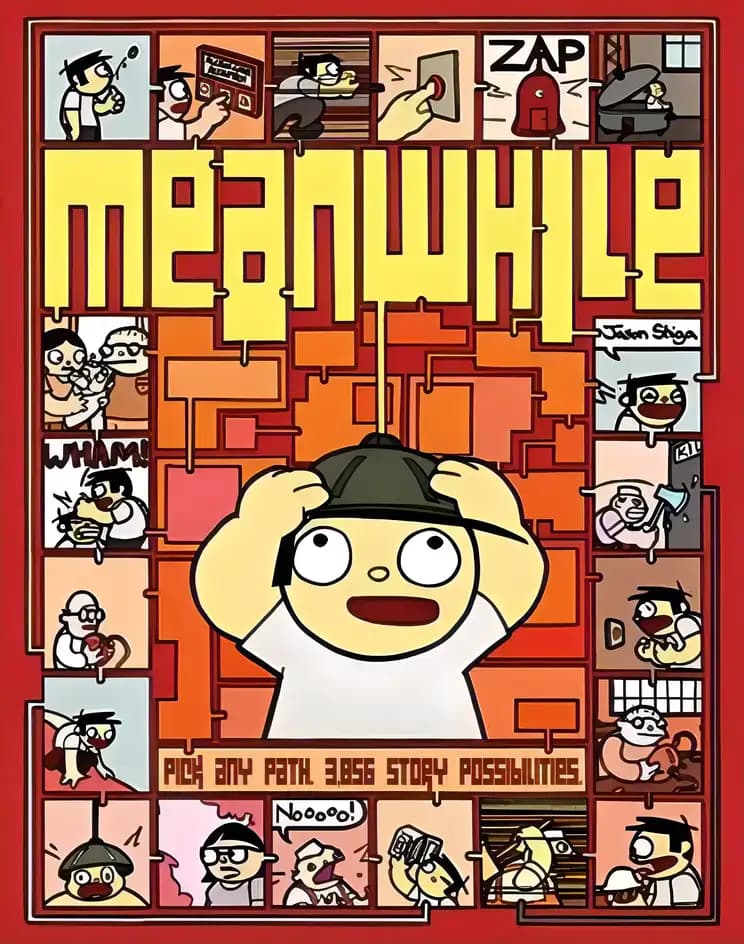
Meanwhile by Jason Shiga is a groundbreaking graphic novel that allows readers to control the story's trajectory by choosing from options that lead protagonist Jimmy into a mad scientist’s lab. Here, he is faced with selecting either a mind-reading device, a time-travel machine, or the deadly Killitron 3000. Each choice leads to a unique path filled with puzzles, clues, and revelations. Featuring a unique tab system, each read-through offers a new adventure, making it an original story of invention, discovery, and potentially saving the world. The book has received numerous awards and high praise from notable authors.
Series reading
Non-Sequential
Age
8-11
Length
80 pages
Text complexity
Character compass
Jimmy
Professor K
Discussion points
What would you do if you could choose the outcome of the story, just like in 'Meanwhile'?
How do you think the different choices made by the character affect the story?
What did you learn about making decisions from this book?
Can you think of a time when you made a choice that changed something in your life? What happened?
If you were to add another path to the story, what would it be and why?
Tip: Role play these questions
Encourage your child to express their thoughts about the consequences of different choices in the story and relate them to their own experiences.
Discuss the concept of decision-making and its impact, drawing parallels between the story and real-life scenarios your child might face.
Create a fun interactive reading session by allowing your child to choose which pages to turn to, mimicking the book’s interactive style.
Use the book’s format to teach problem-solving skills by discussing potential outcomes of various decisions made in the book and assessing their effectiveness.
Key lessons
Example Lesson: Decision-making skills
Explanation: In 'Meanwhile,' the reader navigates through a variety of choices that determine the story’s outcome, demonstrating the impact of decisions.
Real-World Application: This can teach children to think through their choices and understand the consequences in real-life situations.
Example Lesson: Problem-solving
Explanation: The interactive format, with its puzzles and challenges, encourages critical thinking and logical reasoning.
Real-World Application: Children learn to address obstacles and challenges by evaluating options and finding solutions, useful in school projects and daily dilemmas.
Example Lesson: Cause and effect
Explanation: As the narrative branches out based on the selected paths, it clearly illustrates how one action leads to a specific result.
Real-World Application: This helps children grasp the concept of cause and effect, aiding them in understanding the sequence of events in their environment.
Example Lesson: Creativity and imagination
Explanation: The unique choose-your-own-path style fosters creative thinking, as readers imagine various scenarios based on their choices.
Real-World Application: This enhances a child’s creative faculties, which can be expressed in storytelling, play, and other creative activities.