
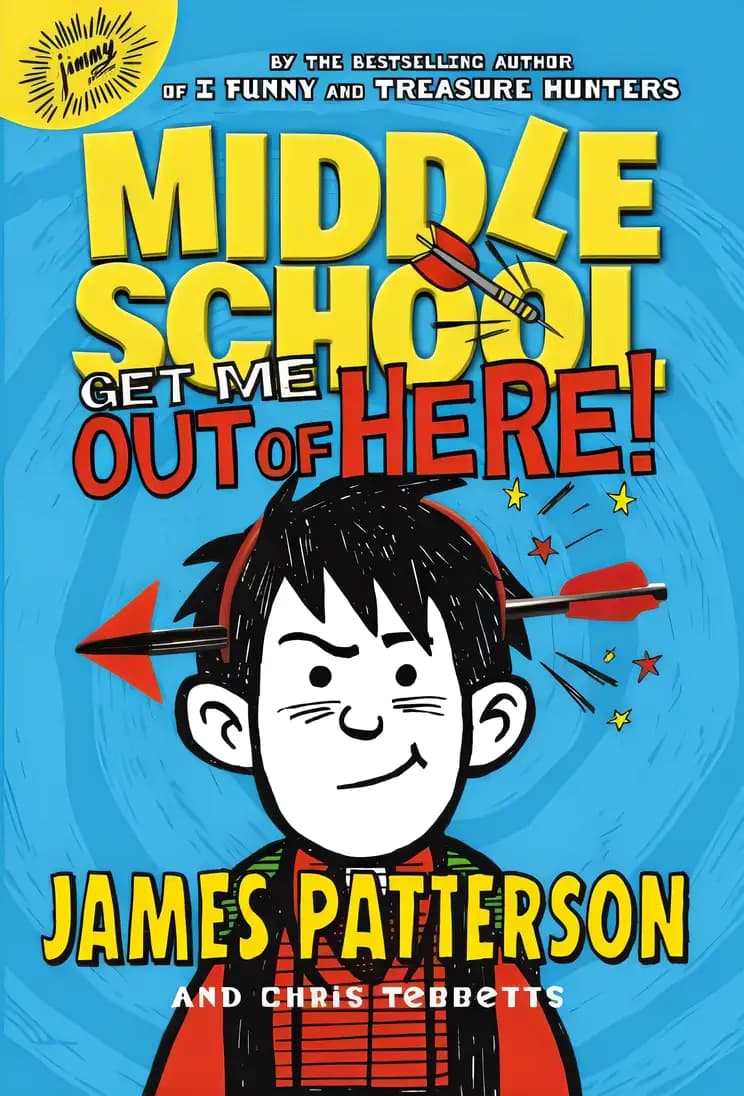
Middle School: Get Me out of Here! (Middle School, 2)
#2 of 6 in Middle School Series
What’s inside...
Live large with James Patterson's winning follow-up to the #1 New York Times bestseller Middle School, The Worst Years of My Life. After sixth grade, the very worst year of his life, Rafe Khatchadorian thinks he has it made in seventh grade. He's been accepted to art school in the big city and imagines a math-and-history-free fun zone. Wrong! It's more competitive than Rafe ever expected, and to score big in class, he needs to find a way to turn his boring life into the inspiration for a work of art. His method? Operation: Get a Life! Anything he's never done before, he's going to do it, from learning to play poker to going to a modern art museum. But when his newest mission uncovers secrets about the family Rafe's never known, he has to decide if he's ready to have his world turned upside down.
Character compass
Rafe Khatchadorian
Georgia Khatchadorian
Grandma Dotty
Jules Khatchadorian
Discussion points
How do you think Rafe's experiences in middle school compare to your own?
What do you feel are the biggest challenges Rafe faces, and how does he handle them?
If you were in Rafe's shoes, which of his strategies would you adopt, and why?
How do Rafe’s relationships with his friends and family impact his school adventure?
What did you learn from Rafe's story that you could apply in your own life or school experiences?
Tip: Role play these questions
Before starting the discussion, ensure your child feels comfortable sharing their thoughts and feelings.
Relate the conversation to your child’s experiences, asking them to compare or contrast their own school life with Rafe's.
Highlight the importance of tackling challenges and making positive choices, as shown by Rafe’s actions in the book.
Ask your child what they would do differently than Rafe in certain situations to encourage critical thinking.
Use the book’s humor as a way to keep the conversation light-hearted and engaging.
Key lessons
Example Lesson: Adaptability and resilience
Explanation: The protagonist, Rafe, faces various challenges in his new school and city. His journey teaches him to adapt and stay resilient amidst change.
Real-World Application: Children can learn to embrace changes in life, such as moving to a new school or city, and understand that it's possible to thrive in new environments.
Example Lesson: Creativity as a coping mechanism
Explanation: Rafe uses his art and creativity to deal with his problems and emotions. This aspect of the story underscores the therapeutic use of creativity.
Real-World Application: Kids can be encouraged to use creative outlets like drawing, writing, or playing music to handle their emotions and stress.
Example Lesson: Importance of honesty
Explanation: Throughout the book, Rafe learns valuable lessons about the consequences of lying and the importance of being truthful.
Real-World Application: This teaches children the value of honesty and integrity, both with themselves and in their interactions with others.
Example Lesson: Value of friendship
Explanation: Rafe navigates his friendships, learning who he can trust and rely on. The story highlights the importance of supportive friendships.
Real-World Application: Children learn the importance of building and maintaining trustful and supportive friendships, which are crucial for personal development and well-being.