
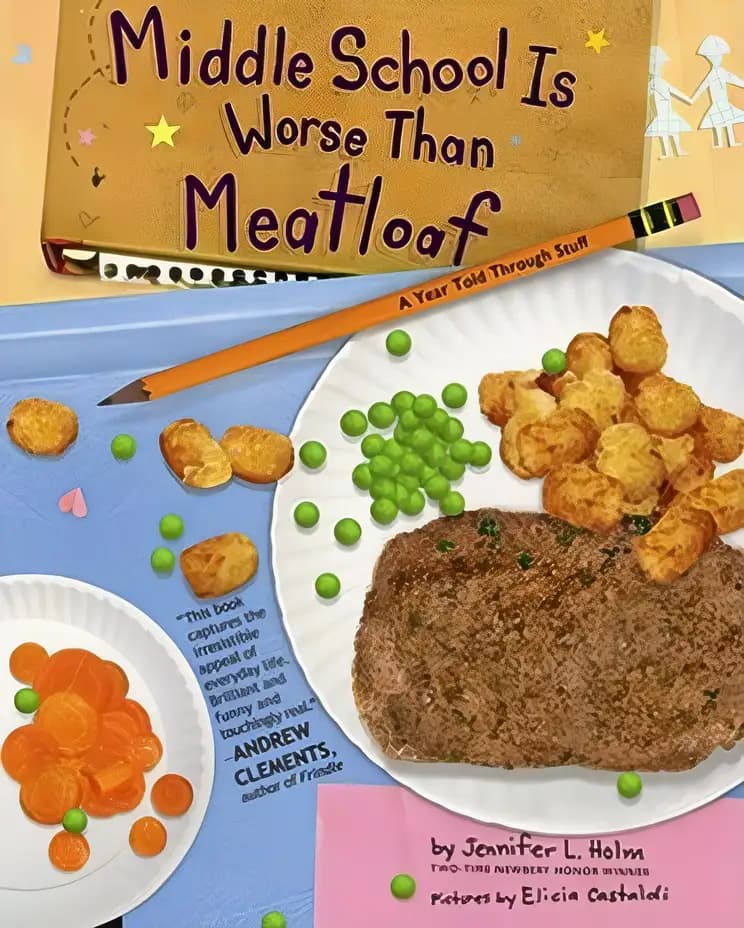
Middle School Is Worse Than Meatloaf
#1 of 2 in Ginny Davis Series
What’s inside...
Ginny has ten items on her big to-do list for seventh grade. None of them, however, include accidentally turning her hair pink. Or getting sent to detention for throwing frogs in class. Or losing the lead role in the ballet recital to her ex-best friend. Or the thousand other things that can go wrong between September and June. But it looks like it's shaping up to be that kind of a year! Here's the story of one girl's worst school year ever -- told completely through her stuff.
Character compass
Ginny Davis
Henry Davis
Discussion points
How do you think Ginny felt when she was trying to navigate her first year of middle school? Can you relate to any of her experiences?
What role do Ginny’s friends and family play in her journey throughout the book? How do you think relationships affect our experiences in school?
Ginny faces quite a few challenges and setbacks in the story. Which one do you think was the hardest for her, and why?
If you could give Ginny one piece of advice at the start of middle school, what would it be and why?
The book is told through a mix of notes, receipts, and report cards. How do you think this style affects the way we understand Ginny's story?
Tip: Role play these questions
Before diving into the questions, encourage your child to express their overall thoughts and feelings about the book. This can help them feel more comfortable and open to a deeper discussion.
Relate the questions to your child's personal experiences in school where possible. This personal connection can make the conversation more meaningful and engaging.
Offer your own insights or similar experiences from your school days when discussing Ginny’s challenges. This shows empathy and encourages a two-way conversation.
Recognize and validate your child's feelings and perspectives as they share. This reinforces that their thoughts are important and valued.
End the conversation by asking your child how they might use what they've learned from Ginny's experiences in their own life. This helps them apply the themes of the book in a practical way.
Key lessons
Example Lesson: Resilience in the face of challenges
Explanation: The protagonist, Ginny, navigates a myriad of middle school challenges, such as struggling with grades and dealing with complex family dynamics.
Real-World Application: Children can learn to persevere through their own personal and academic challenges, understanding that obstacles are a part of growth.
Example Lesson: Importance of communication
Explanation: Throughout the book, Ginny learns the value of expressing her feelings and thoughts, particularly in her interactions with family and friends.
Real-World Application: This teaches children the significance of open communication in fostering relationships and resolving conflicts.
Example Lesson: Empathy and understanding others
Explanation: Ginny’s experiences give insight into the perspectives of different characters, illustrating the diverse challenges they face.
Real-World Application: Children can learn to empathize with peers and family members, appreciating that everyone has their own unique struggles and stories.
Example Lesson: Managing change and transitions
Explanation: As Ginny transitions from elementary to middle school, she encounters and learns to adapt to significant changes.
Real-World Application: This can help children understand and prepare for transitions in their own lives, from school changes to shifts in family dynamics.
Example Lesson: Self-identity and personal growth
Explanation: Ginny works through issues of self-esteem and personal identity, growing more self-aware and confident.
Real-World Application: This encourages children to explore their own identities and fosters a healthy sense of self that is crucial during developmental years.