
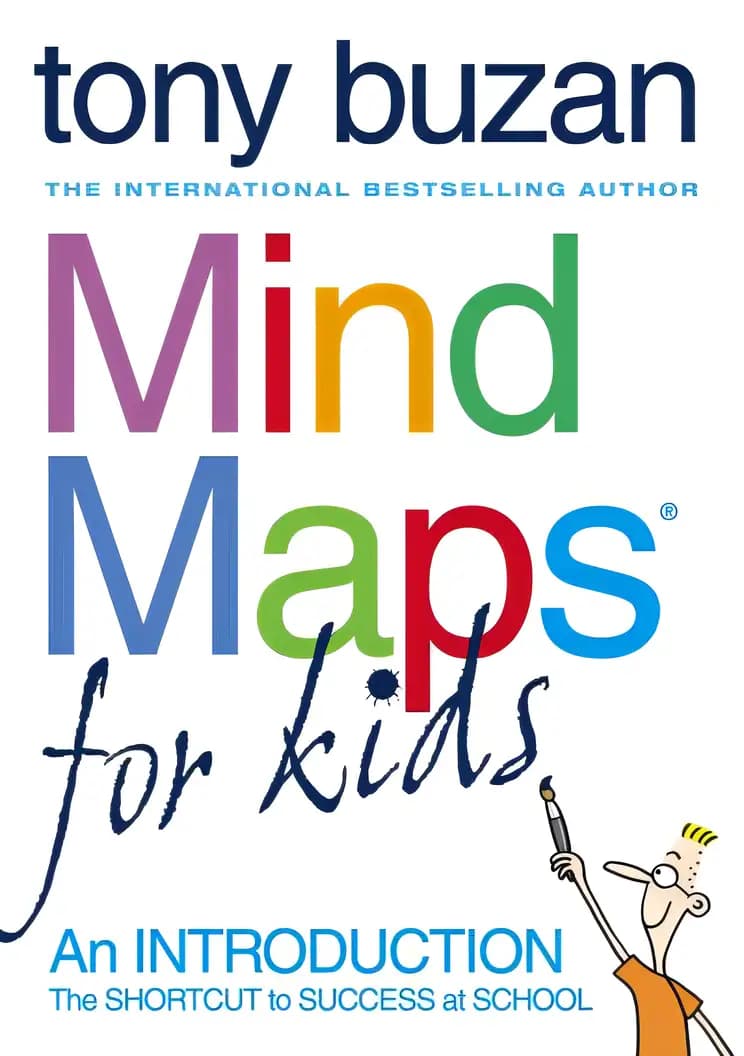
Mind Maps For Kids: An Introduction
Mind Maps for Kids Series
on Goodreads (129)
What’s inside...
Mind Maps for Kids is a book by Tony Buzan designed to introduce young readers aged 7 to 14 to the system of Mind Mapping. This method aims to make schoolwork enjoyable and efficient by reducing homework time, improving memory, concentration, note-taking, revision, and imaginative skills. The book provides step-by-step examples in various subjects, filled with tips, jokes, cartoons, and brain teasers to keep the learning process fun. Tony Buzan has used his experience teaching children globally for thirty years to create a guide that promises to transform the way children learn and help them excel academically.
Series reading
Non-Sequential
Age
8-13
Length
128 pages
Text complexity
Discussion points
How can you use mind mapping to organize your thoughts about a new topic you learned?
What differences do you notice in understanding when you use mind maps versus when you don't?
Can you think of a situation where creating a mind map would help you solve a problem or plan something?
How do you feel when you create mind maps and see all your thoughts in front of you? Do you find it helpful?
Tip: Role play these questions
Encourage your child to explain their mind map to you, fostering a deeper understanding of the material.
Create a mind map together with your child about a family project or plan, demonstrating real-life applications.
Praise your child’s efforts in making connections between concepts, nurturing their confidence in using mind maps.
Ask your child to teach you how to make a mind map, reinforcing their understanding and boosting their communication skills.
Key lessons
Example Lesson: Organization Skills
Explanation: Through the process of creating mind maps, the book teaches children how to organize their thoughts and ideas systematically.
Real-World Application: Children can apply these skills to plan their homework, manage their time for different activities, and set personal goals.
Example Lesson: Creativity Enhancement
Explanation: The book encourages the use of colors, symbols, and images in mind mapping, which stimulates creative thinking.
Real-World Application: This can help children in thinking uniquely and creatively in art projects, problem-solving, and storytelling.
Example Lesson: Memory Improvement
Explanation: Mind mapping as described in the book aids in better retention of information by associating ideas with visual elements.
Real-World Application: This technique can be beneficial for studying, remembering important dates, and recollecting details from readings and daily observations.
Example Lesson: Concentration Skills
Explanation: The book teaches focusing techniques through the step-by-step process of building a mind map, which can enhance the child's ability to concentrate.
Real-World Application: Improved concentration can help children in all learning environments, leading to better academic performance and efficient problem-solving.
Example Lesson: Information Processing
Explanation: By categorizing information into main and sub-points, children learn how to break down complex information into manageable parts.
Real-World Application: This skill is crucial in understanding new concepts in school subjects, following instructions, and making sense of daily interactions.