
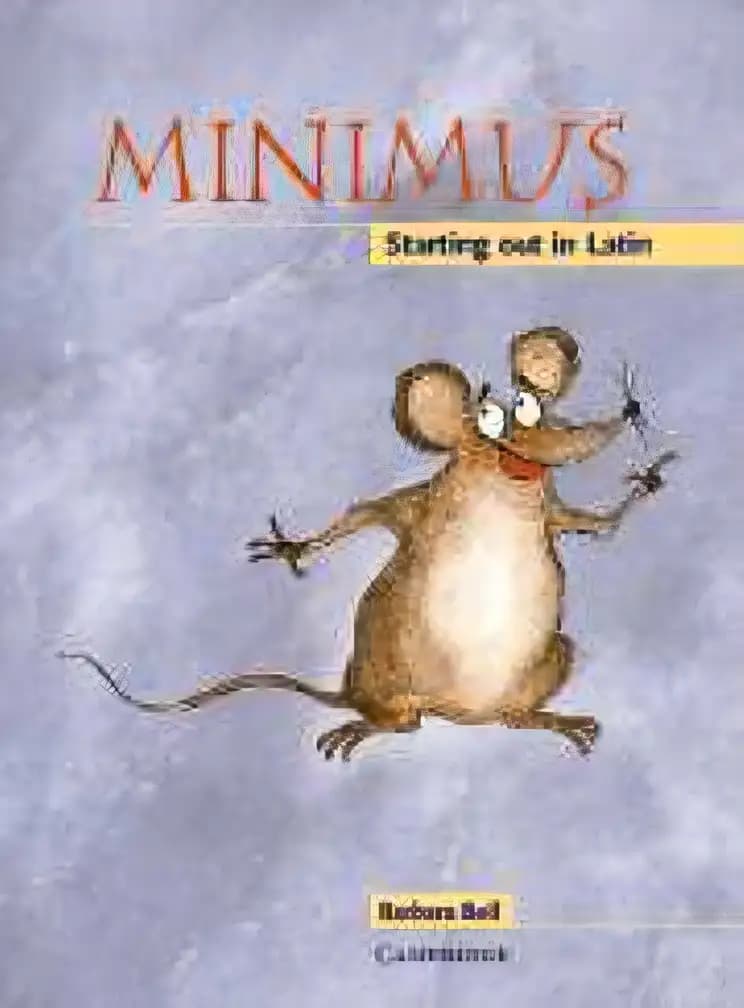
Minimus Pupil's Book: Starting out in Latin
#1 in Minimus Series
What’s inside...
A lively introduction to Latin for children aged 7 and over. Join in the fun with Minimus - a mix of myths, stories, grammar support and historical background! This pupil's book is a lively, colourful introduction to the Latin language and the culture of Roman Britain. A fun way to teach English grammar, it is ideal for cross-curricular activities.
Character compass
Minimus
Lepidina
Varia
Candidus
Iulius
Flavius
Corinthus
Discussion points
What do you think life was like in ancient Rome based on what we've read?
How do the characters in the book use Latin in their daily lives?
Did you find any Latin words that are similar to English words we use today?
What was the most surprising thing you learned about ancient Rome?
How do you think learning Latin can help us understand more about history and other languages?
Tip: Role play these questions
Encourage your child to imagine themselves in ancient Rome while reading, making the learning process more immersive. Discuss the modern-day impact of Latin and how it shapes languages we speak today. Relate the book's content to your child’s everyday life to spark more interest. Ask them to teach you some Latin words, turning the learning process into a fun interactive game. Finally, highlight the historical and cultural aspects of ancient Rome discussed in the book to broaden their world view.
Key lessons
Example Lesson: Introduction to a new language
Explanation: Minimus Pupil's Book: Starting out in Latin introduces children to basic Latin through engaging stories and characters.
Real-World Application: Learning a new language can help children improve their cognitive skills and enhance their understanding of their native language.
Example Lesson: Historical awareness
Explanation: The book is set in a historical context, presenting daily life in an ancient Roman town, giving children a glimpse into history through the lens of a classical language.
Real-World Application: Understanding historical contexts can encourage children to appreciate different cultures and epochs, fostering a broader worldview.
Example Lesson: Importance of perseverance
Explanation: Learning Latin, a complex language, can be challenging. The book encourages sticking with difficult tasks.
Real-World Application: This can teach children the value of persistence and hard work in achieving proficiency in challenging subjects and skills.
Example Lesson: Logical thinking
Explanation: Latin requires attention to detail and rule-following in its structure, which can enhance logical thinking skills.
Real-World Application: Developing logical thinking aids children in problem-solving and analysis in other areas of study and daily situations.