
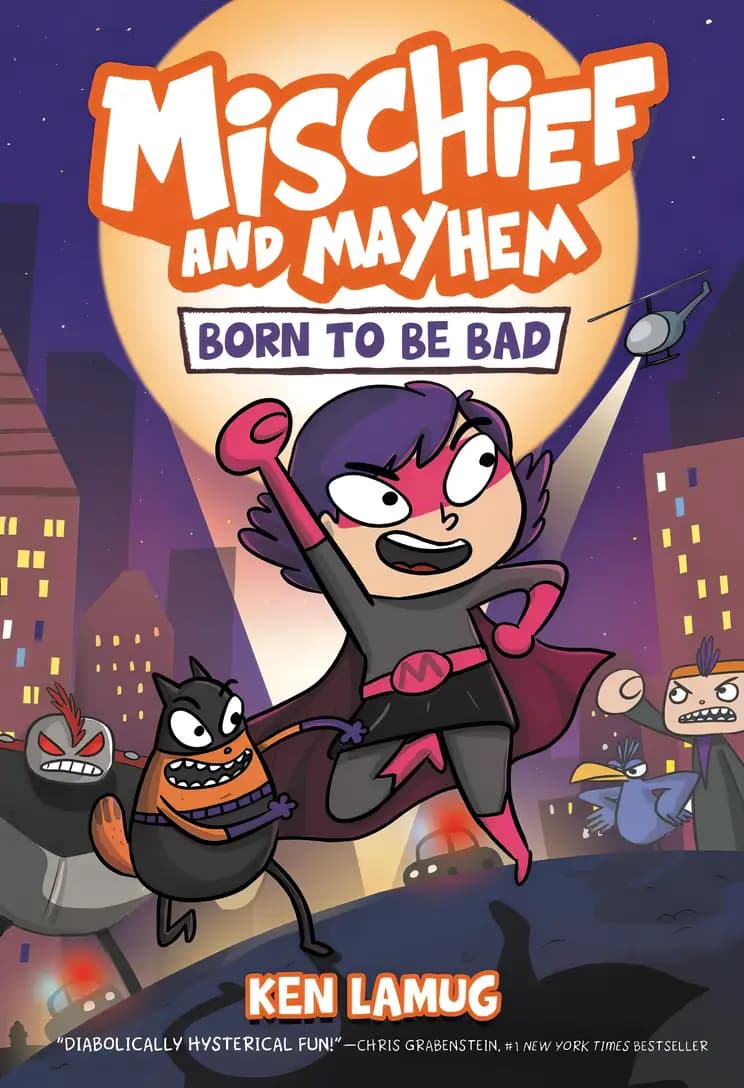
Mischief and Mayhem #1: Born to Be Bad
#1 of 1 in Mischief and Mayhem Series
on Goodreads (159)
What’s inside...
Mischief, and her side-cat, Mayhem, are respectably heinous villains who spoil movies, steal cakes, and target citizens' toilet paper. Previously, they were Missy and Gizmo at superhero camp. Missy, lacking superpowers and relying on her brainpower, is expelled when her deception is discovered. Only camp recruit Melvira supports her and encourages her transformation into a villain named Mischief. However, Missy grows suspicious of Melvira's motives. A confrontation with her former friend looms, questioning Missy's values and testing her resolve. Amidst the chaos, questions arise about Gizmo's survival and the town's toilet paper supply.
Discussion points
What do you think motivated Mischief to be 'Born to Be Bad'?
How do Mischief's actions affect the other characters in the story?
Can you think of a time when something didn't go as planned, just like in Mischief’s adventures?
What lessons do you think Mischief learned by the end of the book?
If you could give Mischief one piece of advice, what would it be?
Tip: Role play these questions
Create a supportive environment that encourages open discussion. Use the questions as a guide to delve deeper into your child's understanding and interpretation of the story. Highlight the consequences of actions, both good and bad, as depicted in the book. Empathize with your child's responses to foster a deeper emotional and moral understanding. Affirm their thoughts to build confidence in expressing their viewpoints.
Key lessons
Example Lesson: Importance of Friendship
Explanation: Throughout the story, the main character learns the value of making and maintaining friendships, even amidst mischief.
Real-World Application: Children can learn to value their peers and work on building strong, supportive friendships in school and other social settings.
Example Lesson: Understanding Consequences
Explanation: The protagonist's adventures often lead to unintended consequences, illustrating that actions have repercussions.
Real-World Application: This teaches children to think about the potential outcomes of their actions and encourages responsible decision-making.
Example Lesson: Creativity and Imagination
Explanation: The book celebrates creative solutions to problems and the joy of imaginative plays.
Real-World Application: Encourages kids to use their imagination in play and problem solving, fostering creativity that is useful in educational settings and beyond.
Example Lesson: Empathy and Understanding
Explanation: Characters in the book learn to understand and empathize with each other’s feelings, promoting emotional intelligence.
Real-World Application: Helps children develop empathy, improving their ability to relate to and interact positively with others.
Example Lesson: Perseverance
Explanation: Despite challenges, the main character persists in their endeavors, demonstrating resilience.
Real-World Application: Teaches children the value of perseverance in overcoming obstacles in learning and personal growth.