
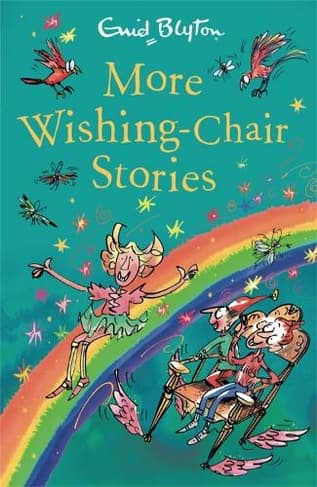
More Wishing-Chair Stories: Book 3
#3 of 11 in The Wishing-Chair Series
What’s inside...
Join Mollie and Peter as they embark on thrilling adventures with their magical Wishing-Chair, meeting fantastical creatures and visiting incredible lands. In this final adventure by Enid Blyton, Molie and Peter are home for half-term and the Wishing-Chair is ready to whisk them away to magical lands. They encounter a mysterious witch's cat, visit the Land of Wishes, and find gold at the end of the rainbow. Additionally, they help deliver presents to ensure Christmas happens. Originally published in magazines between 1937-1952, the stories feature classic texts with updated character names and illustrations by Rene Cloke and cover by Mark Beech.
Character compass
Mollie
Peter
Chinky
Discussion points
What do you think makes the Wishing-Chair so special and magical?
How do the characters work together to solve their problems?
If you had a Wishing-Chair, where would you fly and what adventures would you have?
How do you think the characters felt during their adventures? Can you relate to any of their feelings?
What lessons have you learned from the story?
Tip: Role play these questions
Encourage your child to imagine their imaginary journey with the Wishing-Chair, reinforcing creative thinking.
Discuss the importance of teamwork as shown by the characters, and relate it to your child's everyday experiences with friends or siblings.
After reading, ask your child to draw a scene or character from the book, enhancing their connection with the story.
Share your own thoughts and feelings about the story to model open communication and deepen your shared reading experience.
Key lessons
Example Lesson: The importance of teamwork
Explanation: In 'More Wishing-Chair Stories: Book 3', the characters often rely on each other's strengths and work together to overcome challenges. This teamwork is essential for their adventures.
Real-World Application: Children can learn to collaborate with others at school or during play to achieve common goals and solve problems together.
Example Lesson: Respecting differences
Explanation: The book showcases a variety of characters, each with unique traits. The stories highlight how these differences contribute positively to the group's dynamics and solutions.
Real-World Application: This lesson can help children appreciate diversity among their peers and learn to respect others' opinions and abilities.
Example Lesson: The value of courage
Explanation: Characters in the book often face their fears to help friends or pursue their goals. This demonstration of bravery is a recurring theme.
Real-World Application: Children can be encouraged to face their own fears, whether it's trying new activities, standing up for themselves, or asking for help when needed.
Example Lesson: Responsibility and consequence
Explanation: Throughout the book, characters learn that their actions have consequences. They must take responsibility for their decisions, good or bad.
Real-World Application: This teaches children the importance of thinking before acting and being accountable for their actions, which is crucial in personal development.
Example Lesson: Persistence pays off
Explanation: Characters frequently encounter setbacks in their adventures but they persist, which ultimately leads to success.
Real-World Application: This lesson can inspire children to keep trying in the face of difficulties, whether in academics, learning a new skill, or building relationships.