
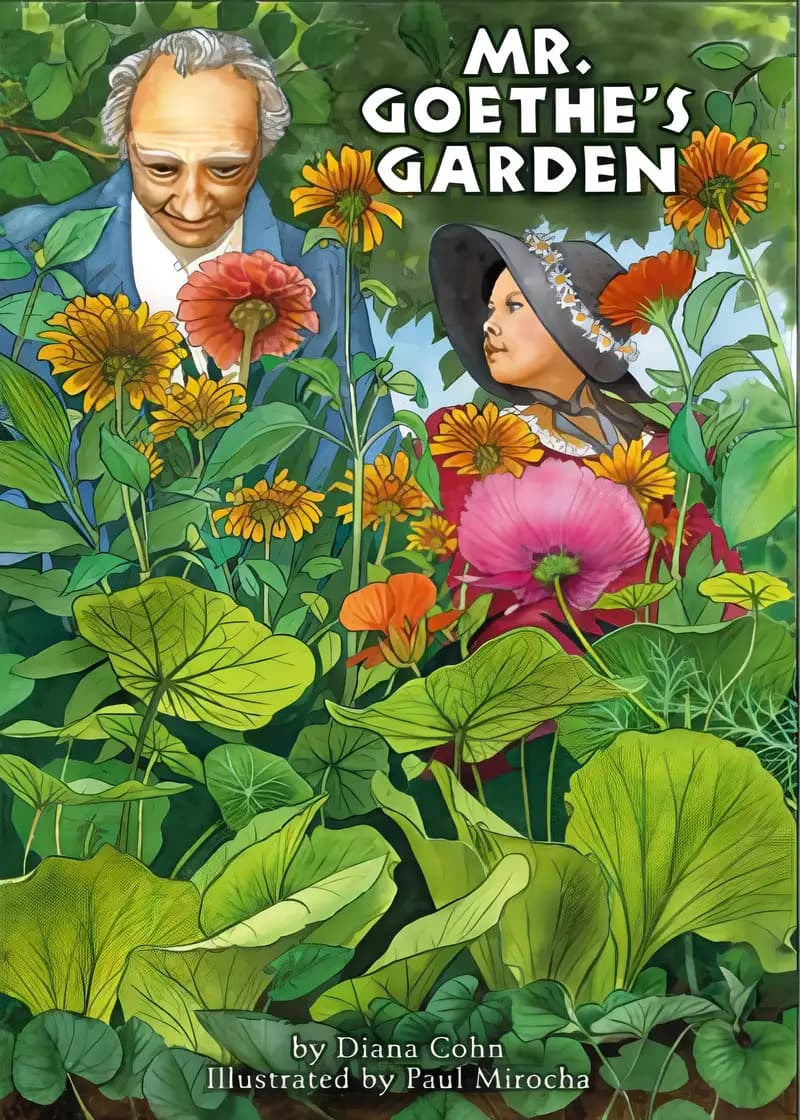
Mr. Goethe's Garden
What’s inside...
Mr Goethe's Garden tells the story of a unique friendship between an inquisitive young girl, Irena, and her neighbour, the elderly world-famous playwright, artist, and natural scientist Johann von Goethe. Set in the 1830s and inspired by Goethe's life and his botanical treatise, The Metamorphosis of the Plant, the book follows Irena as she visits Mr. Goethe in his well-tended garden, learning to draw and observe the natural world in a special way. Exquisitely sensitive illustrations and elegant text reveal the intricate wonders of the plant kingdom, deepening the bonds of friendship between Irena and her wise neighbor as she experiences a new way of seeing the natural cycle of plants. An informative afterword describes the life of Goethe and his many accomplishments.
Age
3-7
Length
32 pages
Text complexity
Character compass
Carl
Johann Wolfgang Von Goethe
Discussion points
What do you think Mr. Goethe meant when he said, 'A garden is a mirror of a soul'?
How do you think the girl felt when she saw the garden change with each season?
Why do you think the garden was important to Mr. Goethe?
What did you notice about the way different plants and animals interacted in the garden?
Tip: Role play these questions
Encourage your child to relate the changing seasons in Mr. Goethe's garden to changes they observe in their own environment.
Discuss the emotions conveyed through the book’s illustrations, asking your child how they think the characters feel in different scenes.
Ask your child to imagine their own garden and what they would grow, reinforcing the theme of creativity and personal growth.
Key lessons
Example Lesson: The importance of nurturing creativity
Explanation: In 'Mr. Goethe's Garden,' the story revolves around the poet Goethe who shares his love for plants and poetry with a young girl, encouraging her creative expressions through their interactions.
Real-World Application: Children learn that creativity can be cultivated through supportive relationships and environments, encouraging them to explore and express their own creative talents in daily activities.
Example Lesson: The value of intergenerational relationships
Explanation: The friendship between Goethe and the young girl shows how relationships between younger and older generations can be enriching, as they share knowledge, stories, and experiences.
Real-World Application: Children are encouraged to spend time with older family members or friends, fostering an appreciation for the wisdom and experiences these relationships can provide.
Example Lesson: Connecting with nature
Explanation: The garden setting plays a pivotal role in the book, highlighting Goethe's connection to the natural world and how it inspires him. This setting provides a backdrop for many teaching moments between Goethe and the girl.
Real-World Application: This lesson encourages children to engage with and appreciate the natural environment, whether through gardening, exploring parks, or observing plants and wildlife, promoting a lifelong respect for nature.
Example Lesson: Patience and observation
Explanation: Goethe teaches the young girl to observe the plants carefully, showing how patience can lead to greater understanding and insights in natural science and life.
Real-World Application: Children learn the importance of patience and careful observation, skills that can be applied in academic settings or when learning new skills or hobbies.
Example Lesson: The joy of shared learning
Explanation: The book illustrates how shared activities like tending a garden or discussing poetry can strengthen bonds and enhance the joy of learning.
Real-World Application: This encourages children (and parents) to seek shared educational activities, enhancing both learning outcomes and family or community bonds.