
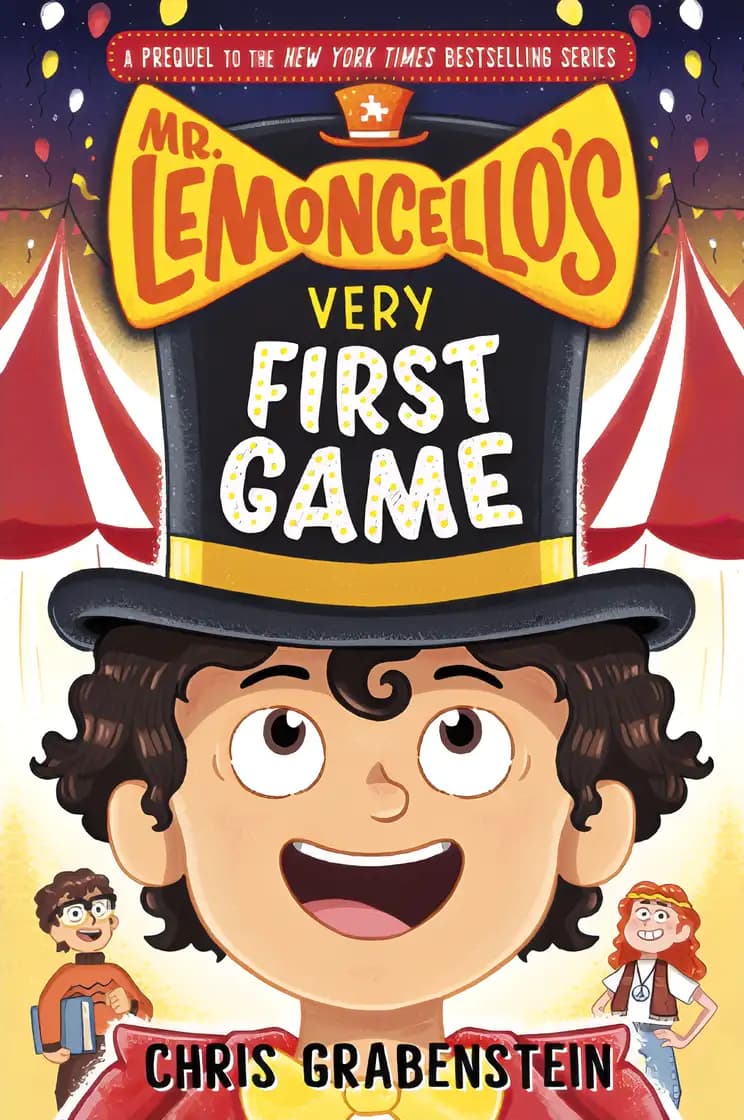
Mr. Lemoncello's Very First Game: Mr. Lemoncello's Library
#1 of 6 in Mr. Lemoncello's Library Series
on Goodreads (1,403)
What’s inside...
Before Mr. Lemoncello became everyone's favorite game maker, he was a kid who liked to roll the dice. Discover the origins of Mr. Lemoncello's Library in this prequel to Escape from Mr. Lemoncello's Library. Go back to the start and meet thirteen-year-old, puzzle-obsessed Luigi Lemoncello! Luigi has a knack for games and puzzles. But sometimes it feels like the cards are stacked against him. Until a carnival arrives in town and Luigi gets the chance of a lifetime: the opportunity to work for the world famous Professor Marvelmous, a dazzling, banana-hat-wearing barker who puts the show in showman! When the carnival closes, Professor Marvelmous leaves behind a mysterious puzzle box along with a clue. A clue that will lead Luigi and his friends on a fantastical treasure hunt to a prize beyond anything they could imagine--if they can find it! Can Luigi crack the codes and unlock the box's secrets? Will there be puzzles? Of course! Balloons? You bet! Will it be fun? Hello! It's a Lemon-cello! Bonus! Can YOU crack the hidden puzzle inside?!
Discussion points
What do you think inspired Mr. Lemoncello to create his games and library? How does his creativity inspire you?
If you could design your own game like Mr. Lemoncello, what rules and features would it have? What makes a game fun and fair?
Mr. Lemoncello's library is filled with amazing inventions and surprises. What was your favorite part of the library, and why?
How do the characters in the book work together to solve problems? Can you think of a time when you had to work with others to achieve a goal?
What lessons did the characters learn by the end of the story? How do those lessons apply to your own life or situations?
Tip: Role play these questions
Use open-ended questions that encourage your child to think critically about the story and relate it to their own experiences.
Discuss the importance of creativity and teamwork as demonstrated in the book, highlighting how these skills are valuable in real life.
Encourage your child to describe their favorite part of the book, then delve deeper into why they found it particularly engaging or exciting.
Relate the challenges faced by characters in the book to challenges your child may face, discussing how they might use similar strategies to overcome them.
After discussing the book, consider engaging in a creative activity together, such as designing a simple game or drawing a new invention, inspired by Mr. Lemoncello's library.
Key lessons
Example Lesson: The importance of teamwork
Explanation: In 'Mr. Lemoncello's Very First Game,' characters must collaborate to solve puzzles and find clues. This emphasizes the value of working together to achieve a common goal.
Real-World Application: Children can apply this lesson by engaging in group activities at school or in sports, learning to cooperate and value each team member's contributions.
Example Lesson: Creative problem solving
Explanation: The book showcases characters using imagination and creativity to navigate the challenges posed by Mr. Lemoncello’s game, highlighting the importance of thinking outside the box.
Real-World Application: Kids are encouraged to use creative thinking in their daily challenges, such as finding innovative solutions for tasks or conflict resolution with peers.
Example Lesson: Value of knowledge and learning
Explanation: The library setting and game clues in the book underscore the significance of reading and continuous learning. Characters use their knowledge to advance in the game.
Real-World Application: This lesson can inspire children to explore reading as a fun way to learn new things and as a tool that empowers them to solve problems and make informed decisions.
Example Lesson: Respect and sportsmanship
Explanation: Throughout the game, characters learn to treat each other with respect, even in a competitive setting, which teaches the reader about fairness and integrity.
Real-World Application: Children learn to apply respect and good sportsmanship in real-life competitions and interactions, understanding that how you play the game is just as important as winning.