
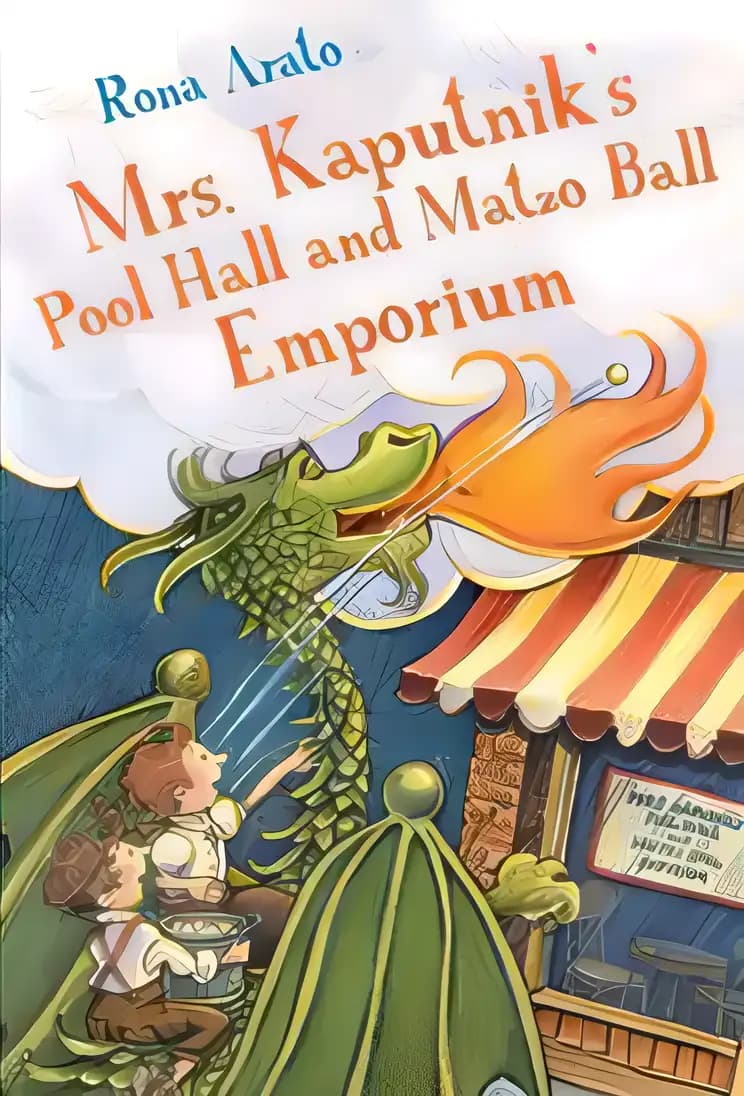
Mrs. Kaputnik's Pool Hall and Matzo Ball Emporium
on Goodreads (20)
What’s inside...
Ten-year-old Shoshi and her eight-year-old brother, Moshe, arrive in New York in 1898 from Russia with their mother and Snigger, the baby dragon. Their father came to New York five years earlier to make his fortune but disappeared. As they navigate New York City's Lower East Side, they encounter various characters including Salty the seaman, carnival barker Aloysius P. Thornswaddle, pitcher Dingle Hinglehoffer, and the mysterious Man in the Black Cape. With Snigger's help, they solve the mystery of their father's disappearance and free the Lower East Side from gangster Nick the Stick's rule, experiencing a journey full of discovery, adventure, and fun.
Age
9-12
Length
192 pages
Text complexity
Discussion points
How do you think Shoshi felt when her family moved to the new city? How would you feel in her place?
What are some ways the Kaputnik family showed they cared for each other throughout their challenges?
Why do you think the author included different quirky characters in the story, like the three Srulek brothers?
How did the Matzo Ball Emporium change the family’s life and the community?
What lessons can we learn about resilience and creativity from the Kaputnik family?
Tip: Role play these questions
Before starting the book, ask your child to predict what the story might be about just by hearing the title. This helps set the stage for engaged reading.
Discuss each character with your child. Ask them who their favorite character is and why, helping them connect more deeply with the characters.
Use the historical setting of the book to educate your child about the time period. Compare and contrast it with today's world, which helps them develop a better understanding of history and cultures.
After finishing the book, encourage your child to express which part of the story they found most exciting or surprising. It's a great way for them to practice articulating thoughts and feelings.
Encourage your child to think of a different ending for the story. This nurtures their creativity and problem-solving skills.
Key lessons
Example Lesson: Resourcefulness
Explanation: In the story, the Kaputnik family utilizes their creativity and resourcefulness to transform a rundown pool hall into a thriving business. They solve problems and make the most of the resources available to them.
Real-World Application: Children can learn to think creatively and use available resources to solve problems, whether it's in their school projects or daily challenges.
Example Lesson: Family Unity
Explanation: The Kaputnik family works together to overcome hardships and establish their emporium, showcasing the strength of family bonds and teamwork.
Real-World Application: This lesson emphasizes the importance of working together with family members to achieve common goals, reinforcing teamwork and communication skills.
Example Lesson: Cultural Appreciation
Explanation: The story introduces various cultural elements, including traditional Jewish foods like matzo balls, highlighting the richness of cultural diversity.
Real-World Application: Children learn to appreciate and respect different cultures and traditions, which is vital in our diverse society.
Example Lesson: Perseverance
Explanation: Despite numerous challenges, the Kaputnik family perseveres and remains optimistic. Their determination ultimately leads to success.
Real-World Application: This teaches children the value of persistence and maintaining a positive attitude in the face of difficulties, fostering resilience.
Example Lesson: Entrepreneurship
Explanation: The establishment of the emporium illustrates basic entrepreneurial skills and the importance of innovation in business.
Real-World Application: Children can learn about entrepreneurship, the value of innovative ideas, and the basics of starting a business, inspiring future young entrepreneurs.