
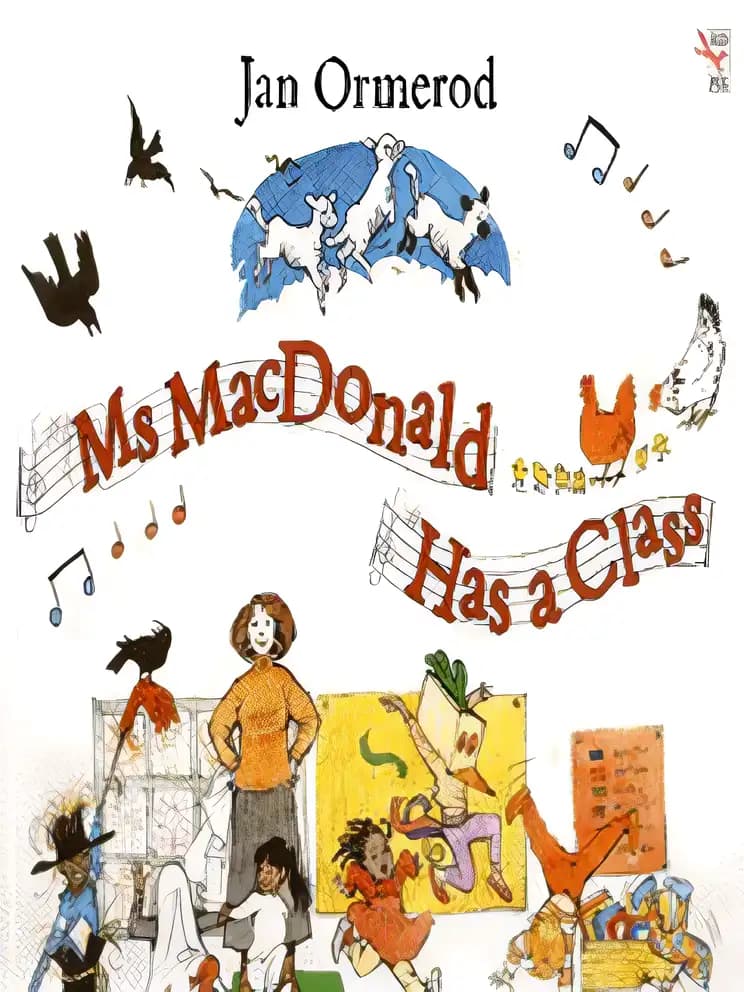
Ms. Macdonald Has a Class
What’s inside...
Detailed illustrations and a cumulative text, perfect for reading aloud, makes this the ideal book for children who are just entering the world of school. In this picture book Ms MacDonald takes her class down to the farm. “Lucky are the kids in Ms. MacDonald’s kindergarten, for she makes learning the joyous experience it can and should be. The rhythm and rhyme of the nursery song relate a class visit to a farm and the follow-up classroom activities that culminate in a performance for family members. The children dance and sing, plan and measure, create and clean up—whole language in a nutshell. As always Ormerod’s drawings capture the personalities and animated exuberance of her characters; 24 multicultural munchkins do their kindergarten thing. . . . A winner!”—School Library Journal
Age
4-7
Length
32 pages
Text complexity
Discussion points
Why do you think Ms. Macdonald enjoys teaching her class?
What new things did the children learn today?
How do you think the children feel when they are in Ms. Macdonald's class?
If you were in Ms. Macdonald's class, what activities would you like to do?
Can you think of ways how you help others learn something new?
Tip: Role play these questions
Use a warm and encouraging tone to make your child feel comfortable in expressing their thoughts about the book.
Allow your child to lead parts of the conversation to gauge their understanding and perspectives.
Relate the classroom experiences in the book to your child’s own experiences in school to make the discussion more relatable.
Highlight the themes of learning and teamwork featured in the book to reinforce their importance.
Encourage your child to imagine themselves in the story, which can help enhance their empathy and creative thinking.
Key lessons
Example Lesson: The importance of inclusivity and diversity
Explanation: Ms. Macdonald's classroom is a space where children from various backgrounds and abilities come together, highlighting inclusivity and diversity.
Real-World Application: Children can learn to appreciate and celebrate differences among their peers, promoting a more inclusive mindset in their daily interactions at school and in the community.
Example Lesson: Teamwork and collaboration
Explanation: Throughout the book, students in Ms. Macdonald’s class work together on projects, emphasizing the value of teamwork.
Real-World Application: This lesson encourages children to participate in group activities, enhancing their ability to cooperate and work effectively with others.
Example Lesson: Respect and empathy
Explanation: Ms. Macdonald teaches her students to listen to each other’s ideas and treat everyone with respect.
Real-World Application: Children can apply these principles by showing empathy and respect in their interactions, helping them to build strong, positive relationships.
Example Lesson: Creativity and expression
Explanation: The classroom setting allows students to express themselves through various creative activities like drawing and storytelling.
Real-World Application: Encouraging children to engage in creative activities can help develop their imaginative skills and express their emotions in a healthy way.
Example Lesson: Responsibility
Explanation: Students are given tasks and roles within the classroom, teaching them about responsibility and accountability.
Real-World Application: This can help children understand the importance of fulfilling their duties and being dependable in both their academic and personal lives.