
My Real Name is Hanna
What’s inside...
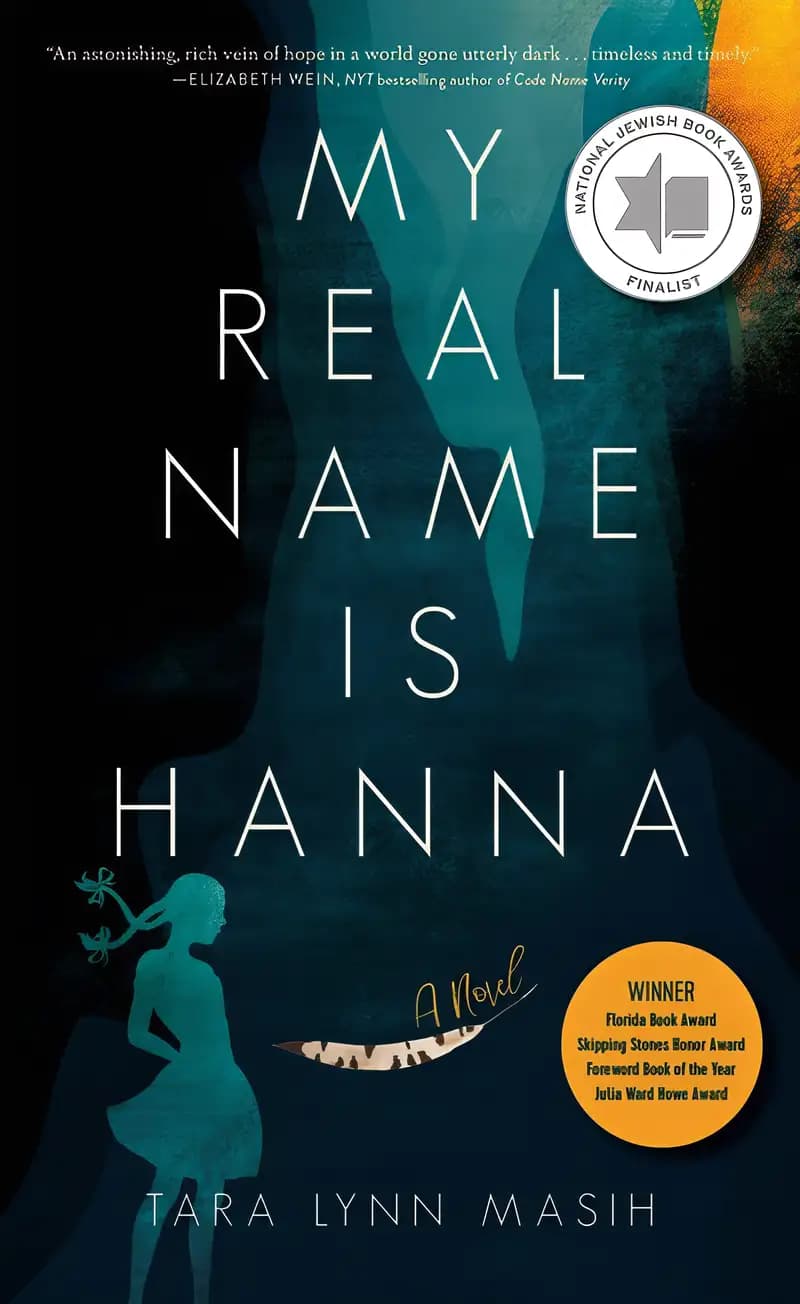
1941, Hitler's army crosses into Soviet-ruled Ukraine in a secret mission titled 'Operation Barbarossa.' A young Jewish girl, Hanna Slivka, is fourteen when German soldiers arrive in her small village of Kwasova. Until their arrival, Hanna has split her time between playing with her younger siblings, sharing drawings with the sweet shy Leon Stadnick, and assisting her neighbor, Mrs. Petrovich, with her annual dyeing and selling of psyanky, decorative eggs. But now, she, Leon and their families are forced into hiding, first in the woods outside of their town and then into caverns beneath it. They battle sickness and starvation, and the local peasants who join the Nazis in hunting Jews through the ravaged countryside, but at no time are they more tested than when Hanna's father - briefly above ground to scavenge for food - goes missing, and suddenly, it's on Hanna to find him, and to find a way to keep her mother, brother and sister alive. This novel is inspired by the true story of Esther Stermer and her family, who survived underground for 511 days. Less than 5% of the Jewish population in Ukraine survived these Holocaust 'Actions.'
Age
12-17
Length
195 pages
Text complexity
Character compass
Hanna Slivka
Leon Stadnick
Abram Slivka
Eva Slivka
Leeba Slivka
Symon Slivka
Levi Yurkovich
Discussion points
How do you think Hanna felt when she had to hide her real identity? What would you do in her situation?
Why is it important to remember and talk about historical events like the Holocaust?
Hanna finds strength and courage throughout her journey. Can you think of a time when you had to be brave?
How does the friendship play a role in Hanna's survival? What does this tell us about the importance of friends and family during hard times?
If you were to write a letter to Hanna, what would you say to her?
Tip: Role play these questions
Encourage your child to express their feelings about the story, and share your own thoughts to create an open dialogue.
Discuss the historical context of the book before diving into the story, providing a foundation for understanding the gravity of the events described.
Ask your child to draw parallels between Hanna’s life and their own. This can help them connect more deeply with her character and her experiences.
Encourage your child to think critically by asking them what different choices they might have made if they were in Hanna’s shoes.
Create a family reading time where you can read some chapters together, fostering a shared experience and deeper engagement with the text.
Key lessons
Example Lesson: Resilience in the face of adversity
Explanation: Hanna demonstrates resilience as she and her family endure hiding during the Holocaust, showcasing strength and bravery under dire circumstances.
Real-World Application: Children can learn to maintain hope and strength in difficult situations, understanding that perseverance can lead to overcoming challenges.
Example Lesson: The importance of cultural identity
Explanation: Throughout the story, Hanna clings to her Jewish identity, which guides her actions and decisions, showing how deeply cultural roots can shape a person.
Real-World Application: This can inspire children to explore and appreciate their own heritage and recognize the diversity in others' backgrounds.
Example Lesson: The power of hope and optimism
Explanation: Despite the darkness surrounding her, Hanna remains hopeful about the future, which helps her cope with the harsh realities she faces.
Real-World Application: Children learn the importance of having a positive outlook, which can fundamentally affect their ability to deal with obstacles.
Example Lesson: Family bonds and support
Explanation: Hanna's family provides crucial emotional support to one another during their time in hiding, illustrating the power of familial love and care.
Real-World Application: This teaches children the value of family relationships and supporting each other during hard times.
Example Lesson: Courage to stand up against wrong
Explanation: Hanna's story is one of bravery as she confronts the threats and fears imposed by the Nazi occupation but chooses to survive and maintain her identity.
Real-World Application: It encourages children to stand up for what is right and to face injustices courageously regardless of the scale.