
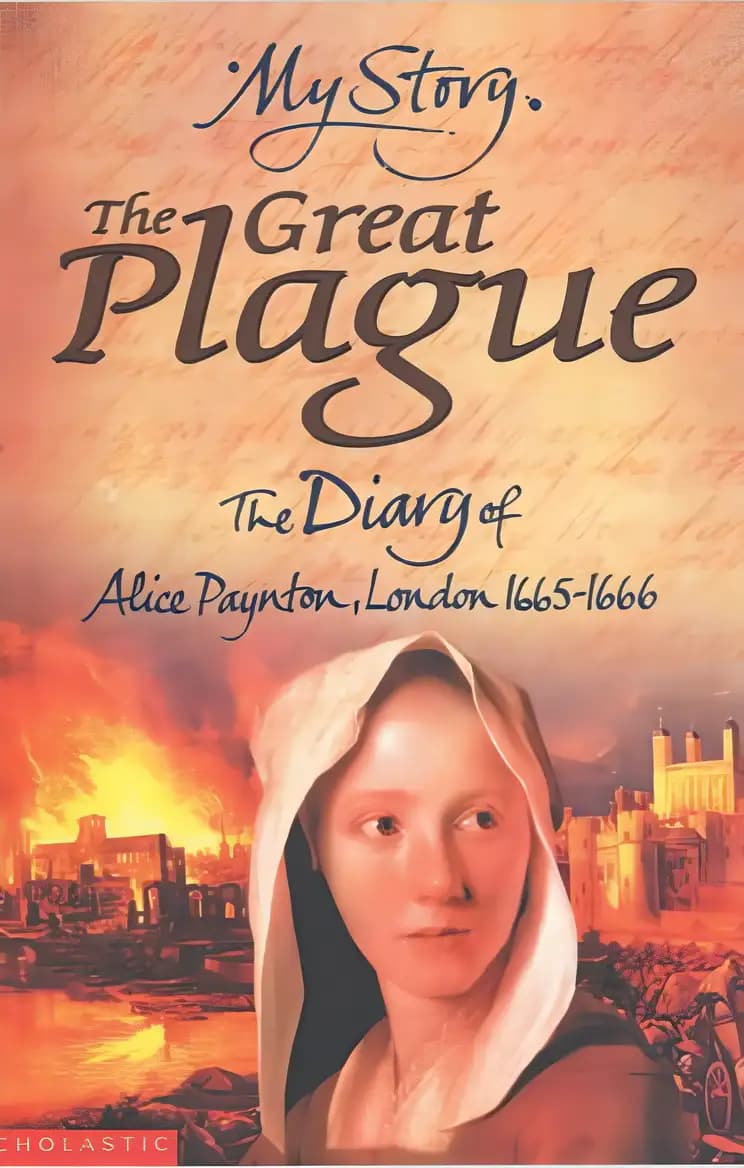
My Story: The Great Plague: A London Girl's Diary, 1665-1666
My Royal Story, My Story: Girls Series
on Goodreads (1,093)
What’s inside...
Seen through the eyes of a 13-year-old girl, this is the story of the bubonic plague in London and how it affected ordinary people. Told in diary format, it covers the year before the Great Fire of London, which ended the threat of the plague.
Series reading
Non-Sequential
Age
8-12
Length
192 pages
Text complexity
Character compass
Alice Paynton
Mrs. Paynton
Master Paynton
Discussion points
How do you think Alice felt during the Great Plague and why?
What differences do you notice between how people lived in 1665 and how we live today?
What would you have done if you were in Alice's situation during the plague?
How do the events and people in the diary help us understand history better?
What lessons can we learn from Alice's experiences and the Great Plague?
Tip: Role play these questions
Encourage empathy by asking your child how they would feel in Alice’s shoes, discussing the emotions and decisions faced during the plague.
Foster a connection to history by comparing and contrasting daily life in the past and present, making it relevant to your child’s world.
Cultivate critical thinking by discussing the choices made by characters and their consequences, asking your child what they might have done differently.
Guide your child to understand the broader context of the Great Plague and its impact on society, encouraging deeper thought on historical events.
Reinforce the importance of resilience and hope, as illustrated through Alice’s story, to help your child find positive messages in challenging times.
Key lessons
Example Lesson: Empathy and Compassion
Explanation: The protagonist’s experiences during the Great Plague reveal the hardships faced by people, fostering a deep understanding and empathy towards others' suffering.
Real-World Application: Children learn to recognize emotions and situations of others, developing a compassionate approach towards friends and family in their everyday interactions.
Example Lesson: Resilience in the face of adversity
Explanation: The diary format of the book provides an intimate glimpse into the protagonist's perseverance through incredibly challenging times, highlighting the importance of resilience.
Real-World Application: This encourages children to maintain a positive outlook and keep striving forward despite difficulties they encounter in their own lives.
Example Lesson: Historical Awareness
Explanation: Set in a significant historical period, this book educates children on the impacts of the Great Plague, enhancing their knowledge and awareness of history.
Real-World Application: Understanding such historical events helps children appreciate the past and recognize its influence on the present, contributing to their overall educational development.
Example Lesson: Critical Thinking
Explanation: As children follow the diary entries, they witness the protagonist questioning the events and decisions made during the plague, which promotes critical thinking.
Real-World Application: Kids are inspired to think critically about situations in their own lives, leading to better decision-making skills.
Example Lesson: Valuing Community and Cooperation
Explanation: Throughout the Great Plague, the sense of community and the need for cooperation among individuals are evident as people come together to face a common threat.
Real-World Application: This teaches children the importance of teamwork and helping each other in times of need, skills that are valuable in school projects and family life.