
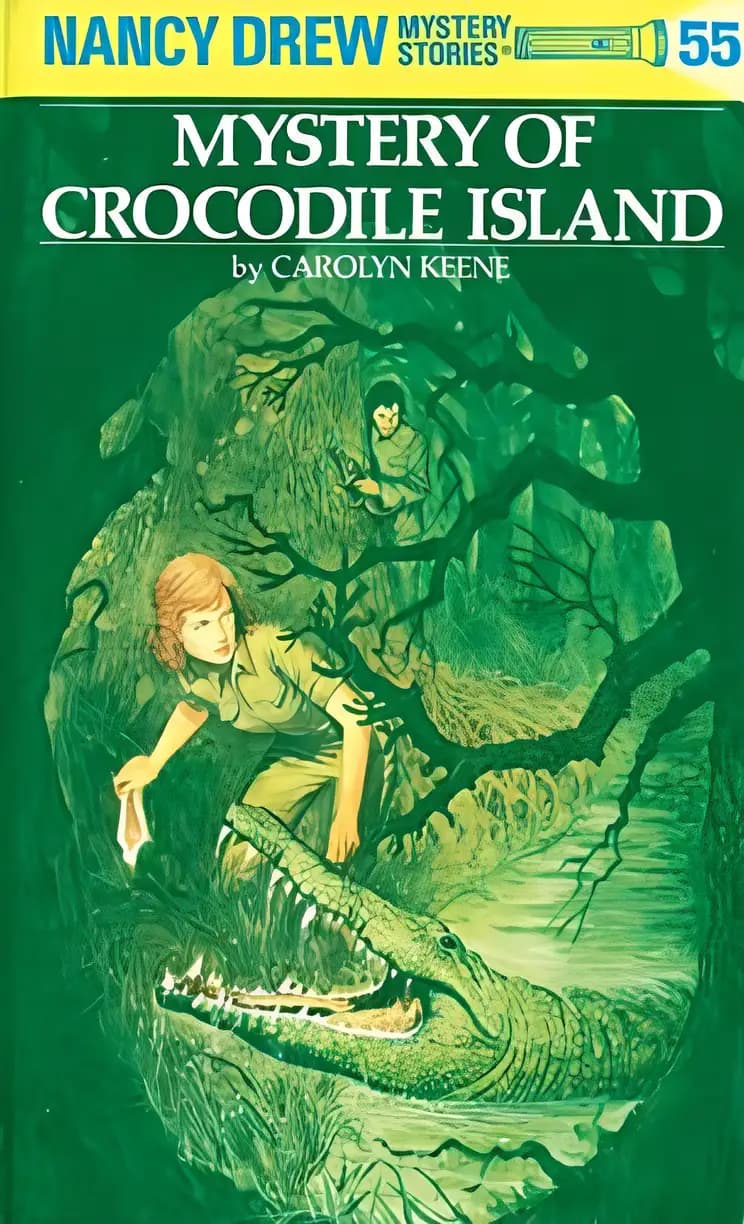
Mystery of Crocodile Island
#55 of 163 in Nancy Drew Series
on Goodreads (4,283)
What’s inside...
Nancy Drew and her friends embark on an adventure to Crocodile Island to uncover a gang of sophisticated art thieves and investigate suspected poachers. They encounter dangerous crocodiles, kidnappings, and thrilling chases, but ultimately expose the criminals and solve the case. They also endure being held for ransom in a submarine, but eventually are rescued and succeed in turning the tables on the island's owners.
Character compass
Nancy Drew
George Fayne
Bess Marvin
Ned Nickerson
Carson Drew
Discussion points
What do you think Nancy felt when she first arrived at Crocodile Island?
How do you think teamwork helped Nancy and her friends solve the mystery?
What would you have done differently if you were in Nancy's place during her adventure?
Can you think of any other ways the mystery could have been solved?
What did you learn about trust and friendship from this story?
Tip: Role play these questions
Encourage your child to imagine themselves in the setting of Crocodile Island and ask how they would feel exploring such a mysterious place.
Discuss the importance of courage and quick thinking in difficult situations, highlighting Nancy's actions.
Ask your child to describe their favorite character in the book and why they liked them, fostering a deeper connection with the story's characters.
Create a fun activity by mapping out the key events of the mystery with your child, using drawings or notes to make the narrative come alive.
After reading, encourage your child to create their own mystery story, using elements they liked from the book to inspire their creativity.
Key lessons
Example Lesson: Courage in the face of uncertainty
Explanation: The protagonist, Nancy Drew, consistently demonstrates bravery as she investigates the mysteries surrounding Crocodile Island. Her willingness to delve into the unknown and confront challenges head-on is a central theme.
Real-World Application: Children can learn to face their own fears and uncertainties, whether it's trying out for a new sport, standing up in class, or making new friends. Demonstrating courage, like Nancy, helps in overcoming personal challenges and growth.
Example Lesson: Critical thinking and problem-solving
Explanation: Throughout the book, Nancy employs logical reasoning and clever problem-solving strategies to unravel clues. Her methodical approach to solving the mystery encourages critical thinking.
Real-World Application: This skill is vital for children in academic settings and daily decisions. It teaches them to analyze situations, think ahead, and come up with constructive solutions.
Example Lesson: Persistence and resilience
Explanation: Nancy faces numerous setbacks during her investigation on Crocodile Island but remains persistent in her quest for truth. Her resilience in overcoming obstacles is inspiring.
Real-World Application: Persistence is a key lesson for children when dealing with difficult tasks at school or in personal projects. Learning not to give up easily, even when faced with failures, is crucial for long-term success.
Example Lesson: Teamwork and collaboration
Explanation: Nancy often works alongside her friends Bess and George, showcasing the power of teamwork. Their collaboration is essential in piecing together the mystery.
Real-World Application: This emphasizes the importance of working with others, sharing ideas, and supporting team members, skills that are beneficial in school projects and family activities.
Example Lesson: Ethical decision-making
Explanation: Throughout the story, Nancy faces various moral dilemmas and consistently chooses to do what is right, even when it's the harder choice.
Real-World Application: Children can learn the importance of honesty and integrity. Making ethical decisions builds character and trustworthiness in personal and academic relationships.