
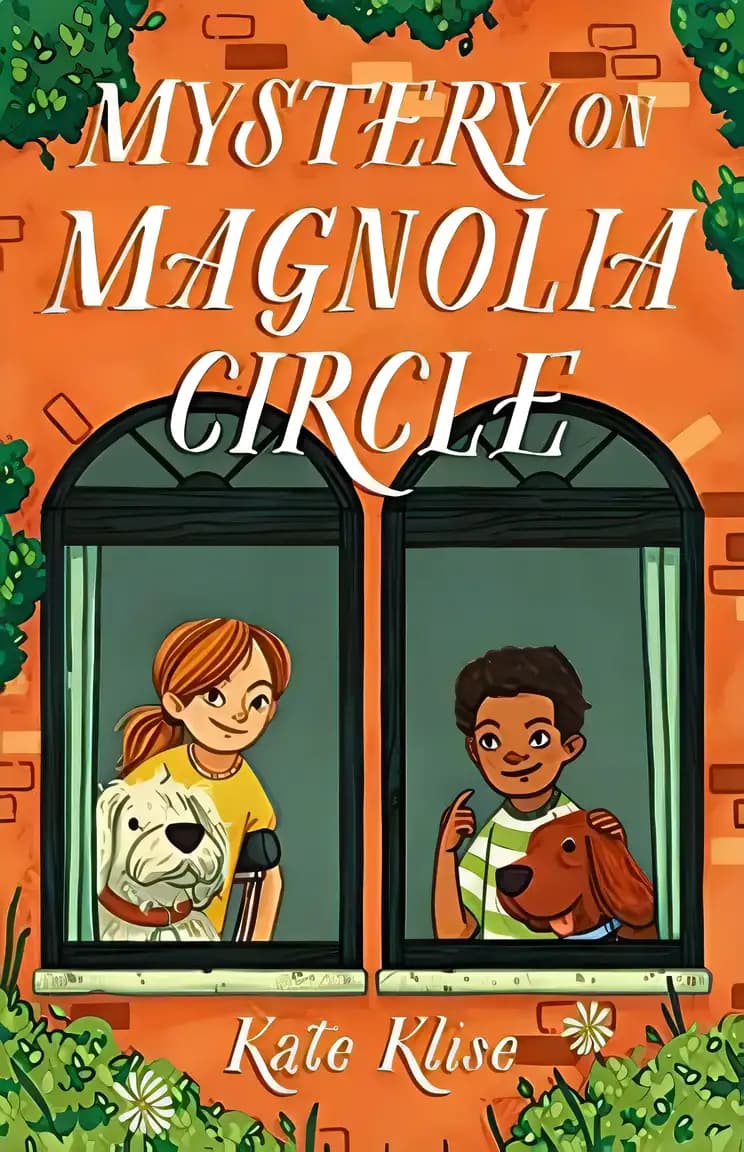
Mystery on Magnolia Circle
#1 in Magnolia Circle Mysteries Series
What’s inside...
Rear Window meets Nancy Drew in this middle-grade novel by Kate Klise about a girl who believes she has witnessed a crime. On the first day of vacation, ten-year-old Ivy Crowden falls down the stairs and breaks her leg, resigning herself to a ruined summer. Her neighbor and best friend, Teddy, can't even cheer her up due to the loss of his beloved dog. However, when Ivy witnesses a possible burglary from her living room window, her summer suddenly becomes filled with mystery and intrigue. Together with Teddy, they navigate the uncertainties of the case, wondering if a classmate could be involved and uncovering a second mystery along the way. With the support of their friends and a loyal dog, Ivy and Teddy find a way to turn their worst summer into an adventurous one.
Character compass
Ivy
Teddy
Discussion points
What did you think about the way the characters solved the mystery? Could you think of other ways they might have solved it?
How did the relationships between the characters change throughout the story? Why do you think these changes happened?
What were your favorite clues in the mystery? Why did they stand out to you?
If you were a character in 'Mystery on Magnolia Circle', who would you be and why?
What lessons did the characters learn by the end of the book? How can we apply those lessons to our own lives?
Tip: Role play these questions
Ask your child to summarize the story before diving into deeper discussion. This encourages recall and comprehension.
Encourage your child to relate personally to the characters or situations in the book. Ask questions like 'Has anything similar ever happened to you?'
Focus on the problem-solving aspects of the book. Discuss the steps the characters took to solve the mystery and encourage your child to think critically about alternative solutions.
Create a comfortable, distraction-free environment for discussions to help your child focus and engage more deeply.
Praise your child's responses and insights, and build on them to extend the conversation. This will reinforce their confidence and enjoyment in discussing what they read.
Key lessons
Example Lesson: The importance of community
Explanation: In 'Mystery on Magnolia Circle,' the protagonist learns to connect and work together with neighbors to solve a local mystery, showcasing the strength and support a tight-knit community can offer.
Real-World Application: Children can be encouraged to participate in community activities and learn the value of teamwork and mutual support in their neighborhood or school.
Example Lesson: Critical thinking and problem-solving
Explanation: The book emphasizes the protagonist's journey in piecing together clues and making logical deductions to solve the mystery, highlighting the process of critical thinking.
Real-World Application: Kids can apply critical thinking skills in their daily decisions and in solving problems, whether academic or personal, by assessing situations and considering various outcomes.
Example Lesson: Empathy and understanding different perspectives
Explanation: As the mystery unfolds, characters in the story express different viewpoints and experiences, teaching the reader to understand and empathize with diverse perspectives.
Real-World Application: This lesson helps children in recognizing the importance of empathy and understanding in their interactions with peers and adults, fostering healthier relationships.
Example Lesson: Courage and taking initiative
Explanation: The young characters in the story often take bold steps to follow leads and confront challenges, showing bravery and initiative.
Real-World Application: Children learn to be proactive and brave when faced with challenges, understanding that their actions can make a difference.