
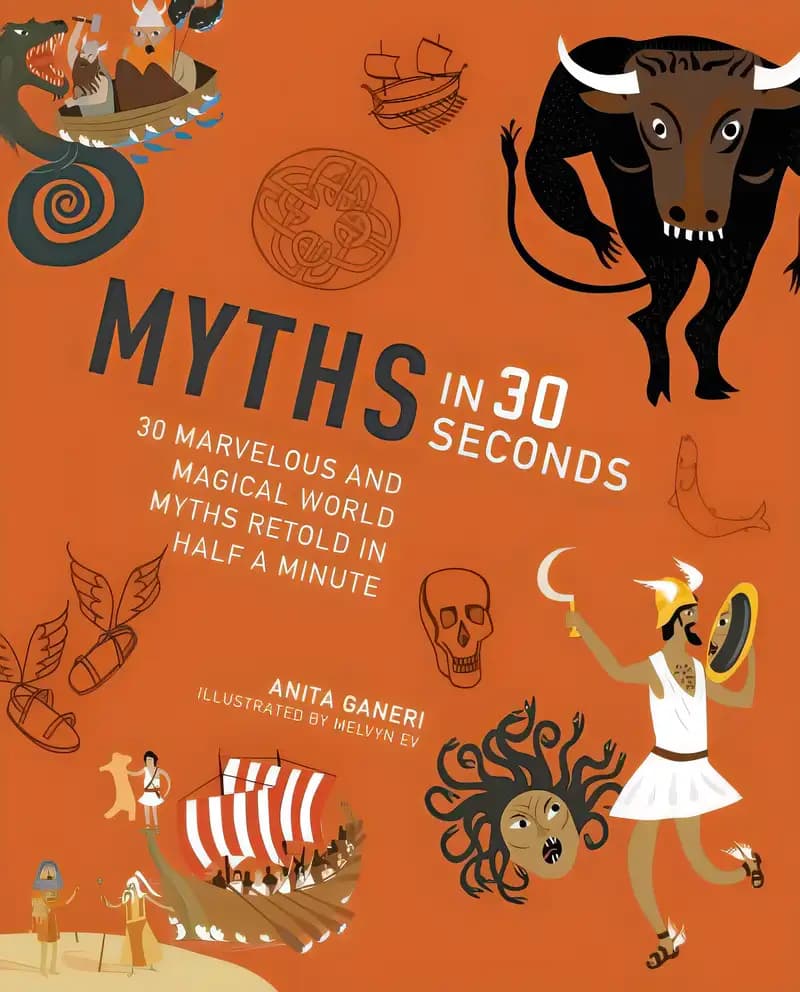
Myths in 30 Seconds (Ivy Kids) /anglais
#3 of 22 in Kids 30 Seconds Series
on Goodreads (42)
What’s inside...
This book provides a lively and engaging introduction to 30 marvelous myths from around the world. Each myth is retold in a concise 30-second soundbite, accompanied by a 3-second flash summary and vibrant artwork. The book is organized into six themed sections, including Creation Myths, Quests & Adventures, and Gods & Goddesses, making it a perfect resource for young readers aged 8-12 looking to explore the history of mythology. The attention-grabbing format uses words and illustrations memorably, making key stories from a range of cultures engaging for an audience aged from 8-12.
Discussion points
What is your favorite myth from the book and why did it interest you?
How do the heroes in these myths compare to modern-day heroes?
Can you think of a moral or lesson that one of the myths teaches us?
If you could meet any character from the myths, who would it be and what would you ask them?
How do you think the world would be different if people still believed in these myths today?
Tip: Role play these questions
Utilize the '30 seconds' concept of the book to keep the discussion lively and brief, encouraging quick thinking and short, focused answers.
Encourage your child to express their opinions about the myths and relate them to their own experiences or desires.
Ask them to draw parallels between the mythological characters and people they know or characters from other books and movies.
After discussing a myth, encourage creative activities like drawing scenes or characters, or creating a short story inspired by the myth.
Use the myths as a springboard to explore more about the cultures from which they originated, enhancing both cultural knowledge and reading enjoyment.
Key lessons
Example Lesson: Understanding diverse cultures
Explanation: The book introduces children to various myths from different cultures, helping them appreciate global diversity.
Real-World Application: Children can become more open and respectful towards people from different backgrounds and cultures, fostering inclusiveness in their everyday interactions.
Example Lesson: The importance of storytelling
Explanation: Myths are an ancient form of storytelling that have been used to pass knowledge and moral values from one generation to the next.
Real-World Application: Children learn to value and continue the tradition of sharing stories, which can help in enhancing their communication skills and sparking creative thinking.
Example Lesson: Moral reasoning
Explanation: The book presents various myths that feature moral dilemmas and the consequences of characters' decisions.
Real-World Application: Children can apply these lessons by evaluating their choices and thinking about the consequences in real-life scenarios, aiding in the development of their moral compass.
Example Lesson: Problem-solving skills
Explanation: Many myths involve heroes overcoming great challenges, which can inspire problem-solving strategies in young readers.
Real-World Application: Children can draw on these examples to approach their problems with resilience and creativity, applying these skills in school and in social situations.
Example Lesson: Historical knowledge
Explanation: By exploring myths, children gain insights into the beliefs and values of ancient civilizations, enriching their historical understanding.
Real-World Application: This knowledge helps children in their academic subjects like history, and encourages a lifelong interest in learning about the past to better understand the present.