
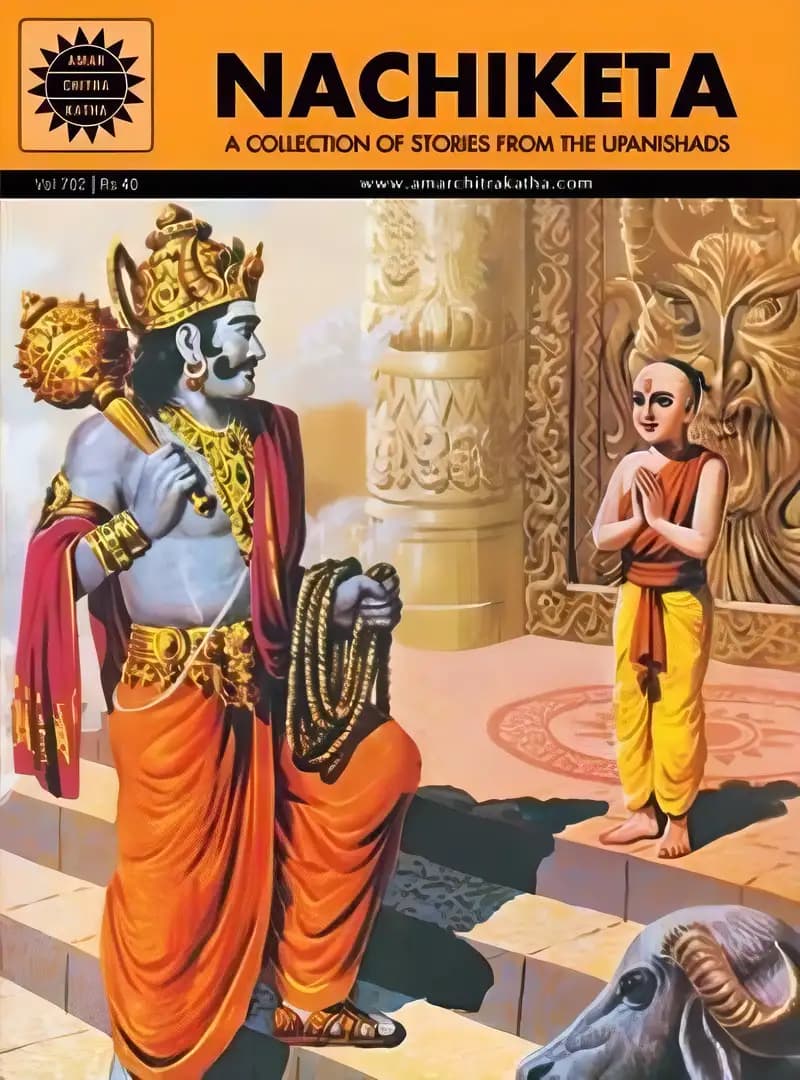
Nachiketa A Collections of the Stories from the Upanishads
on Goodreads (4)
What’s inside...
The book 'Nachiketa A Collections of the Stories from the Upanishads' by Subba Rao presents a series of stories derived from the Upanishads, exploring concepts like reality, the soul, and ultimate truth through the character of Nachiketa, a boy who seeks spiritual knowledge from the god of Death, Yama. It makes these teachings accessible, reflecting on morality, enlightenment, and understanding of self and the universe.
Age
12-99
Length
32 pages
Text complexity
Character compass
Nachiketa
Yama
Vajashravas
Discussion points
What do you think Nachiketa felt when he was facing challenges? How would you feel in his situation?
The Upanishads are filled with lessons. What is one lesson you learned from these stories?
How do you think the characters' choices affected their journeys? Can you think of a time when your choice had a big impact on your day?
These stories are very old and have been told for many years. Why do you think people have continued to share them?
What does bravery mean to you? Can you find examples of bravery in Nachiketa’s stories?
Tip: Role play these questions
While discussing the book, relate the moral lessons to everyday situations your child could face, making the stories more relevant.
Ask your child to imagine alternative endings for different stories to foster creativity and explore various perspectives.
Encourage your child to express which characters they felt most connected to and why, as this can lead to deeper emotional understanding and empathy.
Host a family story night where everyone picks their favorite story from the book and discusses why it stands out to them, promoting shared family experience.
Use the themes from the Upanishads to instill values such as honesty, bravery, and wisdom in your child, reinforcing these through real-life examples.
Key lessons
Example Lesson: Courage in facing the unknown
Explanation: Nachiketa, a young boy, bravely confronts Yama, the god of death, demonstrating immense courage. Despite his fear, he steadfastly seeks answers to the deeper questions of life and death.
Real-World Application: Children learn the importance of facing their fears and uncertainties with bravery. Whether it’s starting a new school or standing up for what is right, courage is a valuable trait in all areas of life.
Example Lesson: Perseverance in seeking knowledge
Explanation: Despite the initial reluctance of Yama to impart spiritual knowledge, Nachiketa persists. His determination to understand profound truths exemplifies perseverance.
Real-World Application: This story encourages children to be persistent in their educational pursuits and curiosity, emphasizing that perseverance leads to profound understanding and personal growth.
Example Lesson: Ethical integrity
Explanation: Nachiketa is offered alluring rewards by Yama to abandon his quest for spiritual knowledge. However, he remains unswayed by material temptations, showing strong moral character.
Real-World Application: Children learn the value of sticking to their principles and making choices that are aligned with their values and ethics, rather than being influenced by external rewards.
Example Lesson: Respect for elders and mentors
Explanation: In his journey, Nachiketa shows utmost respect to Yama, who in turn imparts wisdom. This mutual respect highlights the importance of honoring knowledge givers.
Real-World Application: This teaches children to approach their teachers and elders with respect, fostering a conducive environment for learning and wisdom sharing.
Example Lesson: Understanding life and death
Explanation: The dialogues between Nachiketa and Yama provide deep insights into life, death, and what lies beyond. This philosophical exploration helps in understanding existential concepts.
Real-World Application: Arming children with a mature understanding of life and death prepares them for inevitable life events, helping them deal with loss in a healthy and informed manner.