
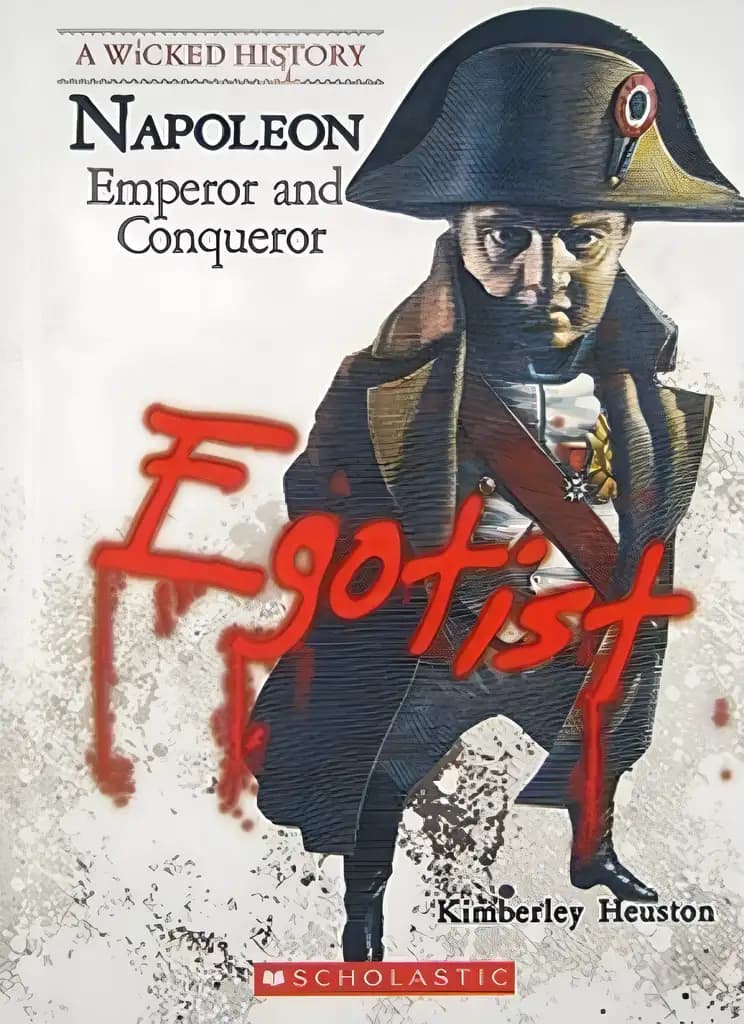
Napoleon (A Wicked History)
A Wicked History Series
What’s inside...
An engaging biography of Napoleon Bonaparte, one of the most brilliant and reckless generals in history, who declared himself emperor of France in 1804, conquered lands from Portugal to Poland, made kings and queens of his family members, and nearly brought all of Europe to its knees. The book features an opening quote about Napoleon, historical maps annotated with key locations from his life, a section on allies and enemies, historical photos and etchings, additional information boxes, six to eight pages of photos with captions, a timeline, glossary, and additional sources, all written in an engaging narrative nonfiction style at a very accessible reading level.
Series reading
Non-Sequential
Age
11-17
Length
128 pages
Text complexity
Character compass
Napoleon Bonaparte
Josephine De Beauharnais
Napoléon Bonaparte
Discussion points
How do you think Napoleon's early life influenced his decisions as a leader?
What qualities do you think made Napoleon a powerful leader, and are those qualities inherently good or bad?
Napoleon faced many challenges during his reign. What lesson can we learn from how he handled these obstacles?
Why do you think it's important to study historical figures like Napoleon, even if they are controversial?
If you had the chance to meet Napoleon, what would you ask him and why?
Tip: Role play these questions
Start by asking your child what they know about Napoleon before reading the book. This sets a baseline and sparks initial curiosity.
Encourage your child to think critically about Napoleon’s actions and their consequences, guiding them to form their own opinions on his legacy.
Relate the story to current events or leaders to make the historical content more relevant and engaging for your child.
Utilize the illustrations and any historical documents provided in the book to help your child visualize the era and better understand the context.
After discussing the key questions, encourage your child to write a short summary or draw a picture of what they think was the most pivotal moment in Napoleon’s life.
Key lessons
Example Lesson: The implications of ambition
Explanation: The book explores Napoleon's rise and fall, showcasing how his ambition led both to success and his ultimate undoing.
Real-World Application: Children can learn the importance of balancing ambition with ethical considerations to avoid negative consequences in their own pursuits.
Example Lesson: The impact of leadership
Explanation: Napoleon's leadership style is analyzed, showing how his decisions affected not only France but also the rest of Europe.
Real-World Application: This can help children understand the significance of responsible leadership and the effects their choices can have on others around them.
Example Lesson: The consequences of war
Explanation: The book provides a detailed account of the Napoleonic Wars, demonstrating the widespread suffering and destruction caused by extended conflicts.
Real-World Application: Children can learn the value of peace and the importance of seeking diplomatic solutions to conflicts.
Example Lesson: The importance of resilience
Explanation: Napoleon’s exile and eventual comeback highlight his resilience in the face of adversity.
Real-World Application: This lesson can inspire children to persevere through their own challenges and setbacks.
Example Lesson: The role of strategic thinking
Explanation: Napoleon was known for his strategic mind in both military and political arenas.
Real-World Application: Children can be encouraged to think critically and plan ahead in their daily activities and long-term goals.