
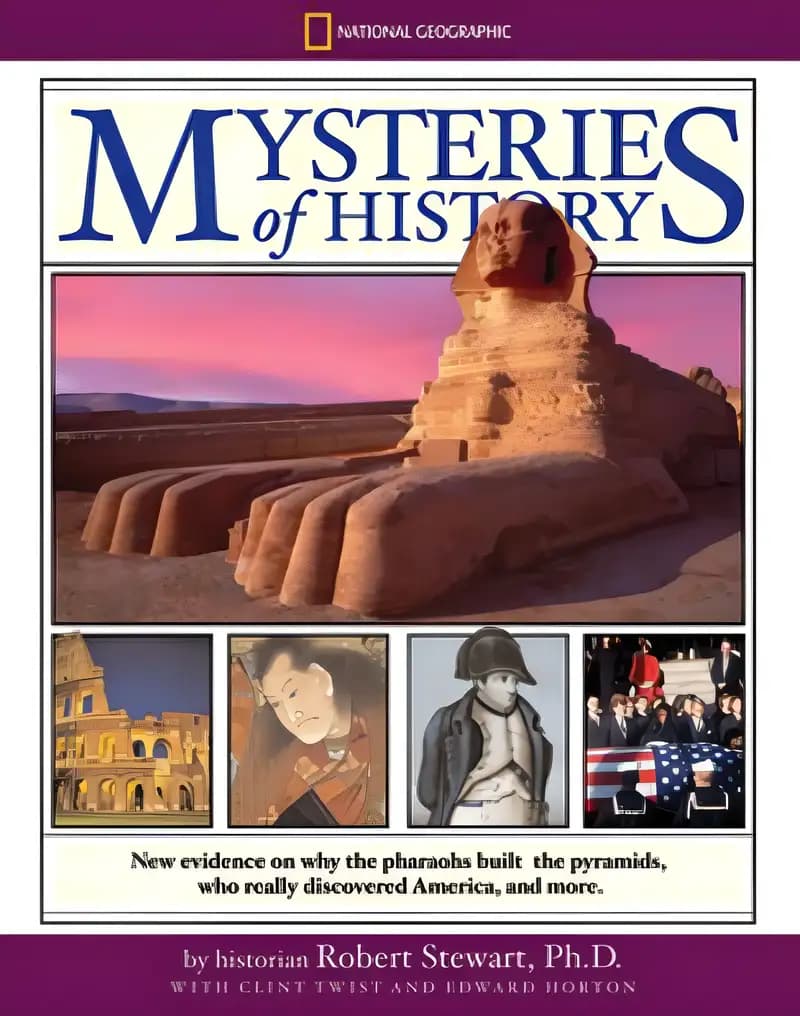
National Geographic Mysteries of History
on Goodreads (66)
What’s inside...
Examines the evidence surrounding some of history's unsolved mysteries, from why the pyramids were built to whether or not there was a conspiracy to kill President John F. Kennedy.
Age
8-12
Length
192 pages
Text complexity
Discussion points
What mystery from the book did you find most intriguing, and why?
How do you think historians uncover secrets from the past?
Can you think of a mystery you would like to solve? What tools do you think you'd need?
How do different cultures throughout history influence our lives today?
If you could go back in time, which historical event would you like to witness and why?
Tip: Role play these questions
Encourage your child to express their opinions and ideas about the mysteries discussed in the book, fostering an environment of open communication.
Discuss the importance of historical perspectives and how they help us understand the world.
Relate the historical mysteries to current events or personal experiences to make the discussion more relevant and engaging.
Prompt your child to ask their own questions about history and explore the answers together, possibly with further reading or research.
Highlight the thrilling aspect of uncovering history, comparing it to detective work to spark their imagination and interest.
Key lessons
Example Lesson: Curiosity and exploration
Explanation: Through uncovering various historical mysteries, the book encourages children to question and explore the unknown.
Real-World Application: Encourages children to ask questions and seek answers about the world around them, fostering a lifelong love of learning.
Example Lesson: Critical thinking
Explanation: The book showcases the importance of analyzing information and looking at different perspectives to understand history.
Real-World Application: Helps children to evaluate information critically in their daily lives, enhancing decision-making and problem-solving skills.
Example Lesson: Appreciation for history
Explanation: By exploring past events and cultures, children learn to value and respect the diversity and complexity of human history.
Real-World Application: Promotes respect and understanding for different cultures and histories, helping to cultivate a more inclusive mindset.
Example Lesson: Problem-solving
Explanation: The mysteries presented require readers to think logically and piece together information to form conclusions.
Real-World Application: Equips children with the ability to approach challenges methodically and logically, useful in both academic and personal situations.
Example Lesson: Patience and perseverance
Explanation: Many historical mysteries involve complex puzzles that are not solved immediately, teaching children the value of patience.
Real-World Application: Instills the virtues of patience and perseverance when facing difficult tasks or when answers are not readily apparent.