
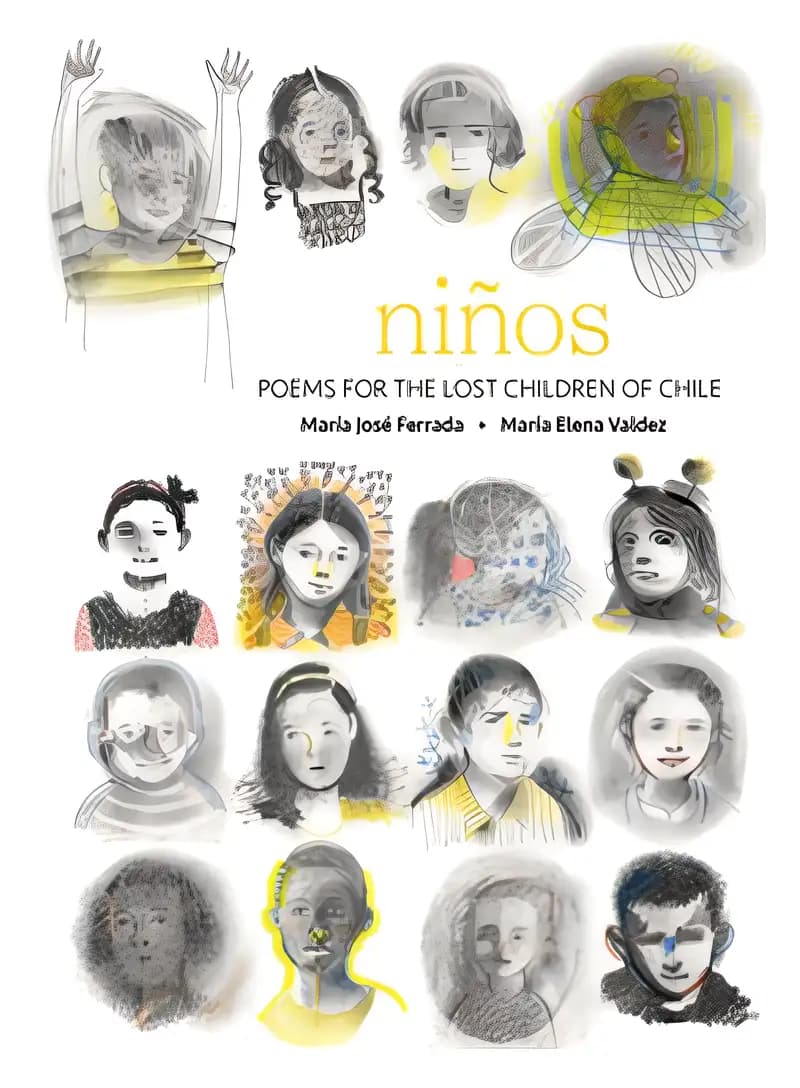
Niños: Poems for the Lost Children of Chile (Stories from Latin America)
What’s inside...
This book presents a collection of thirty-four poems, each dedicated to one of the children who disappeared or were killed during Augusto Pinochet's regime in Chile. It provides a stirring memorial to the young victims and reflects on the cost of political extremism. The poems explore the diverse hopes and dreams of these children, ranging from celebrating birthdays to observing the changing seasons and listening for new sounds. Accompanied by soft, pastel-toned illustrations, this collection serves as a poignant tribute to the lost lives and a reflection on a dark chapter in Chilean history. On September 11, 1973, a military coup plunged Chile into seventeen long years of dictatorial rule. Only the return of democracy could reveal the full horrors of Augusto Pinochet’s regime: 3,197 people dead or disappeared—including thirty-four children under the age of fourteen. This book is a stirring memorial to those victims and to the cost of extremism. Thirty-four poems—one for each child lost—consider the diverse hopes of these fragile young lives. From Alicia to Jaime, Héctor to Paola, Soledad to Rafael, they were brave and creative, thoughtful and strong. In these pages, some children watch for the changing seasons. Some listen for new sounds on rainy afternoons. And some can’t wait for their next birthday. Featuring gentle, emotive poems and soft, pastel-toned illustrations, Niños is an unforgettable tribute to the children of Pinochet’s Chile and all those threatened by political violence across the world.
Age
6-7
Length
76 pages
Text complexity
Discussion points
How do you think the children in the poems might have felt? Can you relate to any of their emotions?
Why do you think it's important to remember and talk about people who are no longer with us?
What did you learn about Chile and its history from these poems?
How can we show empathy and support for people who have experienced loss?
What are some ways we can honor and remember lost loved ones in our own lives?
Tip: Role play these questions
Create a quiet and comfortable reading environment to help your child engage deeply with the emotional themes of the book. Encourage them to express their feelings and thoughts as they relate to the poems. Reinforce the importance of history and empathy, drawing connections between the book's themes and your child's personal experiences. Validate their feelings and provide reassurance as needed, ensuring they feel supported throughout the conversation.
Key lessons
Example Lesson: Empathy and awareness
Explanation: This book exposes children to the sensitive topics of loss and injustice through poetic narratives, helping them to understand and empathize with others' experiences.
Real-World Application: Children can apply this lesson by showing understanding and offering support to peers who may be experiencing difficult situations.
Example Lesson: Historical knowledge
Explanation: The book provides insights into Chile’s history, particularly the impact of dictatorship, allowing children to learn about significant global events and their humanitarian impacts.
Real-World Application: This understanding can encourage children to explore more about world history and develop a better appreciation for the importance of human rights.
Example Lesson: Resilience in adversity
Explanation: The stories of the lost children highlight themes of struggle but also of resilience, as the children's memories are honored and remembered.
Real-World Application: Children can learn to remain hopeful and resilient in their own lives during challenging times, understanding that adversity can be faced and overcome.
Example Lesson: Importance of memory and remembrance
Explanation: The book emphasizes the significance of remembering those who have suffered or been lost due to political strife, underscoring how memory serves as a tool for justice and healing.
Real-World Application: This can teach children the value of preserving family and cultural histories, and how honoring past events is crucial for shaping a just society.